


Google is widening the reach of Gemini for Home, and the move could matter more to future smart home buyers than another single Nest product launch.
The company is opening Gemini for Home to service providers, hardware makers, developers, and other partners. In plain terms, Google wants its home-focused AI features to show up in more places: smart cameras, speakers, security services, carrier bundles, and partner apps.
That does not mean every smart home device will suddenly get Gemini. It also does not mean buyers should assume today’s cameras and speakers will all be upgraded. The practical takeaway is narrower but still important: Google is turning Gemini for Home into a platform that other companies can build around.
For anyone shopping for a smart home system, that changes the questions worth asking. Instead of only comparing camera resolution, subscription pricing, or speaker sound quality, buyers may soon need to check whether a product supports Google’s newer AI home features, whether those features require a paid plan, and whether the manufacturer has committed to updates.
What Google Is Opening Up
Google describes the expanded Gemini for Home effort as a broader AI offering for the home. The goal is to let partners use Google’s AI capabilities inside their own products and services rather than keeping the experience limited to Google-made hardware.
The most important piece is the Google Home Gemini built-in program. That program is aimed at companies that make consumer smart home hardware, including devices such as cameras and speakers. Instead of each manufacturer having to build its own AI assistant layer from scratch, Google is offering a way for partners to build products that can tap into Gemini for Home capabilities.
For smart cameras, Google is pointing partners toward a Camera Reference Design. That matters because cameras are one of the clearest places where home AI can be useful. A camera that can better understand what happened in a clip is more useful than one that only sends a generic motion alert.
For speakers, Google says partners will be able to use Gemini’s voice capabilities for smart speaker products in 2026. That could eventually make Gemini-powered voice interaction available outside Google’s own hardware lineup.
The other major audience is service providers. Google says it is working with carriers, internet providers, and security companies so they can integrate Google Home Premium into their own services. AT&T is named as an early example, with Google saying the company is using Home APIs and Gemini in its Connected Life app and security services.
For buyers, the service-provider angle is worth watching closely. Smart home subscriptions are already fragmented. If Google Home Premium becomes something bundled through an ISP, carrier, or security company, some households may encounter Gemini for Home as part of a package rather than as a separate Google subscription.

Google Nest Cam Indoor (wired, 3rd gen)
Nest Cam Indoor is a useful baseline for readers comparing Google Home cameras because it already fits into the Google Home app and ties into Google’s newer subscription-driven camera features. Check the current listing carefully for generation, subscription requirements, and whether the features you want are included without an upgrade.
As an Amazon Associate I earn from qualifying purchases.
Why This Matters For Smart Home Buyers
The smart home market has spent years selling hardware first and intelligence second. Cameras were judged by video quality, field of view, storage options, and whether they worked with Alexa, Google Home, Apple Home, or Samsung SmartThings. Speakers were judged by sound, microphones, app support, and voice assistant compatibility.
Those basics still matter. A bad camera with AI is still a bad camera. A speaker that sounds thin does not become a good buy just because it has a smarter assistant.
But Google’s move suggests the next round of smart home products may be sold around what the system understands, not just what the device records or plays. A camera may be marketed around event summaries. A speaker may be marketed around more natural requests. A security plan may be marketed around fewer false alerts and more useful daily summaries.
That could help buyers if the features work well. It could also make the buying process more confusing if every partner uses slightly different branding, subscriptions, or feature limits.
Here are the questions buyers should ask before treating Gemini support as a major selling point:
- Is Gemini for Home support available at launch, or only promised for a future update?
- Does the feature require Google Home Premium or another paid subscription?
- Will the product work with an existing Google Home setup?
- Are AI features processed in a way that matches your comfort level for home camera and voice data?
- Does the manufacturer have a good record for long-term software updates?
- Can the device still perform its core job well if the AI features are limited or unavailable?
That last point is especially important. AI can make a smart home product more convenient, but it should not be the only reason to buy the device. A camera should still have strong video quality, reliable notifications, and sensible storage options. A speaker should still sound good and respond consistently.
Smart Cameras May See The Biggest Change First
Smart cameras are the most obvious category for Gemini for Home because the value proposition is easy to understand. Traditional motion alerts can be noisy. A tree branch, a passing car, or a pet can all trigger alerts that do not require action.
Google’s pitch is that AI can make camera alerts and event history more useful by helping describe what happened. Instead of a vague motion notification, a smarter camera experience could provide more context about a delivery, a person at the door, or another event around the home.
That is the kind of feature that could make a real difference in daily use. People do not usually want more alerts. They want better alerts.
Still, buyers should separate the concept from the implementation. A camera’s usefulness depends on more than whether it has access to Gemini. It also depends on the hardware, subscription rules, app design, privacy controls, and how accurately the system understands common events.
A future Gemini-capable camera from a third-party brand may be compelling if it combines good hardware with useful AI summaries. It will be less compelling if the AI features are locked behind confusing plans or if the camera struggles with basic reliability.
Smart Speakers Could Become More Competitive In 2026
Google’s plan for smart speakers is also notable, but it appears to be more of a 2026 story for partner hardware.
The smart speaker category has been stuck for a while. Many people already own one, and the old voice assistant experience has often felt limited. Simple commands such as timers, music playback, weather, and smart light control work well enough, but more complex requests can still feel brittle.
Gemini gives Google a path to make smart speakers feel more conversational and more useful. If that capability becomes available to partner hardware makers, buyers could see more variety in Gemini-capable speakers instead of having to choose only from Google’s own devices.
That could be good for households that care about speaker design, sound quality, room placement, or price. A company that already makes strong audio hardware might be able to build a better Google-compatible smart speaker if it can rely on Gemini for the assistant layer.
The tradeoff is that buyers will need to watch the details. A product labeled with Gemini support may not necessarily offer every Gemini for Home feature. Some features may depend on country, language, subscription tier, account type, or whether the device is used with other Google Home products.
How The Partner Strategy Could Affect Subscriptions
Google is also tying the expansion to Google Home Premium, its paid smart home service. That is where the commercial angle becomes clearer.
If carriers, ISPs, and security companies can bundle Google Home Premium into their own offerings, Gemini for Home may become part of broader home security or internet packages. That could make the service easier to adopt for some households, especially if it is included in a plan they already pay for.
It could also make pricing harder to compare. One buyer may pay Google directly. Another may get similar features through a carrier bundle. A third may receive only part of the experience through a security provider.
For anyone comparing smart home services, the subscription details matter as much as the feature names. The useful comparison is not just “does it have Gemini?” It is “what does the plan include, what devices does it support, and what happens if I change providers?”
| Buyer Question | Why It Matters |
|---|---|
| Is Gemini support built into the device? | Some products may support Gemini features directly, while others may rely on an app, service plan, or future update. |
| Is Google Home Premium required? | AI summaries, camera intelligence, or other advanced features may be tied to a paid subscription. |
| Who bills the subscription? | A Google plan, carrier bundle, ISP package, or security plan may have different cancellation and transfer rules. |
| Does it work with your existing home setup? | Compatibility with current cameras, speakers, displays, and routines will matter more than branding alone. |
| What happens if you switch providers? | Bundled smart home features can become less attractive if they are hard to move later. |
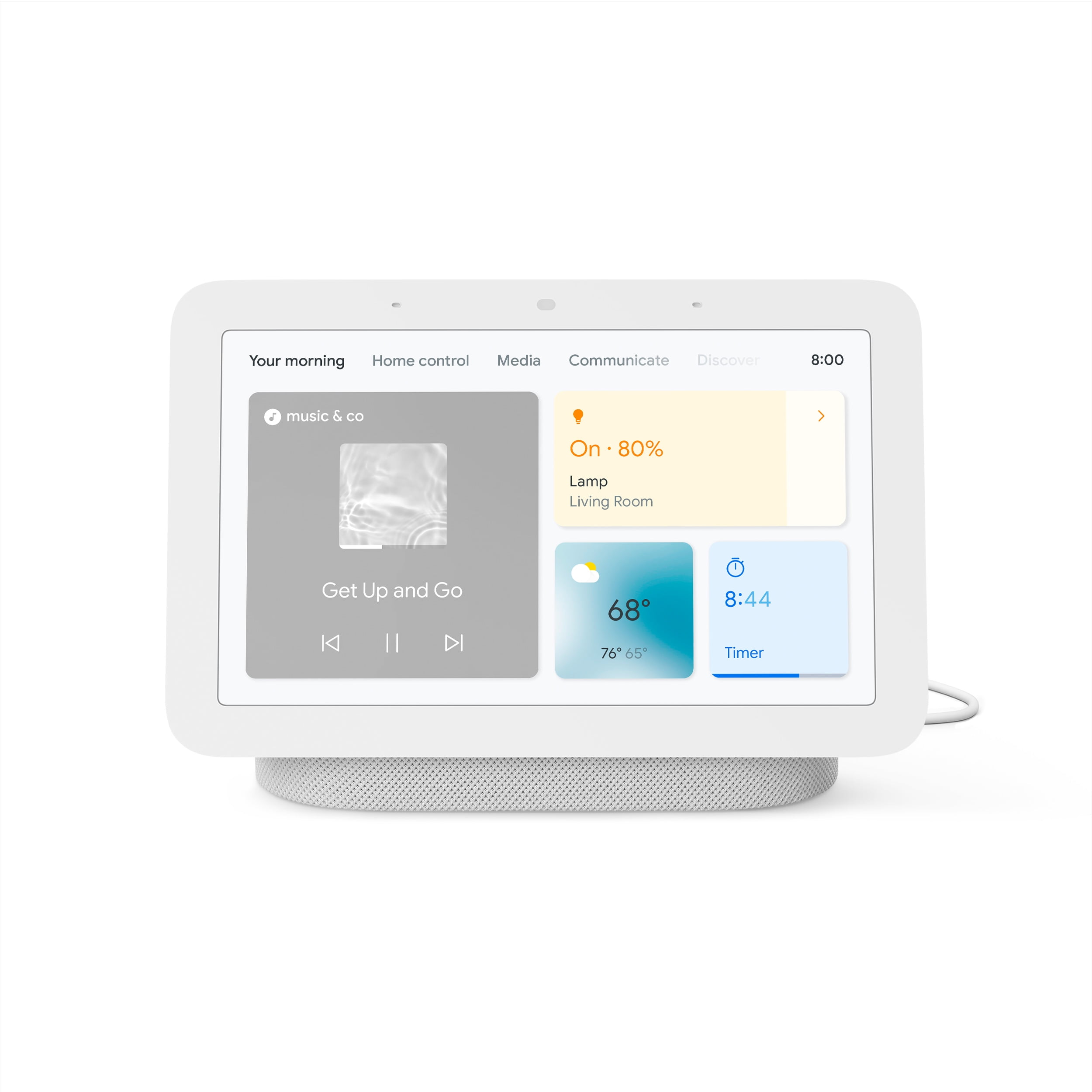
Google Nest Hub (2nd gen)
A Nest Hub can make a Google Home setup easier to use by giving cameras, routines, lights, and compatible devices a shared screen. It is most useful for readers who already plan to stay in Google’s smart home ecosystem rather than shoppers who only need a standalone speaker.
As an Amazon Associate I earn from qualifying purchases.
Who Should Pay Attention Now
This announcement is most relevant to people who are planning a smart home purchase rather than people who already have a setup that works well.
If you are buying a single smart speaker for music and basic commands, there is no need to wait just because Gemini is expanding to partners. Current products can still make sense if they meet your needs and are priced well.
If you are building a larger Google Home setup, buying multiple cameras, or considering a security subscription, it is worth slowing down. A platform shift like this can affect which devices receive the best features over the next year or two.
This is especially true for camera buyers. Cameras tend to be installed for years, and many of their best features depend on cloud services. Before buying a full set of cameras, it is reasonable to check whether the manufacturer has announced Gemini for Home support, whether the device is part of the Google Home ecosystem, and whether the subscription cost still makes sense.
It also matters for people comparing professionally monitored or carrier-connected services. If AT&T and other service providers begin folding Google Home Premium into their own home offerings, the best deal may not always come from buying a device and subscription separately.
Early Verdict: Useful Direction, But Wait For Real Products
Google’s expansion of Gemini for Home is a meaningful platform move, not an instant buying signal.
The upside is clear. If Google can bring better AI understanding to more cameras, speakers, apps, and home services, buyers may get more useful smart home products without every manufacturer having to create its own assistant technology. Better event descriptions, more natural voice controls, and smarter service bundles could make the connected home feel less fragmented.
The caution is just as clear. Partner programs often sound broader at announcement than they feel at launch. Availability, pricing, subscriptions, device support, and regional limits will determine whether this becomes a practical benefit for buyers or just another badge on product packaging.
For now, the best approach is to treat Gemini for Home support as a promising feature, not a reason to overlook fundamentals. Buy the camera with the best mix of reliability, video quality, privacy controls, ecosystem fit, and subscription value. Buy the speaker that sounds good, fits your rooms, and works with the services you actually use.
Then, when Gemini-capable third-party hardware starts arriving in a more concrete way, compare the AI features as part of the full product rather than the headline alone.
Bottom Line
Google is opening Gemini for Home to more companies, including hardware makers, developers, carriers, ISPs, and security providers. That could bring Gemini-powered smart home features to more cameras, speakers, and service bundles over time.
For buyers, the practical move is to watch for confirmed device support, clear subscription terms, and real-world reviews. Gemini for Home may become an important smart home feature, but the products and plans around it will decide whether it is worth paying for.