

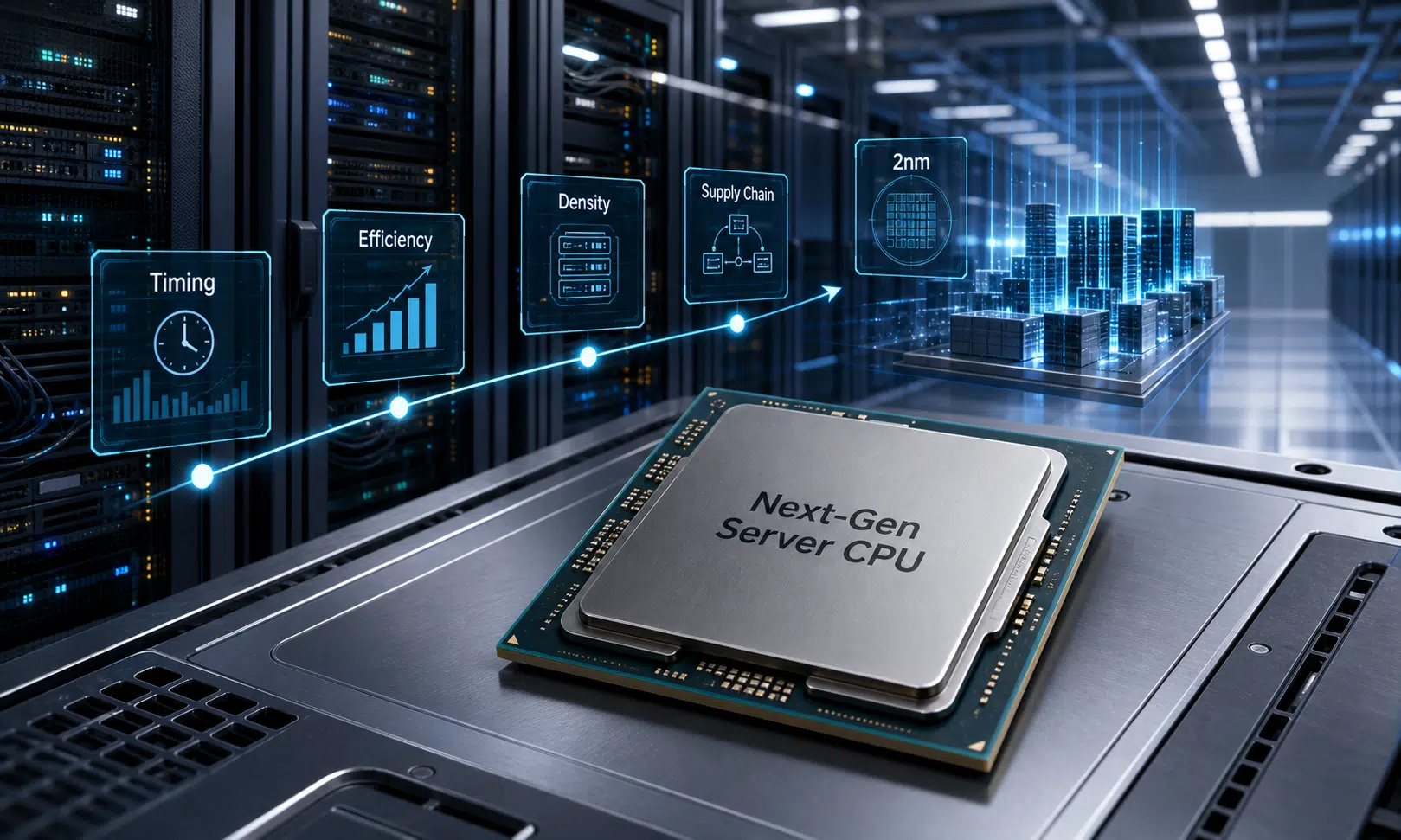

AMD says its next-generation EPYC processor, code-named Venice, has started its production ramp on TSMC’s 2nm process technology in Taiwan. For data center buyers, the headline is not simply that a new server CPU is coming. The practical question is how much this changes refresh timing, vendor negotiations, and AI infrastructure planning.
The company framed Venice as a data center CPU milestone, saying it is the first high-performance computing product to enter production on TSMC’s 2nm process. AMD also said future production is planned for TSMC’s Arizona facility, which gives enterprise buyers another supply-chain detail to track as the platform moves closer to availability.
What Venice Means for Infrastructure Buyers
Venice is aimed at the same pressure points that now dominate server purchasing: more compute density, better energy efficiency, and enough CPU throughput to support GPU-heavy AI systems. AMD has not turned this announcement into a full buyer spec sheet, so procurement teams should treat it as a roadmap signal rather than a final configuration guide.
That distinction matters. A production ramp can be important, but it does not automatically answer questions about platform pricing, OEM availability, validated server designs, memory configurations, power envelopes, or deployment timing. Buyers planning a 2026 or 2027 refresh should use the Venice news to start scenario planning, not to freeze current purchases without more detail.
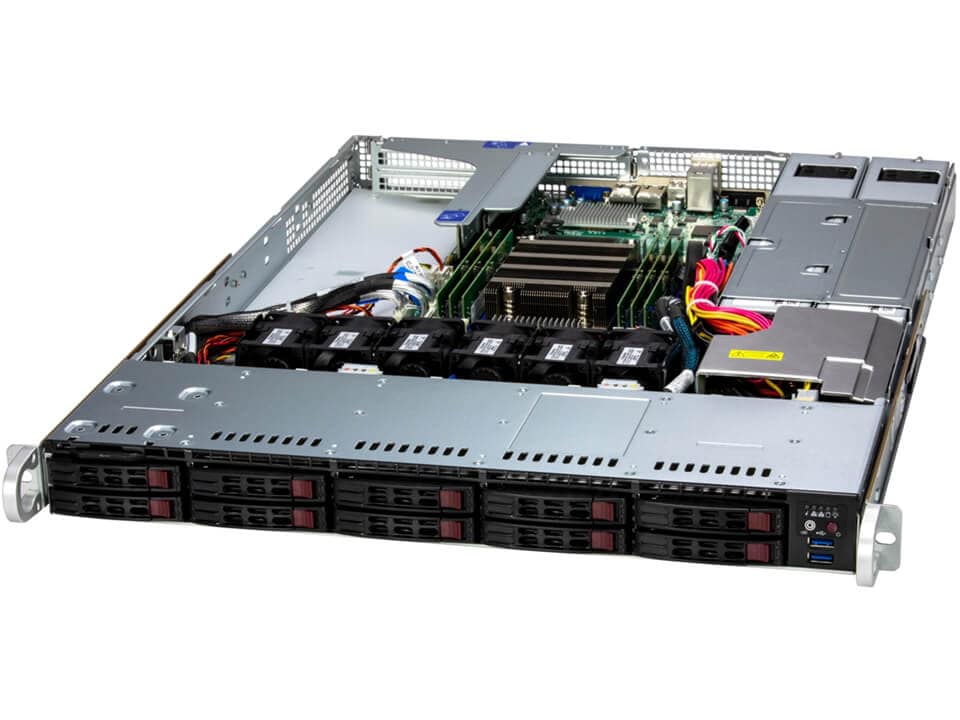
Supermicro AS-1115SV-WTNRT 1U AMD EPYC Server
A current AMD EPYC rack server can be useful as a baseline when comparing today’s validated platforms with future Venice-based systems. Check CPU generation, memory capacity, PCIe layout, storage backplane, and vendor support terms before standardizing on a configuration.
As an Amazon Associate I earn from qualifying purchases.
Venice vs. Verano: The Early Roadmap Split
AMD also pointed to Verano, a follow-on EPYC processor expected to extend TSMC’s 2nm process technology across more of its data center CPU lineup. The company says Verano is being designed with LPDDR memory integration for cloud and AI workloads that need higher bandwidth and stronger efficiency.
| Processor | What AMD Has Said | Buyer Takeaway |
|---|---|---|
| EPYC Venice | Ramping production on TSMC 2nm in Taiwan, with future Arizona ramp plans. | Most relevant for near-term roadmap tracking and server refresh planning. |
| EPYC Verano | Follow-on EPYC design with LPDDR memory integration for cloud and AI workloads. | Worth watching for memory-bound AI infrastructure and efficiency-focused deployments. |
How to Decide Whether to Wait
For buyers with urgent capacity needs, Venice is not a reason to delay every purchase. Current-generation EPYC systems may still be the better fit when workloads are known, budgets are approved, and deployment timelines are tight.
Waiting makes more sense when the buying cycle is flexible and the workload is tied to long-lived AI infrastructure, high-density compute, or power-constrained data center space. In those cases, Venice and Verano could affect not only CPU selection, but also rack design, cooling assumptions, and the balance between CPU and accelerator spending.
- Wait if your refresh window is flexible and AI infrastructure efficiency is a primary requirement.
- Buy current systems if capacity, support contracts, or deployment dates matter more than roadmap positioning.
- Ask vendors when Venice-based platforms will be validated, priced, and available in the server models you actually deploy.

HPE ProLiant DL385 Gen11 AMD EPYC Server
For teams that cannot wait for Venice platforms, a current enterprise AMD EPYC server can anchor procurement discussions around memory, accelerator support, management tooling, and service coverage. Use it as a comparison point when vendors provide Venice platform timing and pricing.
As an Amazon Associate I earn from qualifying purchases.
The clean takeaway: AMD’s Venice ramp is a meaningful signal for enterprise CPU roadmaps, but the buyer decision still depends on platform availability, workload fit, and total system cost. Treat the announcement as a planning trigger, not a purchase order by itself.