

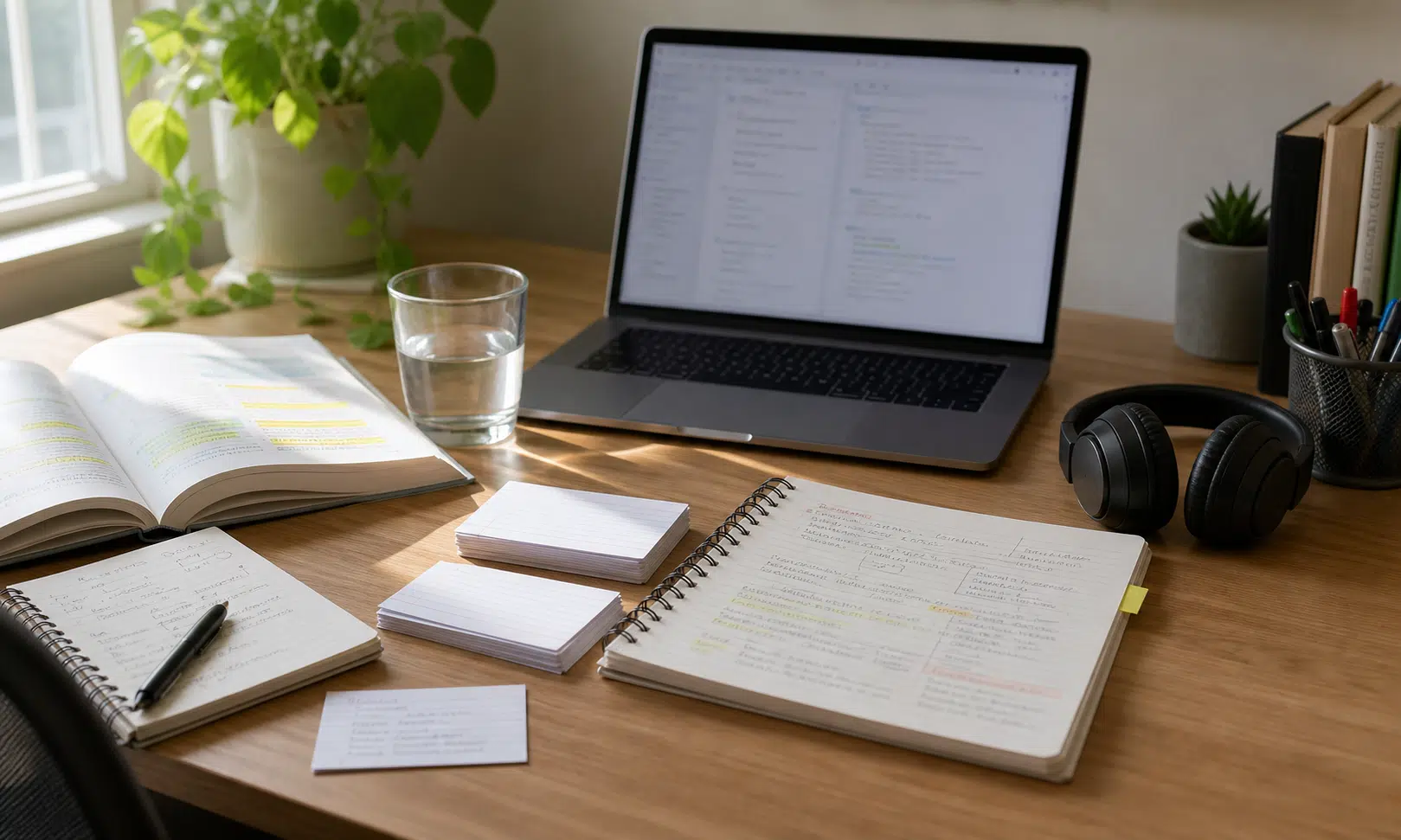

Most people do not need another place to save notes. They need a system that helps useful ideas come back when they can still be applied.
This review looks at a five-part learning setup built around meta-learning, or learning how to learn. The original system scores highly on impact, with a more moderate setup and maintenance burden. That feels directionally right: the payoff can be meaningful, but only if the system becomes part of how you read, study, review, and use information.
Verdict: Best for Serious Self-Learners
This system is most useful for readers, students, creators, operators, and professionals who already consume a lot of information but lose track of the best parts. It is less useful if you mainly need quick reference notes or one-off memorization before a short test.
The main tradeoff is complexity. A second brain, a cleaner study environment, teaching-based review, spaced repetition, and memory techniques can work together, but each one asks for a little attention. The buyer decision is not only which tool to use. It is whether you will keep the habit alive after the initial setup.
The Five-Part Learning System
- Build a second brain. Keep valuable notes, quotes, ideas, and resources in one searchable place. Evernote and Notion are common choices for this kind of personal knowledge base, and Tiago Forte’s Building a Second Brain is a relevant deeper resource for readers who want a formal method.
- Improve the study environment. Reduce obvious friction before you start. Noise-canceling headphones can help with distractions. A cool room, water, and simple snacks can make longer learning sessions easier to sustain. Claims about specific scents improving focus should be treated cautiously unless you have your own reason to use them.
- Use the Feynman-style teaching test. Choose a concept, study it, then explain it in plain language as if teaching someone else. When your explanation breaks down, return to the source, fill the gap, and simplify again.
- Review on a schedule. Short, repeated reviews are more useful than assuming one reading session will stick. A 60-day review process is one example, but the exact cadence matters less than returning to important material before it disappears from working memory.
- Use a memory palace when reference material is unavailable. For lists, speeches, or details you must recall without notes, visual mnemonics can help. Place vivid mental images along a familiar route, then walk through that route in your mind to retrieve them.
Where Tools Actually Help
A note app is useful when it becomes the place you trust for capture and search. A review app is useful when it brings important material back without requiring you to remember to look for it.
Readwise is a natural fit for readers who highlight in Kindle and other digital sources. Its value is not that it magically creates retention. Its value is that it can resurface highlights, make old passages searchable, and send material into a larger note system such as Evernote or Notion.

Kindle Scribe
Kindle Scribe can work well if much of your learning starts with books and handwritten annotations. It gives you one device for reading, highlighting, and capturing margin-style notes before moving the best ideas into your review system.
As an Amazon Associate I earn from qualifying purchases.

Building a Second Brain
Building a Second Brain is a practical next step if you want a clearer method for capturing, organizing, and reusing what you learn. It is best suited to readers who want a repeatable system rather than just another notes app.
As an Amazon Associate I earn from qualifying purchases.
For buyers, the practical question is simple: do you need a capture tool, a review tool, or both? If your notes are scattered, start with the second brain. If your notes are organized but rarely revisited, a spaced review tool may be the better next purchase.
Scorecard
| Dimension | Source score | Editorial read |
|---|---|---|
| Impact | 9.5/10 | High potential because better learning improves every future skill you study. |
| Setup | 7.5/10 | Moderate effort. You need a note home, a review rhythm, and some cleanup of your study habits. |
| Maintenance | 7.5/10 | Manageable if reviews are automated and the system stays simple. |
What to Keep, and What to Treat Carefully
The strongest parts of the system are the repeatable behaviors: capture, simplify, teach, review, and use visual memory only when needed. Those are practical and easy to test in your own work.
The weaker parts are any claims that sound too precise without evidence, especially fixed retention percentages from the Learning Pyramid or broad claims that a specific environment tweak will improve focus for everyone. The useful version is softer: teaching tends to reveal gaps better than passive reading, and a less distracting environment makes study easier.
The best way to apply this system is to start small. Pick one place for notes, schedule one recurring review, and explain one important idea in your own words after each reading session. Add memory palaces only for material you truly need to recall without reference notes.