

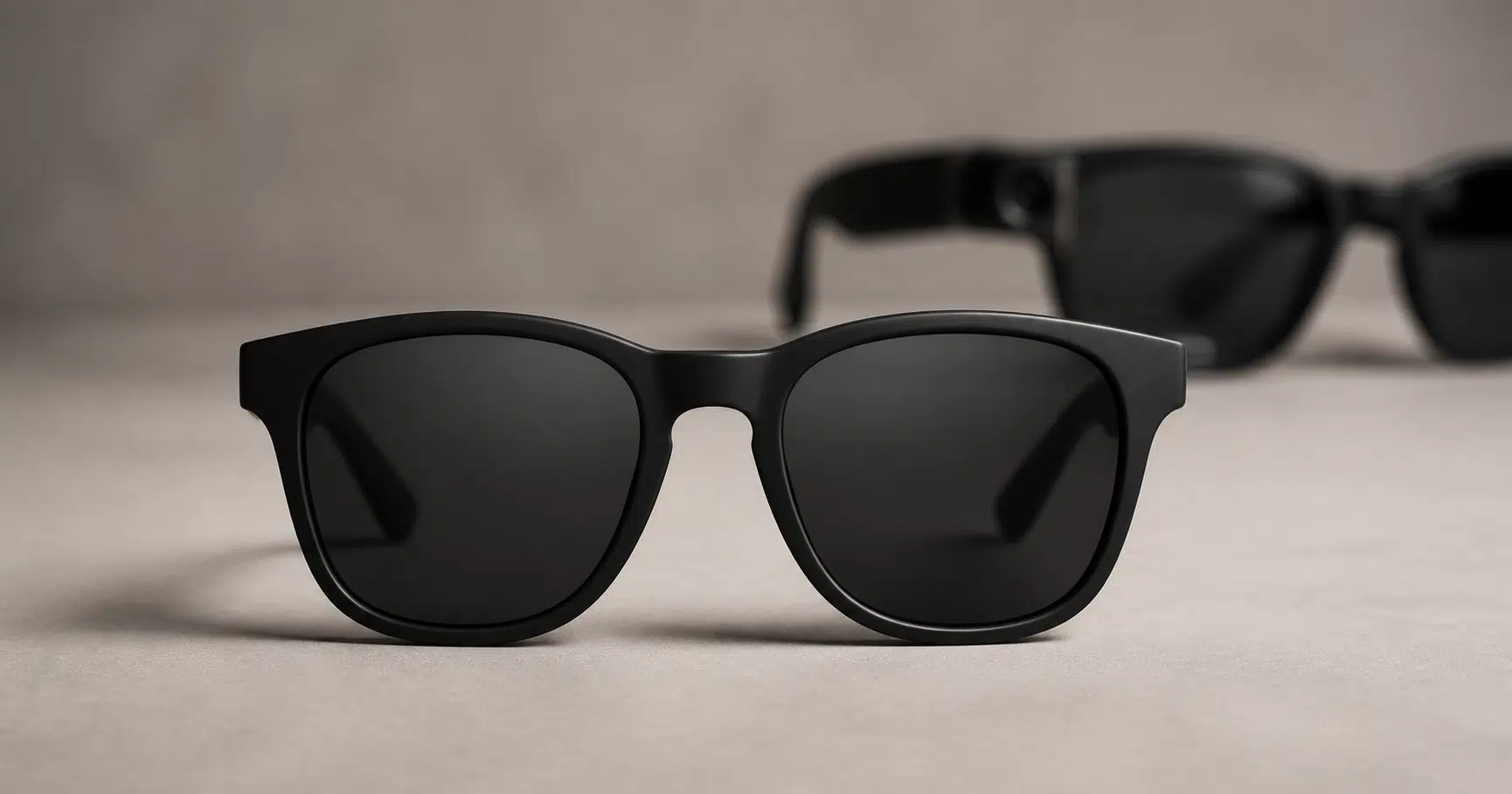

DuckDuckGo pitched its Normal F***ing Sunglasses as an antidote to the technology industry’s determination to put cameras, software, and AI into eyewear. The joke is simple: these are supposed to be ordinary sunglasses, and the absence of electronics is their headline feature.
The limited-edition matte black pair was presented as a collaboration with eyewear company Knockaround. DuckDuckGo said a significant portion of the inventory was depleted within days, although it did not disclose production or sales figures. The reported demand and availability have not been independently verified.
For buyers, that leaves a more practical question behind the marketing: what do these sunglasses provide, and how do they compare with connected eyewear that can record video or run software?
What the DuckDuckGo sunglasses claim to offer
The sunglasses are reportedly based on Knockaround’s Paso Robles frame. Their product listing describes the conventional features expected from a functional pair of shades, including polarized lenses, UV400 protection, and FDA-compliant impact resistance.
The listing also emphasizes what is deliberately missing:
- No camera or video recording
- No microphone or voice assistant
- No battery or charging requirement
- No wireless connection
- No generative AI integration
Those specifications come from the companies’ product description and have not been independently tested here. Even so, the proposed benefit is easy to understand. If the listing is accurate, the glasses cannot record nearby people, transmit location information, or collect usage data because they contain no electronics capable of doing so.
That does not make them technically advanced. It makes them conventional eyewear packaged as a comment on AI smart glasses and wearable privacy.
Ordinary sunglasses versus AI smart glasses
The meaningful comparison is not about processing speed or AI performance. It is about whether buyers want eyewear to remain a passive accessory or become another connected device.
| Decision point | DuckDuckGo and Knockaround listing | Connected smart glasses |
|---|---|---|
| Primary purpose | Sun protection and conventional eyewear | Eyewear combined with electronic functions |
| Camera and recording | None claimed | Available on some models |
| AI features | None claimed | Varies by product and software platform |
| Power | No battery or charging | Charging is required for electronic features |
| Lens features | Polarization and UV400 protection claimed | Varies by frame and lens configuration |
| Privacy considerations | No onboard electronics claimed | Depends on sensors, account requirements, software, and settings |
Smart glasses serve a different buyer. Someone who wants hands-free recording, voice controls, or AI assistance will find nothing useful in DuckDuckGo’s deliberately basic design. Someone who sees those features as unnecessary complications may prefer eyewear with no setup, charging cycle, account, or privacy menu.
The conventional option is also easier to evaluate. Frame comfort, lens quality, UV protection, polarization, durability, and price are the important criteria. With smart glasses, buyers must additionally consider battery life, camera behavior, software support, repairability, and how the device handles recorded or transmitted data.
Who should consider the no-tech option?
DuckDuckGo’s pair makes the most sense for buyers who already want ordinary polarized sunglasses and enjoy the joke attached to them. The concept may also appeal to people uncomfortable wearing a camera on their face—or being around others who do.
However, the campaign alone does not establish that these are the best sunglasses for the money. No price, long-term durability results, fit comparisons, or independent lens tests are available in the supplied details. Buyers should therefore judge the product as eyewear first and branded merchandise second.
If the limited pair is unavailable, an established set of non-connected polarized sunglasses provides the same fundamental experience: sun protection without a camera, battery, or software account. Shoppers should prioritize verified UV protection, a comfortable frame, suitable lens polarization, and a clear warranty.
Knockaround Paso Robles Polarized Sunglasses
The standard Paso Robles model offers the same general frame family without the limited-edition DuckDuckGo branding. Choose a polarized version and confirm that its small-to-medium fit suits your face.
As an Amazon Associate I earn from qualifying purchases.
Tifosi Swank Polarized Sunglasses
The Tifosi Swank combines a lightweight frame with UV-blocking lenses and warranty coverage. Select a specifically labeled polarized version, since lens configurations vary.
As an Amazon Associate I earn from qualifying purchases.
Buyers interested in smart eyewear should make the opposite comparison. Start with the electronic function you genuinely expect to use, then examine its privacy controls and charging requirements. Paying for AI or recording features makes little sense if those features will remain disabled most of the time.
The sellout claim needs context
DuckDuckGo described the campaign as successful and said inventory disappeared quickly, but it did not reveal how many pairs were produced or sold. Without those figures, the claim cannot show whether the glasses reached a large audience or simply came from a small promotional run. The sellout has not been independently verified.
That uncertainty does not undermine the central joke. A deliberately low-tech product gives DuckDuckGo an uncomplicated way to criticize the expansion of cameras and AI into everyday objects. The sunglasses function as merchandise, marketing, and commentary at the same time.
It is also a neatly constructed piece of counterprogramming. Most wearable launches try to persuade buyers that adding another sensor or assistant will improve daily life. DuckDuckGo instead asks whether sunglasses need to become computers in the first place.
Verdict: buy the eyewear, not just the message
The Normal F***ing Sunglasses have a clear audience: people who want conventional shades, appreciate the privacy-themed branding, and have no interest in wearing a connected camera. Their claimed polarized lenses and UV400 protection are the features that matter in practical use; everything else revolves around what the product intentionally leaves out.
They are not a meaningful substitute for smart glasses if recording, voice control, or AI assistance is the reason for buying new eyewear. Nor is there enough independently verified information to call them a standout value among ordinary sunglasses.
The sensible verdict is conditional. If the fit, price, lens quality, and claimed protection meet your needs, the absence of electronics can be a genuine advantage. If the appeal rests entirely on the campaign’s punchline, a regular pair of quality polarized sunglasses will make the same privacy promise by doing exactly what sunglasses have always done—and nothing more.