

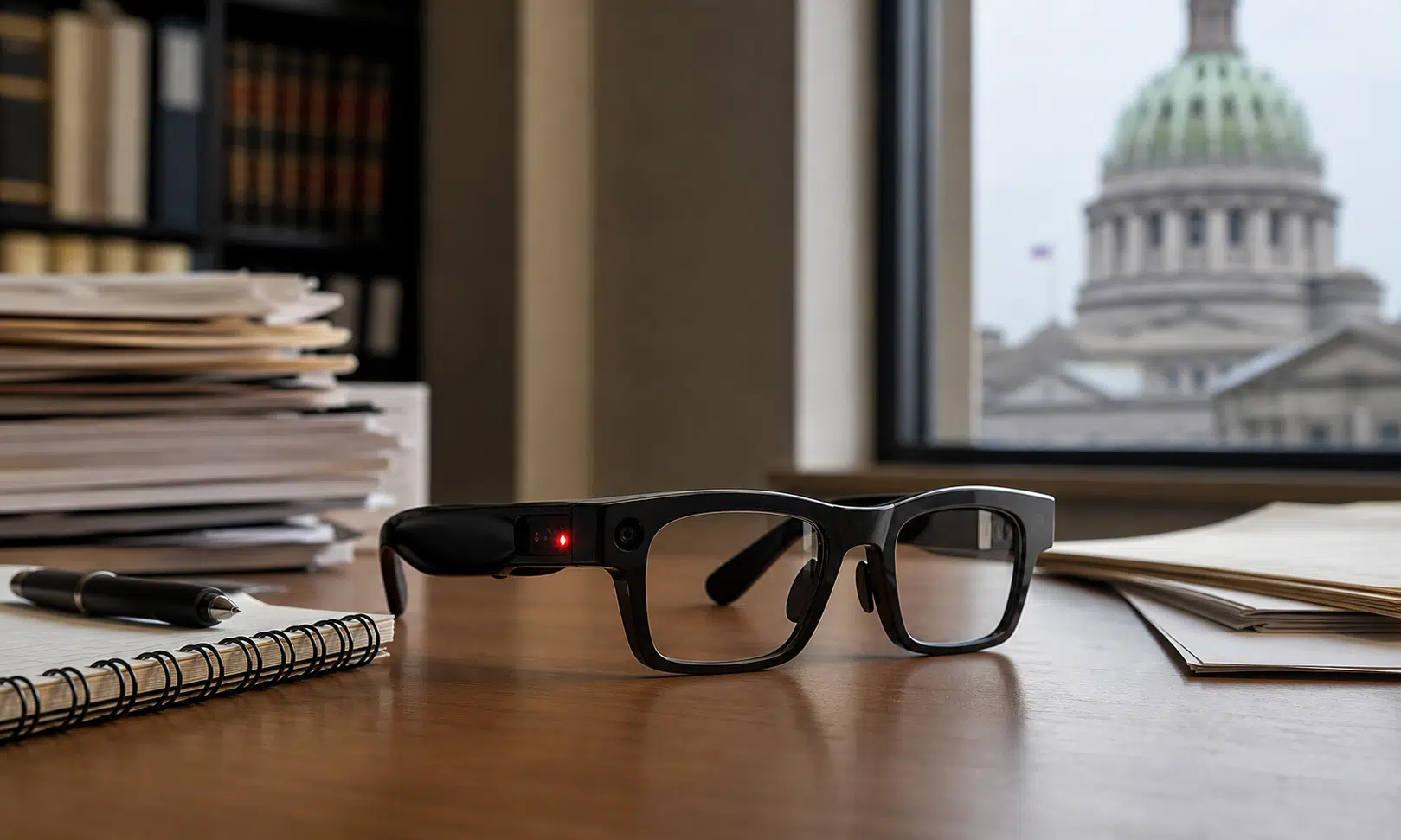

Pennsylvania lawmakers are considering a privacy measure that would make recording indicators a legal requirement for smart glasses used in the state.
House Bill 2603, introduced by Rep. Joe Ciresi of Montgomery County on June 4, 2026, would amend Pennsylvania’s wiretapping and electronic surveillance law to address wearable recording devices. The proposal would require smart glasses manufactured, sold or used in Pennsylvania to include a visual indicator when the device is capturing audio or video.
The bill was referred to the House Communications and Technology Committee on June 5, 2026. It has not become law, and its future depends on the normal legislative process.
What the bill would require
The proposed language focuses on whether people nearby have actual knowledge that a wearable device is recording them. Under the bill, a person could not use a wearable recording device to capture sound or video of another person without that person’s actual knowledge if the device lacks a visual indicator or if that indicator has been disabled.
In practical terms, the proposal is aimed at camera-equipped smart glasses that can look like ordinary eyewear while still recording video, audio or both.
The bill also defines a visual indicator as a light or device on the wearable recorder that shows when recording is taking place. That would put the indicator itself, not just the act of recording, inside the legal framework.
Retailers would also have a role. Ciresi’s proposal says sellers would need to clearly inform buyers about Pennsylvania’s recording laws, so users are made aware of their responsibilities before using smart glasses in the state.
Why lawmakers are looking at smart glasses
Many current smart glasses already include some type of recording notice. Ray-Ban Meta glasses, for example, use a front-facing LED indicator when photos or videos are being captured. The legal issue raised by the Pennsylvania bill is that those safeguards are largely design choices by manufacturers, rather than a specific statewide requirement.
The proposal also addresses attempts to defeat those safeguards. The bill seeks to prevent users from disabling a visual indicator to hide that a wearable device is recording. That detail matters because privacy concerns around smart glasses are not limited to whether an indicator exists on the product; they also extend to whether users can cover, alter or remove it.
The source article referenced reports about people modifying Ray-Ban Meta glasses to remove or obscure the privacy light. Because those reports were not independently established in the provided material, they are best treated as part of the broader concern rather than as a confirmed basis for the bill.
The proposal is still early
House Bill 2603 is not a blanket ban on smart glasses. It is framed as an update to existing privacy and recording rules for a newer category of wearable devices.
If passed, the measure could make Pennsylvania one of the more direct state-level tests of how recording laws apply to consumer smart glasses. For now, the bill remains a proposal, and no final timeline for passage has been publicly confirmed.