


Bambu Lab PLA Pure filament is being pitched as a more transparent, family-focused version of one of the most common 3D printing materials. The company says the new PLA line is designed for people who want to run a printer in shared living spaces, especially homes with children or pets, where concerns about emissions, additives, and printed-object safety are harder to ignore.
The material is described as a cleaner-printing PLA with UL Greenguard certification, toy-safety testing, and a shorter disclosed ingredient list than many hobbyist filaments typically show publicly. Bambu Lab says PLA Pure is sold through its official store in soft pastel colors as well as black and white, with listed pricing of $24.99 for a 1kg spool and $21.99 for a refill. Those details are best treated as store-listed launch information rather than a broader guarantee of future availability or pricing.
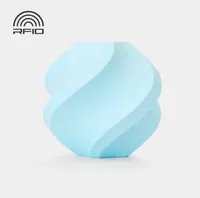
Bambu Lab PLA Pure Filament
Bambu Lab PLA Pure is the safety-focused PLA line discussed here, with disclosed ingredients and toy-safety testing central to its positioning. Check color and spool or refill compatibility before ordering.
As an Amazon Associate I earn from qualifying purchases.
The broader pitch is clear: 3D printing has moved well beyond garages, workshops, and labs. More entry-level machines are quiet, enclosed-looking, and polished enough to sit in a home office or family room, which makes filament chemistry feel less like a niche spec and more like a practical household question.
What Bambu Lab Is Claiming About PLA Pure
Bambu Lab says PLA Pure lists five ingredients: polylactic acid, acrylic copolymer, color pigments, ethylene bis-stearamide, and talc. That level of ingredient disclosure is notable in a category where safety data sheets can be broad and where additives are often described in general terms rather than spelled out in consumer-facing detail.
The company frames those ingredients in familiar consumer-product terms. It says the PLA comes from corn and sugarcane, the acrylic copolymer is also used in children’s toys, the pigments are similar to those used in baby tableware, ethylene bis-stearamide is used in food packaging, and the talc has been verified as asbestos-free.
That last claim is likely to draw attention because talc and asbestos have a complicated relationship. Talc is a naturally occurring mineral, and asbestos can be found in some talc deposits because the minerals may occur near each other geologically. A product claiming asbestos-free talc is therefore not just a marketing flourish; it is a specific safety assurance around a filler commonly associated with matte finishes and other material properties.
It also raises a fair question for buyers: if PLA Pure is being promoted around a disclosed ingredient profile, what does that imply about less transparent filaments, including matte, silk, glitter, tough, or specialty PLA blends? That does not mean those materials are unsafe. It does mean shoppers are being asked to trust manufacturer claims in a category where the visible end product often looks simple, while the formulation behind it can be more complex.
Lower Emissions Are Part Of The Pitch
Bambu Lab says PLA Pure carries UL 2904 Greenguard certification, a standard tied to indoor air quality and emissions testing, including particulate matter and volatile organic compounds. The company also says PLA Pure produced lower emissions than its PLA Basic material in its own comparison, even though PLA Basic is also described as having indoor air quality certification under the same standard.
The company says testing was performed on Bambu Lab A1 and A2L printers without an enclosure or filtration, a setup meant to resemble a more typical home printing environment. That detail matters because many desktop 3D printers are used exactly that way: on a desk, shelf, or table, often without a dedicated ventilation system.
Still, a certification or emissions claim should not be read as a universal safety blank check. Print temperature, printer design, room size, ventilation, print duration, and the specific object being printed can all affect the practical experience of using a filament indoors. PLA is generally treated as one of the more approachable materials for home printing, but users who print frequently or in poorly ventilated spaces still have reason to think about airflow and filtration.
Toy-Safety Testing Does Not Make Every Print A Toy
The more consumer-friendly part of PLA Pure’s positioning is its toy-safety angle. Bambu Lab says the filament passed EN 71-3 testing, a European toy safety standard that evaluates the migration of certain elements from toy materials. That includes heavy metals such as lead, cadmium, and chromium, which are a concern when young children may put objects in their mouths.
That certification can be useful for makers printing decorative objects, educational items, or simple toys, but it does not solve every safety issue that comes with home-printed parts. A printed object can still break into small pieces, create sharp edges, or become a choking hazard depending on the model and print quality. Toy-safety material testing also does not automatically validate the design, size, strength, or finish of whatever someone prints at home.
Food contact is another area where the nuance matters. PLA as a base material is often discussed as plant-derived and comparatively benign, but a finished 3D print is not the same thing as an injection-molded food container. Layer lines can create tiny gaps where residue and bacteria are harder to clean, and PLA parts typically cannot tolerate the high heat of dishwashers or boiling-water sanitizing. Bambu Lab warns that PLA should not be used for liquids or exposed to temperatures above 60 degrees Celsius.
A More Transparent Filament, With Practical Limits
PLA Pure looks less like a radical new material and more like an attempt to make a familiar one feel easier to trust. The meaningful shift is not just that Bambu Lab is selling another PLA variant. It is that the company is putting ingredient disclosure, indoor-air-quality claims, toy-material testing, and asbestos-free talc language at the center of the product.
For buyers, that can be useful, especially if the printer lives in a shared space rather than a workshop. It gives safety-conscious users more to evaluate than color, finish, print temperature, and price. It may also put pressure on other filament makers to be clearer about what is inside their materials, particularly in specialty PLAs where additives create the look or mechanical behavior people are paying for.
The tradeoff is that the safest reading of PLA Pure is still a narrow one. Bambu Lab is making claims about the filament and its test results, not about every object a user might print with it. Cleaner ingredients and lower-emission claims can reduce some concerns, but they do not remove the need for sensible ventilation, careful model selection, and realistic expectations about what home-printed plastic parts are suitable for.