


A possible US restriction on Chinese cellular modules would not be a narrow telecom story. It could affect almost any product that quietly uses a mobile network connection: industrial sensors, fleet trackers, payment terminals, medical equipment, smart meters, security systems, vehicles and some networking hardware.
That is why buyers should treat the issue less like a headline about geopolitics and more like a practical supply chain risk. If a product sends or receives a 4G or 5G signal, the module inside it may matter as much as the brand printed on the outside.
According to reports, the Federal Communications Commission is weighing whether Chinese-made cellular modules should be added to a wider set of federal restrictions aimed at communications equipment considered a national security concern. The agency has already moved against some categories of foreign-made routers and drones, and it has also advanced restrictions affecting Chinese testing labs involved in certifying US-bound electronics.
The cellular module question is potentially more disruptive because these parts are embedded deep inside other products. A buyer may know the manufacturer of a connected asset, but not the module supplier, firmware update path, network access design or country-of-origin details behind the connection.
What cellular modules do, and why they matter
A cellular module is the component that lets a device connect to a mobile network. In simple terms, it gives non-phone hardware a way to communicate over LTE, 5G or related cellular standards without relying on Wi-Fi or wired networking.
That makes the module valuable in products that need to operate in the field, move between locations or report data from places where fixed broadband is unavailable. It also makes the module a sensitive part of the device. It touches the network, often receives firmware updates, and may be managed remotely by the product vendor, module vendor or service provider.
For security and procurement teams, the concern is not only where the final product is assembled. It is also who designed the communications module, who maintains its software, what access the supplier keeps after deployment, and whether the product can keep receiving security updates if regulations change.
The categories most exposed are likely to be products where cellular connectivity is built in but not obvious to the person buying or operating the device.
- Industrial IoT sensors and monitoring systems
- Vehicle telematics, fleet tracking and connected logistics hardware
- Smart meters and energy infrastructure equipment
- Medical devices that transmit operational or patient-related data
- Payment terminals, kiosks and vending systems
- Security cameras, alarm panels and access-control equipment
- Consumer smart-home products with backup cellular connectivity
- Routers, gateways and portable connectivity devices
The risk profile also depends on the buyer. A consumer replacing a home device faces a different problem from a manufacturer with thousands of units in a regulated supply chain. Government contractors, healthcare providers, utilities, transport operators and critical infrastructure suppliers should be especially careful because their acceptable risk threshold is usually lower.
Quick Comparison
| Image | Product | Best fit | Link |
|---|---|---|---|
 |
Peplink MAX BR1 Pro 5G | For branch, vehicle or backup WAN projects, a business 5G router such as the Peplink MAX BR1 Pro 5G gives buyers a concrete device to evaluate for carrier support, firmware handling and lifecycle documentation. Check the exact regional model, supported bands and certification details before standardizing on it. | Check Price on Amazon |
 |
Teltonika RUTX11 Industrial LTE Router | An industrial LTE gateway such as the Teltonika RUTX11 is relevant for monitoring, automation and field equipment where cellular failover and documented hardware configuration matter. Buyers should confirm the regional SKU, module details and support timeline with the seller. | Check Price on Amazon |
 |
Digi IX20 Industrial LTE Router | For larger fleets, an industrial router such as the Digi IX20 may be a better fit than a consumer hotspot because it is designed around managed deployment, support and documented variants. Procurement teams should request the exact part number, embedded modem details and certification status. | Check Price on Amazon |
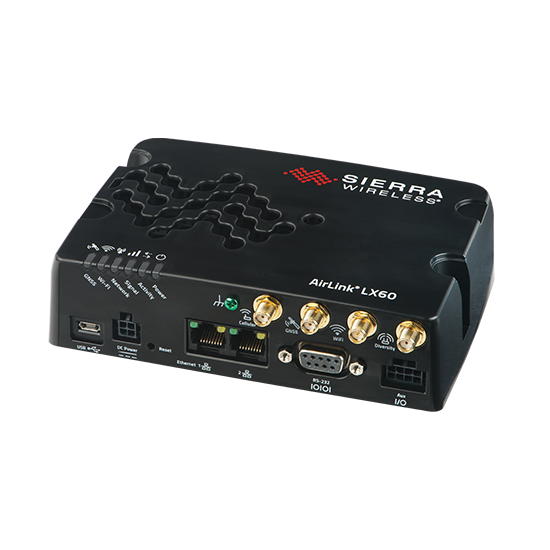 |
AirLink LX60 Dual Ethernet LTE Router | A router such as the AirLink LX60 is aimed at enterprise IoT, retail, fleet and backup connectivity use cases where support terms and firmware updates are part of the buying decision. Verify the regional model, carrier approvals and management subscription terms before deployment. | Check Price on Amazon |
As an Amazon Associate I earn from qualifying purchases.
The reported FCC review fits a broader restriction trend
The reported interest in cellular modules follows a broader US push to tighten control over communications equipment, radio-connected devices and certification processes linked to China. The FCC has used its Covered List rules to restrict equipment viewed as posing national security risks, and recent moves around drones, routers and testing labs show that the policy focus has moved beyond traditional telecom network gear.
That matters because cellular modules sit between several regulatory and commercial categories. They are telecom components, but they are also supply chain components. They are not usually sold directly to the end user, yet they can determine whether a finished product is eligible for sale, import, certification or long-term support.
Reports have suggested that a small group of Chinese suppliers holds a large share of the global cellular module market. Charles Parton, a former UK diplomat and senior associate fellow at the Royal United Services Institute, has reportedly estimated that Chinese companies including Quectel, Fibocom, China Mobile, Sunsea and MeiG account for a substantial portion of global supply. That estimate should be treated as a reported assessment rather than a settled public figure, but it points to the buyer issue: alternative sources may not be able to absorb demand quickly if restrictions arrive suddenly.
For device makers, the hard part is that module choices are made early in product design. Swapping a module can trigger engineering changes, firmware work, network testing, carrier approvals, recertification, documentation updates and customer support planning. For buyers of finished products, the challenge is even more basic: many product datasheets do not clearly disclose the cellular module vendor.
Buyer checklist: what to ask before purchasing connected hardware
For now, this is not a reason to panic-buy replacement equipment. It is a reason to improve due diligence before signing a new contract, renewing a device fleet or standardizing on a platform that may stay deployed for years.
The most useful first step is to ask vendors direct questions in writing. If a supplier cannot identify the cellular module vendor, manufacturing country, firmware update process and substitution plan, that is a meaningful procurement signal.
| Buyer question | Why it matters | What a stronger answer looks like |
|---|---|---|
| Which cellular module is inside the product? | The final device brand may not reveal the communications supplier. | The vendor names the module maker, model family and regional variants. |
| Where is the module designed, manufactured and assembled? | Restrictions may focus on origin, ownership, production or certification details. | The vendor provides country-of-origin and supply chain documentation. |
| Who controls firmware updates? | Update channels are central to both security and regulatory risk. | The vendor explains the update path, signing process and approval controls. |
| Can the product ship with an alternate module? | A single-source module can become a deployment bottleneck. | The vendor has a tested second source or a published redesign plan. |
| Would a module change require recertification? | Approval delays can affect availability and support timelines. | The vendor describes certification impact and expected lead times. |
| What happens to installed devices if rules change? | Existing fleets may need updates, waivers, replacements or support extensions. | The vendor has a support policy for deployed units and spare parts. |
For larger purchases, these questions should not be handled only by the IT team. Procurement, legal, security, compliance and operations all have a stake in the answer. A device that is cheap to buy but difficult to certify, update or replace can become expensive once it is deployed at scale.
How this could affect prices, availability and product roadmaps
If Chinese cellular modules were restricted, the effect would depend on the final rule. A targeted ban on specific suppliers would be very different from a wider restriction based on country of production, ownership or component category. Rules could also distinguish between new device approvals, already-authorized products, software updates, federal procurement and the broader consumer market.
Even so, buyers should expect three pressure points if the policy moves forward.
- Lead times could stretch. Device makers may need to redesign products around alternate modules, then retest and recertify them before shipment.
- Prices could rise. If demand shifts quickly to non-Chinese module suppliers, available capacity may tighten and component costs may increase.
- Product support could become uneven. Some vendors may continue supporting existing models, while others may push customers toward revised hardware.
The biggest risk is not necessarily that every connected device becomes unavailable. It is that specific models, regional variants or certified configurations become harder to source. That can create messy operational problems for companies that depend on identical hardware across many locations.
For example, a logistics company may have standardized on a tracker that fits its vehicle installation workflow. A utility may have approved a specific smart meter configuration. A healthcare provider may have validated a connected device as part of a broader compliance process. In those cases, replacing the module is not just a purchasing change. It can reopen testing, documentation, training and support work.
Who should act first
The buyers with the most urgent need to review their exposure are those planning long-lived deployments. Cellular-connected devices often stay in the field for years, and the cost of replacing them after installation can dwarf the original price difference between models.
Government suppliers and contractors should be especially careful. Even before any broader domestic-market impact, procurement rules for public-sector or federally linked work can be stricter than general commercial rules. Companies selling into defense, infrastructure, healthcare or public safety markets should ask whether their customers already require disclosure of communications components.
Manufacturers also need to look upstream. A finished device vendor may be able to answer customer questions only if it has already mapped its own bill of materials and supplier dependencies. If the cellular module is treated as a generic part, the company may be slow to respond when buyers begin requesting origin and security details.
For smaller businesses, the practical approach is simpler: avoid locking into a device fleet without asking whether the vendor has a non-restricted module option. That question is particularly important for routers, gateways, point-of-sale systems, fleet hardware and remote monitoring products.
Practical steps for procurement teams
A sensible response starts with inventory. Buyers should identify which products in their environment use cellular connectivity, then rank them by criticality, replacement cost and regulatory sensitivity.
- List cellular-connected devices already deployed or scheduled for purchase.
- Ask vendors to disclose module supplier, model and origin details.
- Flag products that rely on a single module supplier with no tested substitute.
- Check whether the device is used in regulated, safety-critical or customer-facing workflows.
- Add module transparency and update-control language to future purchasing requirements.
- Build extra lead time into projects that depend on cellular-connected hardware.
This does not require every buyer to become a telecom component expert. It does require buyers to stop treating cellular connectivity as a black box. The module is part of the security and availability profile of the product.
The bottom line for connected device buyers
The reported FCC review of Chinese cellular modules is still a developing policy issue, and the final scope could change. But the direction of travel is clear enough for buyers to act. US restrictions on communications technology have expanded from major network equipment into drones, routers, certification labs and now, potentially, embedded cellular components.
That makes cellular module transparency a reasonable buying requirement. Vendors should be able to explain what module is inside a product, where it comes from, how it is updated, and what happens if that component becomes restricted or unavailable.
For buyers, the best move is not to wait for a formal ban and then scramble. It is to add module-level questions to procurement now, especially for devices that will be deployed widely or expected to last for years. The products most worth buying will be the ones whose suppliers can answer those questions clearly.