

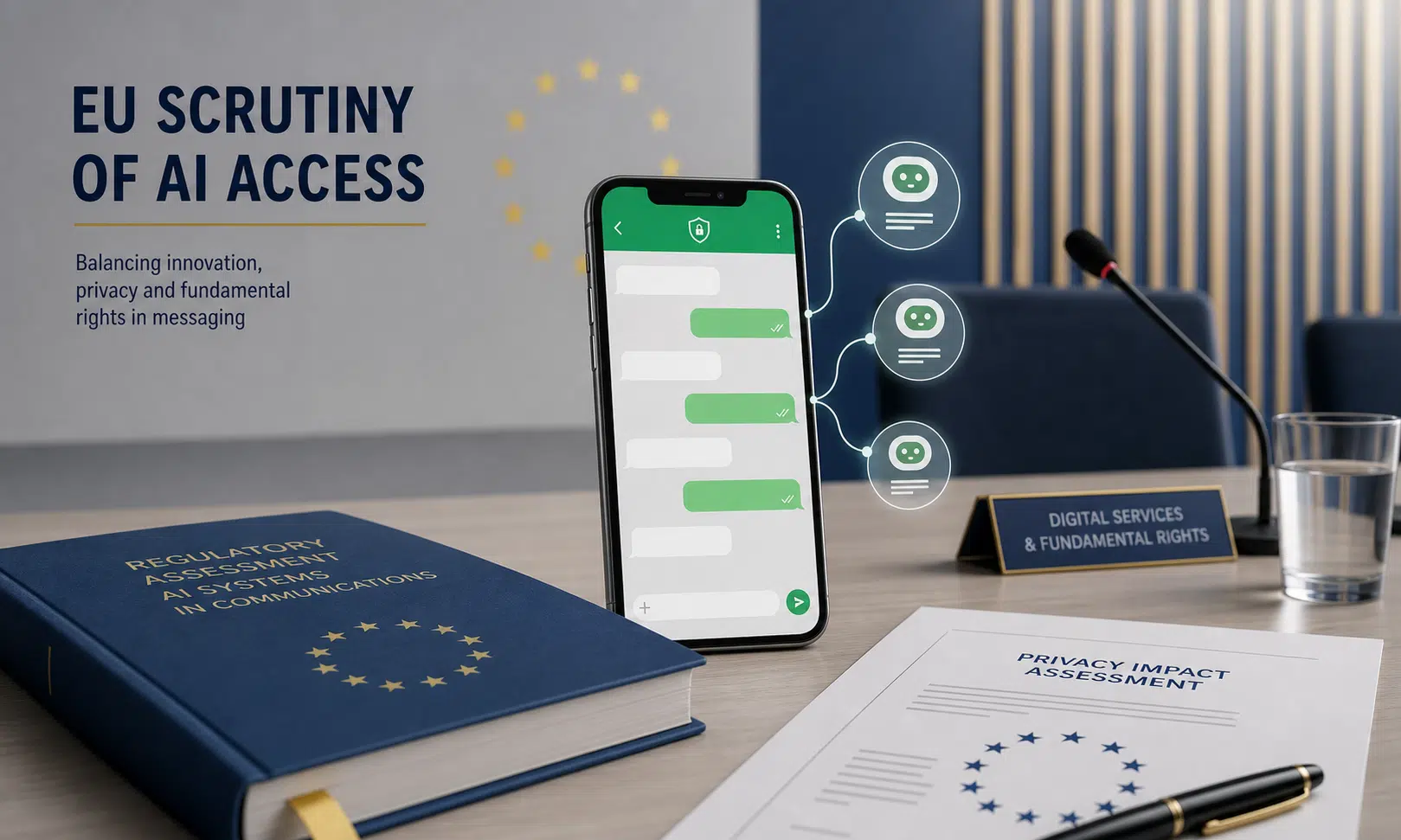

The European Commission has moved to restrict how Meta controls access to AI assistants inside WhatsApp, using an interim antitrust measure while its broader investigation continues.
The order is aimed at third-party general-purpose AI assistants that want to reach users through WhatsApp. Regulators are concerned that Meta’s rules for WhatsApp access could limit rival AI services while giving Meta’s own assistant a built-in advantage.
A firm final outcome has not been reached. The measure is temporary while the investigation proceeds, and Meta has indicated that it intends to challenge the decision.
What the EU is asking Meta to do
The Commission’s interim measure requires Meta to restore access for rival AI assistants under terms regulators consider comparable to the earlier free-access arrangement. The case centers on WhatsApp Business access, which outside services can use to communicate with users through the messaging platform.
The point is not that every WhatsApp user will immediately see a menu of AI assistants. A firm rollout timeline has not been publicly confirmed. The practical effect, if the order is implemented as described, would be to reopen a path for competing AI assistant providers to operate through WhatsApp in Europe.
Why WhatsApp matters in this case
WhatsApp is one of Meta’s most important consumer platforms, and regulators see messaging apps as a potential entry point for everyday AI assistant use. That makes access to WhatsApp commercially important for companies trying to bring AI tools to large audiences.
The Commission’s concern is that a dominant communications platform could shape the AI assistant market by deciding which assistants can operate inside that environment and on what terms. EU technology regulation That concern fits a broader European competition pattern: regulators have repeatedly questioned whether large platform owners use control over key services to favor their own products.
The competition concern
The investigation focuses on whether Meta’s WhatsApp rules unfairly disadvantaged third-party AI providers. Earlier reporting on the case described the Commission as examining whether Meta blocked or restricted outside AI assistants while continuing to promote its own Meta AI service.
Because the investigation is still open, the interim order should not be read as a final legal finding. It is a temporary step meant to prevent possible market harm before the Commission reaches a final decision.
Meta’s response
Meta has pushed back on the order and argues that the Commission is effectively asking it to let large AI companies use a paid WhatsApp Business product for free. The company has also said it plans to appeal.
That appeal means the dispute may continue even as the Commission tries to keep access conditions in place during the investigation. For AI providers, the immediate question is whether WhatsApp remains a practical channel for reaching European users. For Meta, the larger issue is how much control it can keep over AI features and third-party access inside its own messaging platform.