


Nextorage NEM-PAC 2TB SSD Review
The Nextorage NEM-PAC is not the flashiest PCIe 4.0 SSD in its class, but it makes a clear case for itself as a practical drive for PlayStation 5 owners and desktop users who want capable storage without chasing the top of every benchmark chart.
This is a heatsink-equipped NVMe SSD sold in 1TB, 2TB, and 4TB capacities, though the 4TB model may not always be easy to find. The reviewed 2TB version sits in a busy part of the market: fast enough for gaming, fast enough for a primary desktop drive, and priced against several DRAM-less TLC competitors.
Its broad appeal comes from the combination of PCIe 4.0 performance, a PS5-compliant heatsink, Samsung 236-layer TLC flash, and a five-year warranty with a higher-than-usual endurance rating of 750TB written per TB of capacity. That last point is not a guarantee of better real-world reliability, but it does give the NEM-PAC a useful paper advantage over many drives rated at 600TBW per TB.
The short version: the NEM-PAC is a competent, cool-running SSD that performs well in the places most buyers will notice. It is not the most power-efficient option in this class, and it is not the best drive for heavy sustained write work, but it is easy to recommend as a sensible PS5 or desktop upgrade when the price is right.
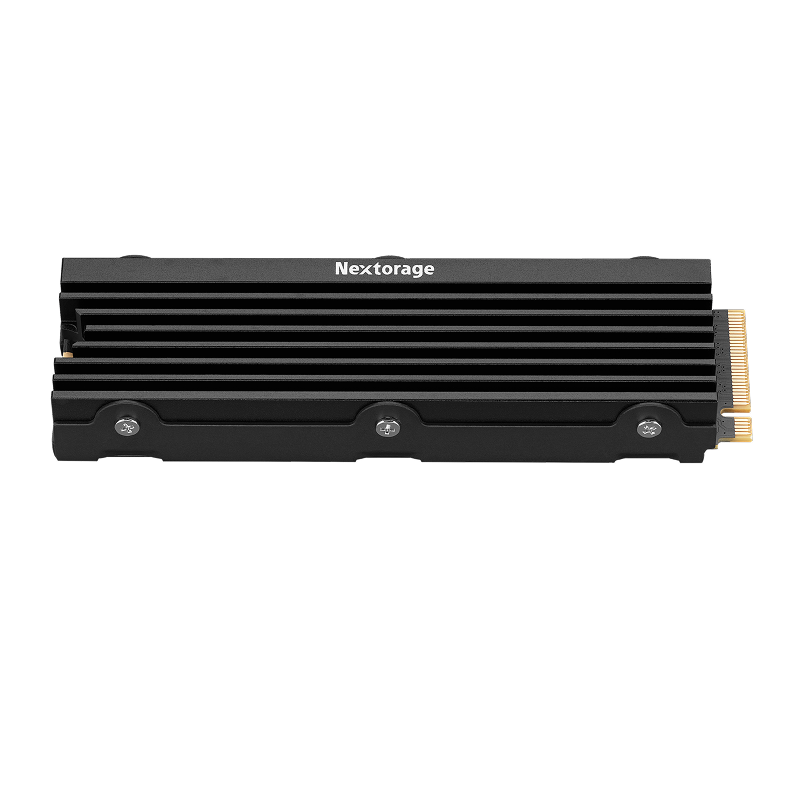
Nextorage NEM-PAC 2TB SSD
The NEM-PAC makes the most sense when it is priced near mainstream Gen 4 drives with heatsinks. It is a good fit for PS5 owners or desktop users who want a ready-to-install SSD with TLC flash and a five-year warranty.
As an Amazon Associate I earn from qualifying purchases.
Specifications and Positioning
The Nextorage NEM-PAC is a PCIe 4.0 NVMe SSD with a preinstalled heatsink. That matters because the PS5 requires an M.2 drive that physically fits inside the console’s expansion bay and can stay cool under gaming workloads. For desktop users, the included heatsink is also useful if the motherboard does not already provide one.
The drive is rated for up to 7,400 MB/s sequential reads and up to 6,400 MB/s sequential writes. Random performance is listed at up to 1,000K read IOPS and 1,050K write IOPS. Those figures place it where a modern high-end DRAM-less PCIe 4.0 SSD should be, at least on paper.
| Feature | Nextorage NEM-PAC |
|---|---|
| Interface | PCIe 4.0 NVMe |
| Capacities | 1TB, 2TB, 4TB |
| Sequential read rating | Up to 7,400 MB/s |
| Sequential write rating | Up to 6,400 MB/s |
| Warranty | Five years |
| Endurance rating | 750TBW per TB of capacity |
| Heatsink | Included |
The hardware is also more interesting than the simple exterior suggests. The 2TB sample uses a four-channel, DRAM-less Silicon Motion SM2268XT2 controller with four NAND packages. The flash was identified as Samsung 236-layer TLC, the same general generation associated with strong random-read behavior in other SSDs.
That combination gives the NEM-PAC a slightly unusual identity. Nextorage has historical ties to Sony’s console ecosystem and was later acquired by Phison, yet this drive uses a Silicon Motion controller and Samsung flash. That does not automatically make the drive better or worse, but it does show how flexible SSD makers have become as NAND supply, pricing, and controller availability shift.
For buyers, the practical question is simpler: does the drive feel fast, stay cool, and make sense at its asking price? In most normal gaming and desktop use, the answer is yes.
Design and PS5 Fit
The NEM-PAC has a plain, functional design. The included heatsink is not decorative, and that is the point. It is there to help the drive stay within a reasonable thermal range in a console or desktop, and the review results suggest it does that job well.
The heatsink should fit the PS5 expansion slot, which is one of the drive’s biggest selling points. Sony recommends PCIe 4.0 drives with at least 5,500 MB/s of sequential read bandwidth for best results, and the NEM-PAC is rated well above that threshold.
Desktop users can also benefit from the heatsink, especially in systems where the M.2 slot sits near a graphics card or lacks strong airflow. Laptop users are the weaker fit here. The heatsink can often be removed by taking out the side screws, but that depends on the system and should be done carefully. If the heatsink is removed and later reused, the thermal pad or adhesive may need replacement.
The 2TB version is single-sided, which can help with compatibility in some systems. Still, anyone buying for a laptop should check physical clearance before assuming the drive will fit.
Gaming Performance
In gaming-oriented storage testing, the NEM-PAC lands in the practical middle of the pack rather than at the very top. That is not a bad place to be. A good PCIe 4.0 SSD does not need to win every chart to make games load quickly or keep a console library responsive.
The key point is that the NEM-PAC avoids the feel of an ultra-budget drive. In a gaming workload, especially one that includes installing large games, recording video, saving progress, and loading assets, the drive shows enough performance headroom to be a sensible choice for demanding users.
That distinction matters more over time than it does in a single clean benchmark run. Many games show only small load-time differences between decent SSDs. Some show almost none. But once a drive is nearly full, has been through repeated large installs and deletions, or is handling a heavily modded game library, weaker drives can lose more of their best-case behavior.
The NEM-PAC is better understood as a drive for buyers who want to avoid that budget-drive compromise. It is not promising magic load-time gains over every other PCIe 4.0 model, but it offers enough consistency and responsiveness to make sense for a serious game library.
Desktop and Application Use
For a primary desktop drive, the NEM-PAC is also a good fit. Trace-based application testing puts more emphasis on everyday work: launching apps, opening files, handling common productivity tasks, and behaving well as a boot or main storage drive.
In that kind of use, the NEM-PAC comes across as solid rather than specialized. The Silicon Motion controller appears well suited to real-world responsiveness, and the drive’s random-read behavior is one of its stronger points. That is more important for daily feel than peak sequential numbers alone.
A single-drive desktop setup is also a reasonable use case. If one SSD holds Windows, applications, games, downloads, and project files, it is more likely to spend time in less-than-perfect conditions. It may be fuller, more fragmented at the file-system level, and more frequently asked to juggle reads and writes. The NEM-PAC has enough all-around performance to handle that role well.
It is worth keeping expectations grounded. This is still a DRAM-less SSD. Modern DRAM-less drives can be very good, especially with Host Memory Buffer support, but they are usually built around cost and efficiency trade-offs. The NEM-PAC feels like a strong mainstream design rather than a no-compromise enthusiast flagship.
File Transfers and Synthetic Tests
File-copy behavior is one area where the NEM-PAC is good but not flawless. In real-world transfer testing with a mixed 50GB dataset, the drive shows strong read performance and very good write performance. Copy performance is less impressive by comparison, though still fast enough that it should not feel slow next to many PCIe 4.0 drives.
That makes the drive a better match for gaming, general desktop use, and normal file handling than for workloads built around constant large internal copies. If your work involves shuffling hundreds of gigabytes at a time on the same drive, there are better options.
Synthetic testing tells a similar story. In ATTO and CrystalDiskMark, the NEM-PAC does not always look lively at low queue depths in sequential workloads. It needs some queue depth before it starts to show its best side. That behavior is not unusual for this controller class, and it does not automatically translate into a poor user experience.
The more important result is its low 4KB QD1 random read latency, which is competitive. Small random reads are a big part of what makes a system feel responsive. Opening applications, loading bits of game data, browsing folders, and handling background system activity all benefit from strong small-block behavior.
So the trade-off is clear: the NEM-PAC may not feel as sharp as the very best drives in every transfer scenario, but it should feel quick in the everyday tasks buyers are most likely to care about.
Sustained Write Performance
Like most consumer SSDs, the NEM-PAC uses an SLC cache to absorb writes at high speed. This cache temporarily writes TLC flash in a faster mode, which allows the drive to deliver much higher short-term write speeds than it can sustain indefinitely.
The NEM-PAC’s cache behavior is generous. In testing, the 2TB drive wrote at more than 6.43 GB/s for over 95 seconds, with an estimated cache size in the 610GB to 615GB range. That is a large cache and more than enough for game installs, ordinary downloads, and most consumer file transfers.
Once the cache is exhausted, the drive drops into direct-to-TLC writing at around 845 MB/s. That is far slower than the initial burst, but still usable. It is not an ideal result for a creator drive or NAS-style workload, but it is acceptable for a gaming and general-use SSD.
The slowest phase comes when the drive has to fold data out of the cache while continuing to accept new writes. In that state, write performance averaged around 552 MB/s. That is better than many QLC-based drives and faster than SATA SSD territory, but it is not strong compared with some competing PCIe 4.0 TLC drives.
This is the main reason the NEM-PAC should not be mistaken for a heavy workstation SSD. If your workload regularly writes very large files for long periods, such as high-bitrate video capture, large media exports, or scratch-disk use, a higher-end drive with stronger sustained performance may be a better buy.
For a PS5, gaming PC, or normal desktop, this limitation is less concerning. Most users will spend far more time inside the fast cache than outside it.

Kingston FURY Renegade 2TB Heatsink SSD
For users who move large files often or want a more performance-focused Gen 4 drive, the FURY Renegade with heatsink is a logical comparison point. It is still appropriate for gaming and PS5 use, but it targets a more enthusiast buyer than the NEM-PAC.
As an Amazon Associate I earn from qualifying purchases.
Power Use and Temperature
Power efficiency is one of the NEM-PAC’s weaker areas. Idle power looks reasonable, but average and peak power draw are higher than expected compared with some nearby competitors. The drive finishes many tasks quickly enough that it still works well in a desktop or console, but it is not the first pick for a laptop where battery life and idle behavior matter more.
The upside is thermal behavior. With its included heatsink, the NEM-PAC runs cool under demanding testing. The drive kept a large amount of thermal headroom, which supports its role as a PS5-ready SSD and a practical desktop option.
That balance suggests Nextorage may have tuned the drive more for consistency and temperature control than for chasing the highest efficiency score. That is an interpretation rather than a confirmed firmware strategy, but it fits the results: good performance where it matters, strong cooling, higher power draw, and a higher endurance rating than the baseline many 2TB-class drives use.
For PS5 buyers, this is a reasonable trade. Console storage sits in a tight bay, and thermal stability matters. For desktop buyers, the same is true if the M.2 slot has poor airflow. For laptop buyers, the included heatsink and power profile make this a less natural match.
How It Compares
The NEM-PAC competes with a crowded set of PCIe 4.0 drives, including models such as the Addlink A93, Biwin Black Opal NV7400, TeamGroup MP44, Inland TN470, WD Black SN7100, Crucial P310, Silicon Power UD90, and Kingston NV3.
Not all of those drives target the same buyer. Some lean harder into budget pricing. Some use QLC flash. Some have newer flash or more efficient controller behavior. Some may also ship with variable hardware depending on supply and production changes, which is a common concern in the lower-cost SSD market.
The NEM-PAC’s advantage is not that it dominates this whole group. It does not. Its advantage is that it offers a clean, buyer-friendly package: a PS5-ready heatsink, TLC flash, good random responsiveness, a five-year warranty, and higher endurance ratings than the usual 600TBW-per-TB baseline.
The Kingston NV3 comparison is especially relevant because that drive often appeals to buyers looking for a cheap PS5 upgrade. A cheaper drive can make sense if the only goal is adding capacity. But the NEM-PAC is the more reassuring pick for someone who wants a drive that feels better rounded and less like a pure budget compromise.
The WD Black SN7100 is a tougher rival on efficiency, while drives like the TeamGroup MP44 can be strong values depending on current pricing and hardware. That makes price the deciding factor. The NEM-PAC is most compelling when it is one of the cheaper heatsink-equipped TLC options in its performance class.
Who Should Buy the Nextorage NEM-PAC?
The NEM-PAC makes the most sense for three groups of buyers.
- PS5 owners who want a compatible PCIe 4.0 SSD with a ready-to-use heatsink.
- Desktop users who want a fast, cool-running main drive without paying flagship prices.
- Gamers who install large titles often and want something better rounded than the cheapest Gen 4 SSDs.
It is less ideal for laptop upgrades, mainly because of the heatsink and power profile. It is also not the best match for heavy sustained write workloads. If you regularly move huge project files, edit large media libraries, or need workstation-grade write consistency, the NEM-PAC’s post-cache performance is a reason to look higher up the stack.
For ordinary gaming and desktop use, though, its weaknesses are manageable. Most users will see the drive at its best: quick game installs, strong load responsiveness, good app behavior, and low temperatures.
Verdict
The Nextorage NEM-PAC 2TB is a good example of a drive that does not need to be exciting to be useful. It has a proper heatsink, PS5-friendly dimensions, strong everyday responsiveness, and enough performance for a gaming PC or console expansion drive.
Its flaws are real. It is not as power-efficient as some peers, and its sustained write behavior trails stronger TLC competitors once the cache is exhausted. Those issues matter most for laptop users and heavy write workloads. They matter much less for PS5 storage, game libraries, and normal desktop use.
The best reason to buy the NEM-PAC is value. If it is priced close to budget Gen 4 drives, it is worth the step up for the heatsink, TLC flash, cool operation, and higher endurance rating. If it is priced near faster premium drives, the case gets weaker.
As a PS5-ready or desktop-ready SSD, the NEM-PAC is a safe, practical choice. It performs well where most buyers will notice, stays cool, and avoids the rougher compromises of the cheapest PCIe 4.0 options.
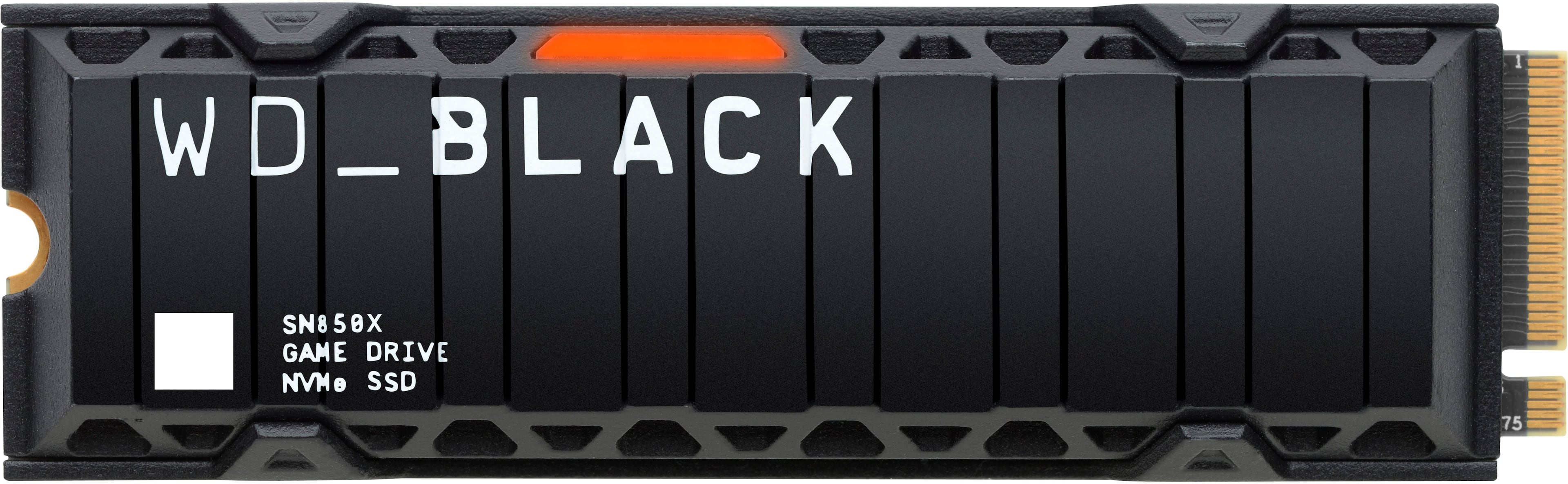
WD Black SN850X 2TB Heatsink SSD
The SN850X is worth checking beside the NEM-PAC when price is close. It is a strong gaming-focused alternative, especially for buyers who already know WD Black drives from PS5 upgrade guides.
As an Amazon Associate I earn from qualifying purchases.