

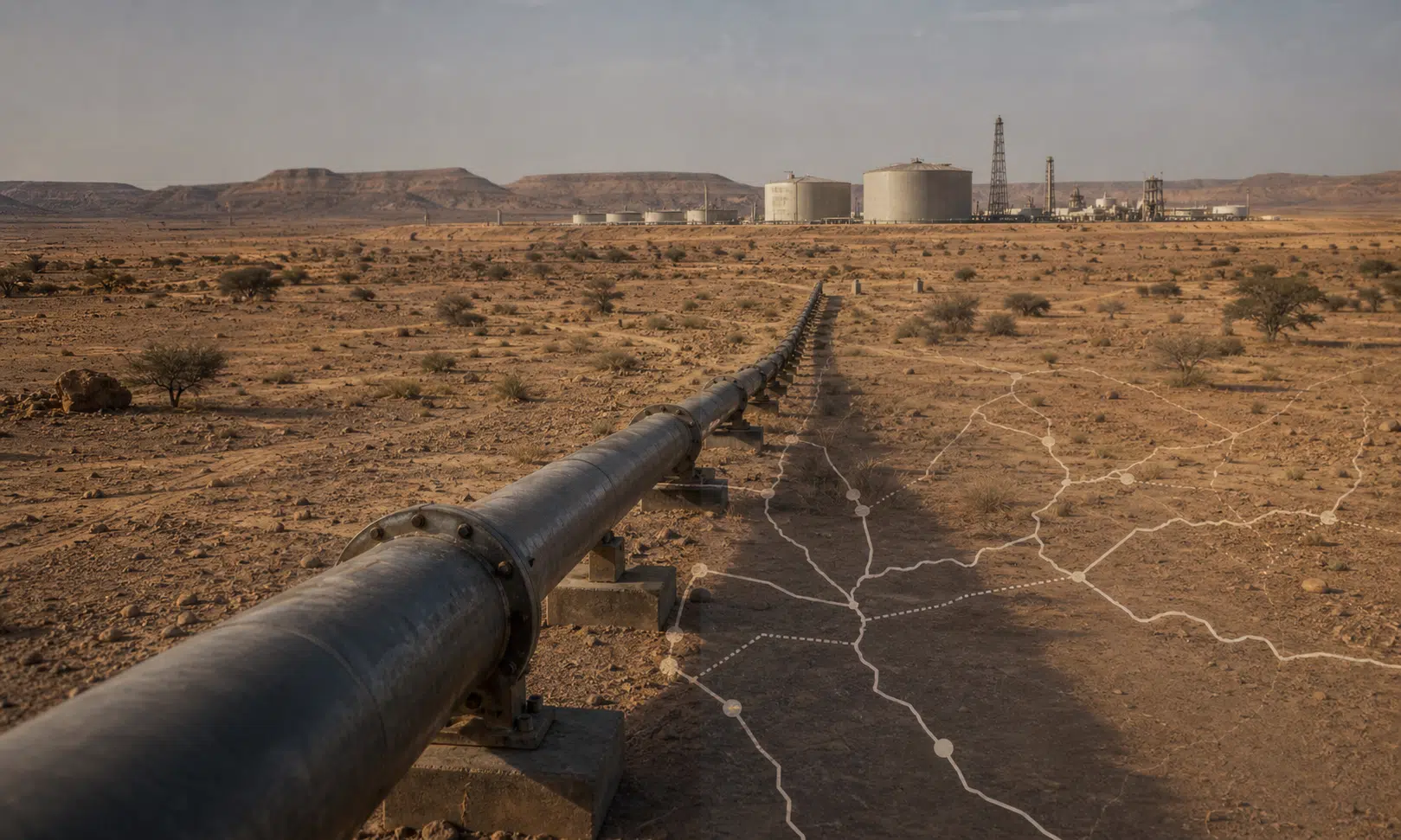

Niger’s military-led government has signed a new package of oil agreements with Chinese energy companies, putting fresh investment behind its petroleum sector while tightening the state’s role in strategic energy infrastructure.
The agreements, valued at about $1 billion, cover the relaunch of the Dinga Deep and Abolo-Yogou oil projects. Nigerien officials say the projects are expected to lift national crude production from roughly 110,000 barrels per day to 145,000 barrels per day by the end of 2029.
For investors and companies watching the Sahel, the deal is not just another upstream announcement. It shows how Niger is trying to keep Chinese financing and technical capacity in place while renegotiating the balance of control, jobs and pipeline economics in its favor.
What Niger Secured In The New Oil Agreements
The signing ceremony was chaired by Prime Minister Ali Mahaman Lamine Zeine, with Niger’s foreign minister, Bakary Yaou Sangare, presenting the deal as a major step for the country’s petroleum industry.
The headline number is the planned $1 billion investment tied to Dinga Deep and Abolo-Yogou. But the commercial details matter just as much as the production target.
Niger says the cost of transporting crude for export through the Niger-Benin pipeline has been reduced from $27 to $15 per barrel. Officials estimate that change could save the country more than $106 million a year.
The government also secured a 45% stake in the West African Oil Pipeline Company, the China National Petroleum Corporation-linked operator of the export pipeline that carries Nigerien crude through neighboring Benin.
| Deal Area | Previous Position | New Position | Why It Matters |
|---|---|---|---|
| Oil projects | Dinga Deep and Abolo-Yogou awaiting relaunch | Relaunch backed by about $1 billion in planned investment | Gives Niger a route to expand crude output |
| Production target | About 110,000 barrels per day | 145,000 barrels per day by the end of 2029 | Sets a measurable growth target for the sector |
| Pipeline transport cost | $27 per barrel | $15 per barrel | Improves export economics if volumes materialize |
| Pipeline ownership | No state stake reported in WAPCO | 45% state stake | Moves Niger closer to direct control over export infrastructure |
| Local participation | Disputes over expatriate staffing and pay gaps | Commitments on jobs, subcontracting and wage alignment | Addresses a central political pressure point |
A Deal Built After Months Of Friction
The agreements come after a difficult period between Niger’s authorities and Chinese oil operators. Niger has been pressing foreign companies in its oil sector over labour practices, local hiring, wage disparities and compliance with national rules.
In 2025, Oil Minister Sahabi Oumarou instructed CNPC and refinery operator SORAZ to end contracts for expatriate employees who had spent more than four years in the country. Niger also expelled senior Chinese oil executives linked to CNPC, the West African Oil Pipeline Company and SORAZ during a dispute over pay and labour conditions.
That background makes the new agreements more significant. Niger has not moved away from China as an energy partner. Instead, it appears to be setting stricter terms for the partnership.
For buyers of market intelligence, risk data or energy-sector advisory services, this is the key distinction: Niger is not closing the door to foreign capital. It is trying to rewrite the operating terms around it.
How The Deal Compares With Niger’s Wider Resource Strategy
Niger’s approach fits a wider pattern across the Alliance of Sahel States, where military-led governments have pushed for greater control over mining, energy and other strategic resources.
That strategy carries both commercial opportunity and political risk. On one side, governments are still looking for capital, infrastructure and technical partners. On the other, operators may face tighter local-content rules, tougher labour scrutiny and pressure to revise legacy arrangements.
For companies assessing Niger, the comparison is no longer simply whether China, Western firms or regional players have access. The more useful question is what each partner is expected to concede in exchange for access.
- For the Nigerien state: the deal offers lower pipeline costs, a direct stake in export infrastructure and a stronger claim that oil revenue will support local jobs.
- For Chinese operators: the agreements protect a major position in Niger’s oil sector, but under closer political and labour oversight.
- For local firms: expanded subcontracting could create openings, provided the commitments move from paper to procurement.
- For outside investors: the deal shows that resource nationalism in Niger is negotiable, but not passive.
What Buyers And Investors Should Watch Next
The most important test is execution. Production growth from 110,000 to 145,000 barrels per day by 2029 depends on project delivery, operating stability, pipeline reliability and the government’s ability to keep relations with Chinese partners workable.
The pipeline-cost reduction is also worth watching. A move from $27 to $15 per barrel would materially improve Niger’s export economics, but the real benefit depends on sustained crude flows and the absence of political or cross-border disruption along the Niger-Benin route.
The local-content commitments are another practical indicator. The agreements include plans to create about 450 jobs for Nigeriens by 2030, expand subcontracting for local companies and reduce pay disparities between expatriate and domestic workers. Those targets will help determine whether the deal eases the labour tensions that preceded it.
For commercial teams, the near-term opportunity is not limited to oil production. Demand could also emerge around workforce localization, compliance support, subcontractor qualification, logistics, security risk analysis and country-risk monitoring.
The Bottom Line
Niger’s new oil agreements with Chinese firms are best read as a controlled reset rather than a clean break or a simple expansion deal.
China remains central to Niger’s oil sector. But Niger is using the moment to claim more influence over pipeline assets, operating costs, employment and the distribution of value from its petroleum industry.
For energy investors, suppliers and advisory firms, the message is practical: Niger still wants partners, but the terms are becoming more state-directed, more local-content focused and more politically exposed than before.