

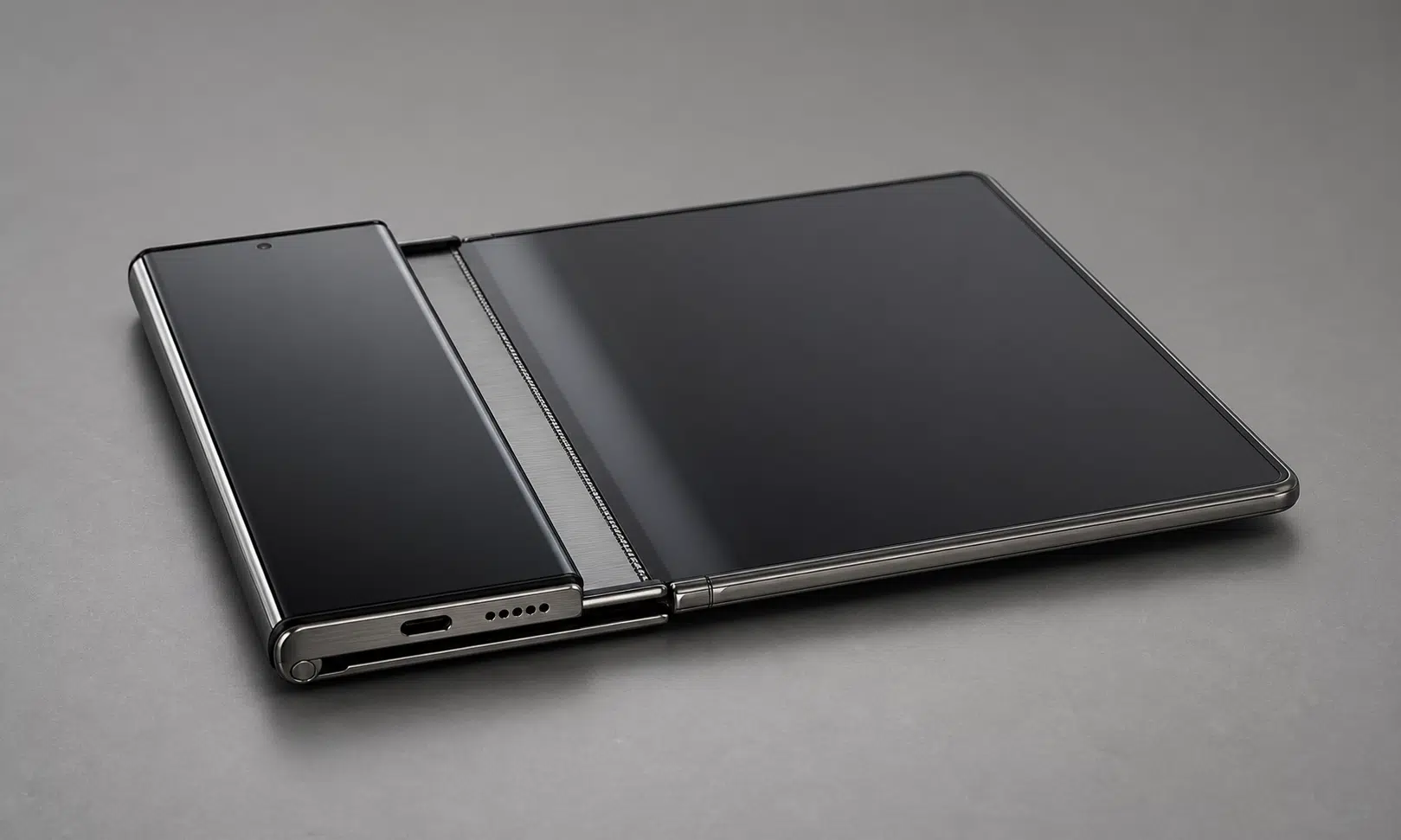

The Samsung Galaxy Z Roll 5G has been circulating in rumor form as a possible look at where Samsung could take expandable phones after foldables. The idea is simple enough to understand: instead of opening on a hinge, the phone would use a rollable display that extends sideways, giving users a larger screen when needed and a smaller device when it is retracted.
That concept fits with Samsung’s broader interest in flexible display technology, but the specific Galaxy Z Roll 5G claims being shared should be handled carefully. Several details, including the name, final design, launch timing, camera hardware and battery size, have not been independently verified. At this stage, the safest way to read the information is as a mix of patent-related speculation, concept discussion and unconfirmed leak material rather than a confirmed Samsung product sheet.
What the Galaxy Z Roll 5G rumor is claiming
The central claim is that Samsung is exploring a rollable phone with a display that can expand from a normal smartphone-like size into something closer to a small tablet. In practical terms, that would aim to solve one of the main compromises of foldable phones: users want more screen area, but they also want a device that still fits in a pocket.
A rollable design could, in theory, avoid the visible crease associated with many foldable displays because the screen would slide or unroll rather than bend around a fixed hinge. That does not mean a commercial model would be crease-free, durable or ready for sale. It only means the design direction is different from a book-style foldable.
The rumored feature list also mentions a punch-hole selfie camera, a triple rear camera system and a motorized mechanism for extending the screen. Those details remain unconfirmed, so they should not be treated as final specifications. They do, however, show the kind of product people expect Samsung to be considering: a phone that can work as a handset most of the time, then expand for video, multitasking, reading, editing documents or using several apps side by side.
The 12.4-inch display claim
One of the most attention-grabbing claims is a 12.4-inch rollable Dynamic AMOLED 2X display. The source material also refers to a Samsung Flex Duet-style concept that expands from 8.1 inches to 12.4 inches. That size would put the expanded device near tablet territory, at least in screen area.
This is where the distinction between a concept and a shipping phone matters. A 12.4-inch expandable display sounds useful for productivity, gaming and media, but it would also raise difficult engineering questions. A phone-sized body would need room for the rolled display, a sliding frame, internal motors or rails, a battery large enough to support the larger panel, and enough structural strength to survive daily use.
For buyers, the important point is not just whether Samsung can show a rollable screen. It is whether the final device, if it ever ships, can handle normal wear, dust, pocket pressure, drops and repeated expansion cycles without becoming fragile or overly thick. None of those practical details are settled by the rumor itself.
Health sensor and holographic display ideas remain speculative
The article source also discusses Sensor OLED technology, with health-monitoring sensors built into the display. The claimed use cases include heart rate, blood pressure and stress measurements through the screen. Samsung has shown interest in health features across its device ecosystem, but the specific claim that a Galaxy Z Roll 5G would include these display-based measurements has not been independently verified.
There is a similar issue with the holographic display claims. The source describes a possible system using eye tracking and a holographic layer to create depth effects, letting users view objects from different angles by tilting the device. That would be a major interface change if implemented well, especially for gaming, virtual meetings or shopping previews. For now, it should be treated as a concept-level possibility rather than a confirmed Galaxy Z Roll feature.
The same caution applies to the claim of a 500 PPI display tied to these advanced functions. It is a plausible-sounding number for a premium mobile screen, but it should not be presented as a confirmed specification for an unreleased device.
The camera and chip claims are especially uncertain
Some of the rumored specifications go far beyond typical early product discussion. The source lists a Qualcomm Snapdragon 8 Elite Gen 6 Pro, a dedicated display-scaling engine, up to 1TB of UFS 4.1 storage, a 324MP ISOCELL HR1 main sensor, a 50MP periscope telephoto camera with 10x optical zoom and 100x Space Zoom, plus a 50MP ultra-wide camera with macro support.
Those details should be treated with strong caution. A 324MP main camera and a named future chipset are not confirmed Galaxy Z Roll 5G specifications. They may be speculative, concept-driven or based on unverified leak material. A careful reading should separate the broad product idea, a rollable Samsung phone, from the exact numbers attached to it.
| Rumored area | What is being claimed | How to read it |
|---|---|---|
| Display | Expandable rollable screen up to 12.4 inches | Possible concept direction, not a confirmed retail spec |
| Camera | 324MP main sensor with additional 50MP cameras | Unverified and should not be treated as final hardware |
| Performance | Future Snapdragon chip and display-scaling engine | Speculative until Samsung or Qualcomm confirms details |
| Battery | 8,000 mAh dual-cell silicon-anode battery | Unconfirmed and tied to broader design assumptions |
Battery, durability and software would decide whether it works
The source also mentions an 8,000 mAh dual-cell silicon-anode battery, IP68-style protection, S Pen support while the display is moving, desktop-class DeX support, and an AI privacy shield designed to reduce side viewing. These are all buyer-relevant ideas, but none should be treated as confirmed features of a shipping Galaxy Z Roll 5G.
If Samsung does release a rollable phone, the real test will be less about the most dramatic spec and more about everyday reliability. A large expanding display needs software that resizes apps cleanly as the panel moves. The hinge-free mechanism still needs to feel sturdy. S Pen support would need consistent digitizer behavior across the display area. Battery life would need to hold up when the phone is used in its expanded mode for long sessions.
That is why the software claims matter almost as much as the hardware claims. A dynamic taskbar, smooth app scaling and DeX support would make sense for a larger mobile display, but they are not guaranteed just because the screen expands. Samsung would need to make the transition feel natural enough that users do not have to think about whether an app is ready for the larger layout.
What to take away from the Galaxy Z Roll 5G reports
The Galaxy Z Roll 5G rumor is useful as a sign of where high-end mobile design may be heading. Rollable screens could offer a cleaner alternative to foldables if manufacturers can solve durability, thickness, battery life and app-scaling problems. A phone that expands into a tablet-like workspace would have obvious appeal for people who watch video, edit documents, draw, work in split-screen apps or travel with fewer devices.
But the specific claims around the Galaxy Z Roll 5G need careful treatment. The 12.4-inch screen, 324MP camera, health-sensing OLED layer, holographic display, large silicon-anode battery and other headline features are not confirmed product facts. They are better understood as unverified claims around a possible future Samsung design.
For now, the most grounded conclusion is that Samsung’s display work continues to make rollable phones feel technically plausible, but the Galaxy Z Roll 5G itself remains an unconfirmed product. Anyone following the rumor should watch for official Samsung information, regulatory filings, credible supply-chain reporting or hands-on prototype evidence before treating the leaked spec list as real.