

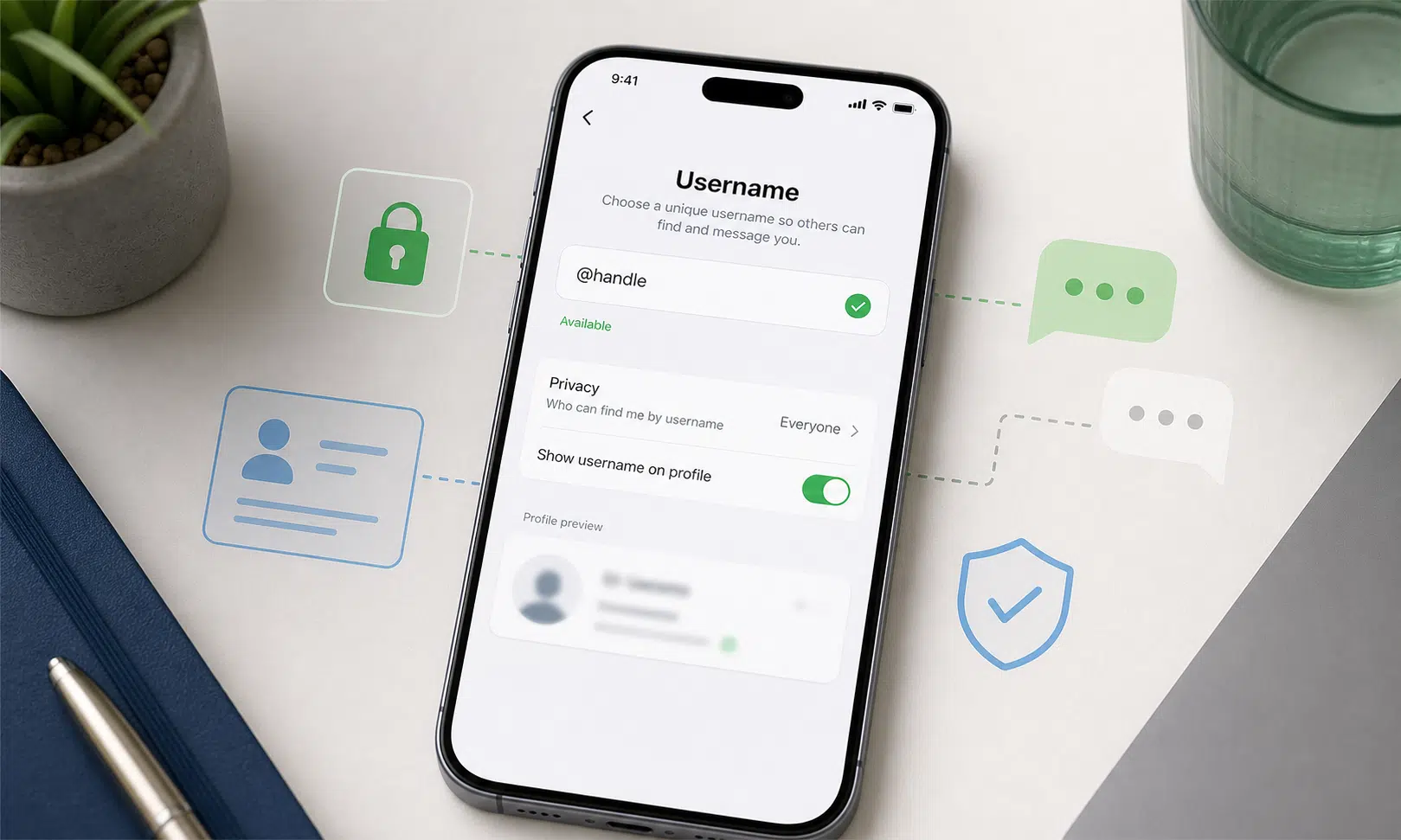

WhatsApp is preparing a username system that could make one of the app’s most awkward social rituals a little less permanent: giving someone your phone number just so they can message you.
The idea is straightforward. Instead of requiring a phone number for every new connection, WhatsApp usernames would give people another identifier to share. That matters because phone numbers tend to follow people across banking, accounts, work, family, and countless other parts of daily life. A username is easier to control, easier to change, and less revealing.
WhatsApp username reservations are the first step in that shift. The reservation process is designed to let people pick a handle before the broader username feature fully launches. A firm launch date has not been publicly confirmed, so this should be treated as an early setup move rather than a complete replacement for phone-number-based contact.
Why WhatsApp wants usernames
WhatsApp has always been built around phone numbers, which made the app simple to start using but less flexible as it grew into a place for family chats, school groups, neighborhood coordination, work messages, creators, small businesses, and customer conversations.
That model can feel too personal in situations where the relationship is new or practical rather than close. A classmate, event contact, parent group, local seller, or community organizer may need a way to reach you, but that does not always mean they need your phone number.
Usernames are meant to create more distance between identity and contact. If the feature works as described, someone could begin a WhatsApp conversation through a username without immediately seeing the other person’s phone number, as long as the username option is enabled. That would not make WhatsApp anonymous, and it would not remove the phone number from the account itself, but it could reduce how often numbers are exposed during first-time chats.
How username reservations work
The reservation flow is meant to be available from the latest version of WhatsApp by going to Settings, then Account, then Username. From there, users can choose a handle to save for later use when usernames become available in their region.
The early reservation window is partly about scarcity. WhatsApp has a very large user base, and common names, business names, creator handles, and short usernames can overlap quickly. Reserving a username ahead of the wider feature rollout gives people a better chance of keeping a name that matches how they are known elsewhere.
For creators, small businesses, and organizations, consistency may be especially important. WhatsApp has described an option for some users to claim an existing Instagram or Facebook username on WhatsApp, which would make sense for people who already use Meta’s other platforms as part of their public identity. Availability and eligibility may vary, so it is not something every user should assume will be guaranteed.
This is not meant to be a public directory
The privacy framing matters because usernames can be implemented in very different ways. On some platforms, a username makes a person more searchable. WhatsApp’s planned version appears to be more closed: people would need to know the exact username before starting a first conversation, rather than browsing a directory or relying on suggestions.
WhatsApp has also outlined an optional username key, which would add another piece of information someone needs before they can message a user through a username. That extra layer is aimed at limiting unwanted contact, especially for people who want a username for convenience but do not want it to become a public inbox.
That balance will be important. A username system can make WhatsApp easier to share in low-trust situations, but it can also create new ways for strangers to try reaching people. Requiring the exact username, and optionally a key, is a sign that WhatsApp is trying to avoid turning usernames into a discovery feature.
What users should know before choosing one
A good WhatsApp username should probably be memorable enough to share, but not so obvious that strangers can easily guess it. That is a different calculation from choosing a public social media handle, where discoverability is often the point.
Users who want a more private setup may want to avoid using a full legal name, phone-number fragments, birthdays, or other details that make the handle easy to connect to accounts elsewhere. People who use WhatsApp for public-facing work may make the opposite choice and pick a handle that matches their Instagram, Facebook, business, or creator identity.
The feature is also not a reason to treat usernames as a full privacy shield. WhatsApp accounts are still tied to phone numbers behind the scenes, and the practical privacy benefit depends on how the rollout works, which settings are enabled, and how people share their usernames.
For now, the main change is that WhatsApp is moving toward a more flexible identity layer. Phone numbers have made the app universal and easy to use, but they are a blunt tool for modern messaging. Usernames could give users a middle ground: reachable when they want to be, without handing over one of the most persistent identifiers they have.