


In 2017, Palmer Luckey hit a reset button.
After leaving Facebook amid the fallout from a political-donation controversy tied to the Oculus founder, Luckey wasn’t looking to build another consumer gadget. He was increasingly convinced something bigger was breaking: the U.S. defense innovation pipeline.
Silicon Valley, in his view, was drifting away from national security work. Traditional defense primes, meanwhile, were still operating on timelines that felt out of sync with modern software and autonomy.
That gap became the thesis for Anduril Industries, the defense tech startup Luckey co-founded in 2017 alongside a group of veterans from the tech-and-defense overlap, including Trae Stephens and Brian Schimpf. The idea was straightforward and blunt: build autonomous systems and the software to control them, and ship them like a modern technology company—not a decade-long procurement project.
From early prototypes to real-world deployments
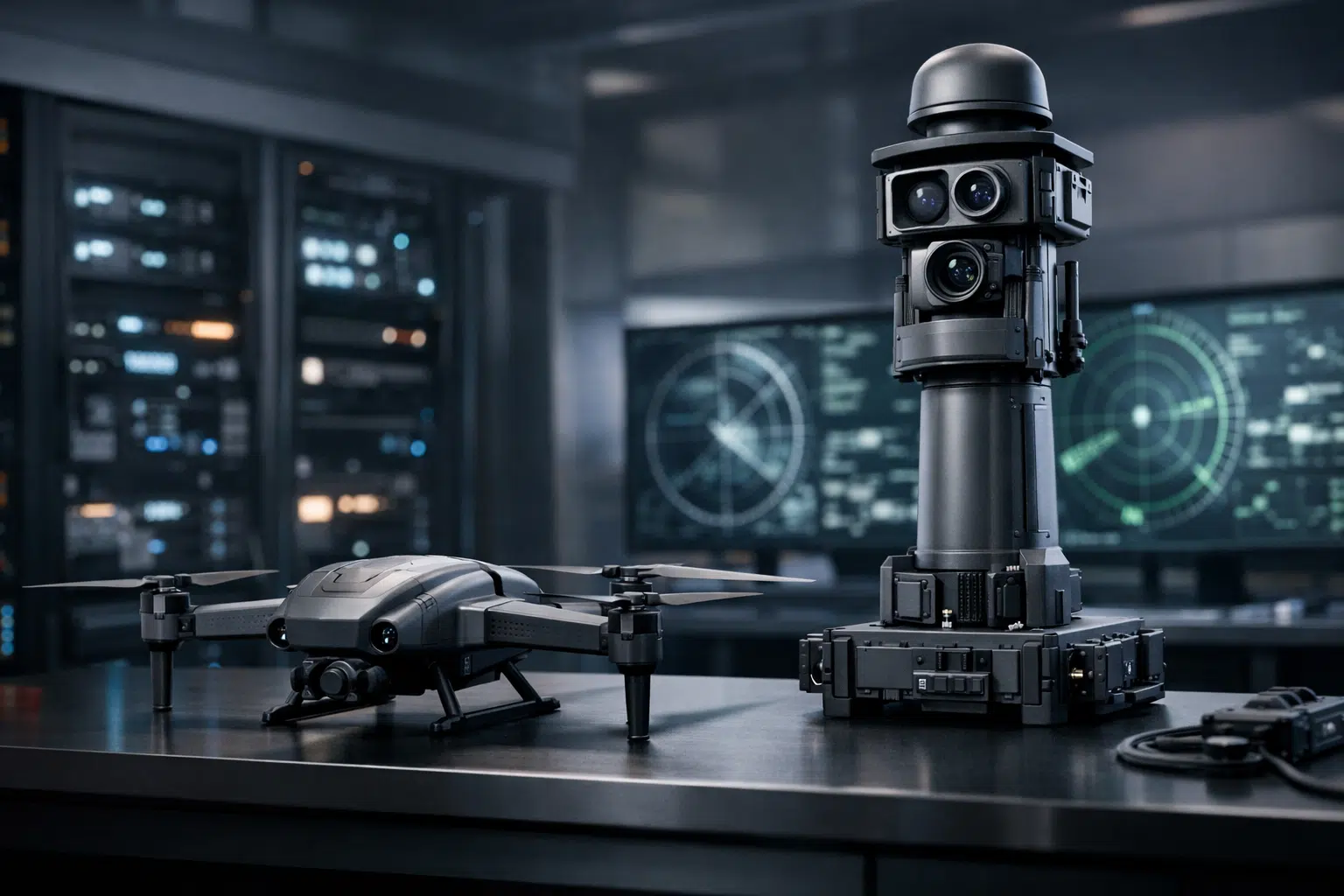
Anduril’s first chapter wasn’t glamorous. Its early focus centered on autonomous surveillance—systems designed to watch remote environments continuously, flag anomalies, and reduce the need for always-on human staffing.
A key early proof point came at the U.S. southern border. U.S. Customs and Border Protection piloted Anduril’s autonomous surveillance towers in early 2018, starting with a small deployment in the San Diego sector. From there, deployments expanded as the program matured, giving Anduril one of the most visible real-world testbeds an early-stage defense company could ask for.
That kind of validation matters in defense. Once a system works in messy, real environments—and the customer is willing to keep buying—skepticism fades fast.
Venture-backed defense, built like software
The “bootstrapped garage startup” myth doesn’t quite fit here. Anduril wasn’t a slow-burn hobby project; it was venture-backed early, with Founders Fund as a prominent supporter. The company’s growth has tracked the broader investor shift toward defense tech—especially as autonomy, drones, and counter-drone systems moved from edge-case concepts to battlefield necessities.
In 2019, Anduril raised $120 million, accelerating hiring and expanding beyond surveillance towers into a wider portfolio: counter-drone systems, autonomous aerial platforms, and other sensor-and-autonomy-driven tools designed to be deployed quickly.
By 2021, investors valued Anduril at about $4.6 billion—an eye-catching number for a company operating in one of the most tradition-heavy industries in the world.
A war-driven wake-up call
Russia’s full-scale invasion of Ukraine in 2022 didn’t create the demand for autonomy and drones, but it exposed how urgent that demand had become. The conflict highlighted how fast low-cost unmanned systems can reshape tactics, and how quickly nations can burn through inventory when a war drags on.
Anduril has been linked to systems and programs connected to Ukraine, and the broader shift pushed the entire defense ecosystem—startups included—to move faster, scale manufacturing, and shorten iteration cycles.
Where Anduril stands now
As of June 2025, Anduril’s valuation has been reported around $30.5 billion following a major fundraising round. Headcount has also surged, with public reporting putting the company at 3,500+ employees (as of 2024).
Luckey’s pitch hasn’t really changed. The company still frames its mission around ensuring the U.S. and its allies can field advanced technology at real speed—and at scale—without waiting for a “next decade” procurement cycle.
Lessons for founders
Lesson 1: Make your company an engineer’s playground
Defense work can sound slow from the outside. Anduril sells the opposite: build fast, test fast, iterate fast. For the right kind of engineer, the promise isn’t just compensation—it’s velocity.
Lesson 2: Turn your weakness into a strength
Being new in defense is usually a liability. Anduril treated it as permission to ignore legacy processes, ship prototypes quickly, and prove value in the field rather than in PowerPoint decks.
Lesson 3: Build a product ecosystem, not single products
Anduril’s strategy leans on a connected platform approach—anchored by its Lattice software—so customers get more value as they add more systems. That kind of integration doesn’t just improve capability; it also raises switching costs.
Lesson 4: Build a brand in a brandless industry
Most defense contractors are invisible to the public by design. Anduril isn’t. A recognizable brand helps with recruiting, partnership conversations, and mindshare—especially when the market is getting crowded with “defense tech” startups.
Lesson 5: Use alternative funding to move faster
Traditional defense R&D is often tied to government budgeting cycles. Venture funding can compress timelines and enable bigger bets sooner—if the company can execute and scale responsibly once the prototypes work.