



OpenAI CEO Sam Altman says the way people use ChatGPT increasingly depends on age, with younger users treating the chatbot less like a search box and more like a standing assistant for school, work, relationships, and day-to-day decisions.
Speaking at Sequoia Capital’s AI Ascent event, Altman described a generational split in ChatGPT habits. Older users, he said, often use it as a replacement for Google. People in their 20s and 30s tend to use it as something closer to a personal adviser. College students, in his view, may be going even further, building ChatGPT into the center of how they organize information and make choices.
His description was deliberately broad, but it points to a real shift in how consumer AI is being used. ChatGPT is no longer just a place to ask one-off questions. For many users, especially younger ones, it is becoming a place where personal context, saved prompts, school work, career questions, and private decision-making all meet.
Altman’s generational map of ChatGPT use
Altman framed the difference in simple terms: older users often treat ChatGPT like a better search engine, younger adults use it for guidance, and college students use it more like an operating layer for their lives.
That does not mean every user fits neatly into one group. Plenty of older professionals use advanced workflows, and plenty of students use ChatGPT only for quick answers. But Altman’s point was that younger users appear more willing to make the tool persistent, personal, and deeply embedded in their daily routines.
| User group | How Altman described the pattern | What that looks like in practice |
|---|---|---|
| Older users | ChatGPT as a Google replacement | Asking questions, looking up explanations, comparing options, and summarizing topics |
| People in their 20s and 30s | ChatGPT as a life adviser | Discussing work, relationships, money, decisions, communication, and personal plans |
| College students | ChatGPT as an operating system | Connecting ideas, files, prompts, classwork, planning, and recurring workflows |
The college-student behavior is the most striking part of Altman’s remarks. He said younger users have developed complicated setups, sometimes connecting ChatGPT to files and relying on saved or memorized prompts. In other words, they are not only asking questions. They are designing repeatable systems around the tool.
That distinction matters for businesses, educators, and anyone selling software into the AI market. A user who treats ChatGPT like search may want fast answers. A user who treats it like an adviser wants continuity and judgment. A user who treats it like an operating system wants integrations, memory, workflow control, and reliability.
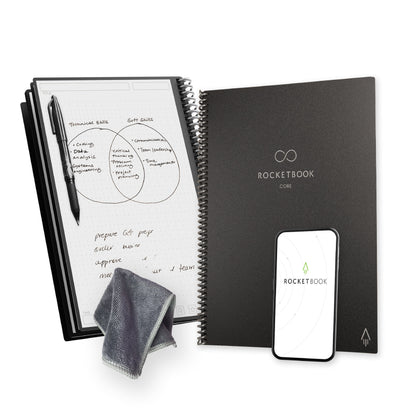
Rocketbook Core Smart Reusable Notebook
For students who still think best on paper, a reusable smart notebook can bridge handwritten planning with digital organization. It fits naturally with ChatGPT workflows where class notes, project ideas, and prompts need to be captured and revisited.
As an Amazon Associate I earn from qualifying purchases.
Why college students may be ahead of the curve
OpenAI’s own reporting in 2025 said more than one-third of 18-to-24-year-olds in the United States use ChatGPT, with a meaningful share of their messages tied to learning and school work. That makes college-aged users one of the clearest groups to watch if you want to understand where mainstream AI behavior may be headed.
Students have obvious reasons to experiment. They write papers, study unfamiliar material, plan projects, prepare for interviews, summarize readings, and practice difficult conversations. Those are exactly the kinds of tasks where a conversational AI tool feels useful because the user can revise, push back, ask for alternatives, or keep narrowing the answer until it fits.
But Altman’s comments go beyond school assignments. He suggested that some college students ask ChatGPT before making life decisions. That is a much bigger claim than using AI to brainstorm a paper topic or polish an email. It places the product in a role that used to be filled by friends, parents, mentors, therapists, advisers, or private reflection.
This is where the promise and the risk start to overlap. ChatGPT can help a user slow down, compare options, draft a message, or see a problem from another angle. It can also sound confident when it is wrong, miss emotional nuance, or give advice without understanding the full human stakes.
The role of memory and personal context
Part of the appeal for younger users is continuity. ChatGPT can retain certain memories and context when the feature is enabled, and users can also bring their own context into a conversation by pasting notes, describing relationships, or uploading relevant material where supported.
Altman described younger users as giving ChatGPT extensive context about the people in their lives and prior conversations. That should be read as his characterization of user behavior, not as an independently verified measurement of what every young user shares or what the system knows. The important point is more practical: the more context a user gives an AI tool, the more personal and adviser-like the responses can feel.
That can be useful. A student planning a semester can ask ChatGPT to remember their course load, work schedule, and goals. A job seeker can use it to keep track of target roles, resume versions, and interview notes. Someone preparing for a sensitive conversation can test different phrasings and think through likely reactions.
It also creates a privacy and judgment problem. People may disclose details about friends, partners, classmates, health, money, or family conflicts because the interaction feels private and helpful. Before doing that, users should understand what data settings are enabled, what the product can remember, and whether a topic belongs in a professional or confidential setting instead.

Yubico Security Key C NFC
If ChatGPT, cloud notes, email, and school files are part of the same workflow, account security matters. A USB-C/NFC security key can add stronger sign-in protection for supported services without turning the article into a generic gadget roundup.
As an Amazon Associate I earn from qualifying purchases.
When ChatGPT advice is useful, and when it is not
Reports and user stories show people turning to ChatGPT for relationship advice, business questions, medical questions, career planning, therapy-like conversations, and difficult personal decisions. That range is exactly why experts remain divided on how much trust users should place in the tool.
For low-stakes problems, ChatGPT can be helpful. It can help organize a messy thought process, list trade-offs, draft a message, or ask questions a thoughtful person might ask. It is often useful as a rehearsal space before a meeting, negotiation, breakup, family conversation, or job interview.
For high-stakes decisions, it should not be treated as the final authority. Medical symptoms, legal exposure, mental health crises, financial commitments, immigration issues, safety concerns, and major relationship decisions all require more than a fluent answer. In those situations, ChatGPT may be useful for preparing questions, summarizing documents, or clarifying what to ask a qualified professional, but it should not replace one.
A practical way to use ChatGPT as an adviser is to keep it in a supporting role:
- Ask it to identify trade-offs rather than choose for you.
- Ask what information is missing before making a decision.
- Ask for several possible interpretations, not one definitive answer.
- Use it to draft language, then revise the wording yourself.
- Check important claims against trusted sources or qualified experts.
That kind of use is less glamorous than handing over a decision, but it is much more reliable. The tool is strongest when it helps a person think, not when it becomes a substitute for thinking.
What this means for the AI market
Altman’s comments also carry a commercial signal. If younger users are treating ChatGPT as a life adviser or operating system, the competitive battle is not only about which chatbot gives the best answer to a single question. It is about which product becomes the place where users store context, build habits, connect tools, and return every day.
That helps explain why memory, file access, voice features, app integrations, and agent-like workflows matter. A chatbot that only answers questions competes with search. A chatbot that remembers preferences, drafts documents, helps with planning, and fits into daily routines competes with productivity software, tutoring tools, note apps, coaching services, and parts of the traditional web.
OpenAI has become one of the most closely watched private technology companies in the world. After a major 2026 funding round, the company said it had reached an $852 billion post-money valuation. That number underscores how much investors are betting that AI assistants will become central to consumer and business behavior.
Still, the product’s cultural role may be just as important as its valuation. If college students normalize asking an AI system for help with studying, planning, communication, and personal decisions, those habits could follow them into the workplace. Employers may soon see new graduates who expect AI to be built into every knowledge-work process, from writing and research to project management and internal communication.
The real question is trust
Altman compared the adoption gap to the early smartphone era, when younger people seemed to understand the new interface faster than older generations. That comparison is useful because smartphones did not simply give people a new tool. They changed habits, expectations, attention, communication, and commerce.
ChatGPT may be following a similar path for some users. The question is not whether people will ask AI systems for advice. They already do. The question is how much authority those systems should have in decisions that affect relationships, health, careers, money, and identity.
For now, the safest answer is a balanced one. ChatGPT can be a useful adviser when the user remains in charge, brings judgment to the response, and knows when to seek human expertise. It becomes riskier when its fluency is mistaken for wisdom or when convenience replaces outside perspective.
Younger users may be showing where AI behavior is going next. Whether that future is helpful or harmful depends less on whether people use ChatGPT, and more on whether they understand what kind of adviser it really is.