

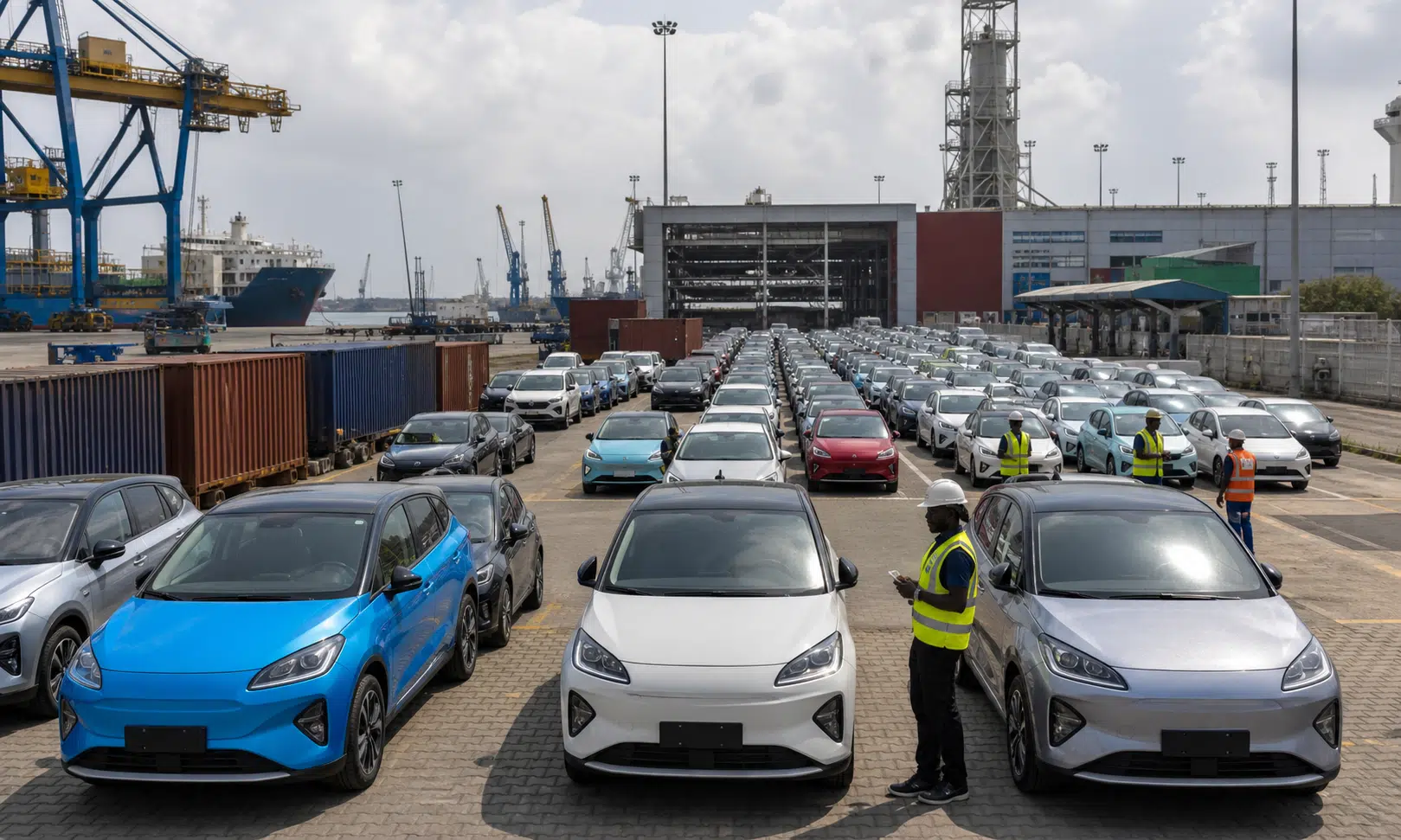

A new bipartisan push in the United States to restrict Chinese-made vehicles and auto parts could have consequences well beyond the U.S. market. For Africa’s developing automotive industry, the concern is straightforward: if Chinese automakers face a harder path into the United States, they may put more energy into markets where demand is rising and local production is still relatively young.
The proposed legislation, introduced by Republican Congressman John Moolenaar and Democratic Congresswoman Debbie Dingell, seeks to block Chinese vehicles from U.S. roads on national security and economic grounds. The wider political pressure around Chinese automakers has also grown, with U.S. lawmakers urging tougher action before high-level talks with China.
For African governments and manufacturers, the issue is not only about trade politics in Washington. It is about whether a larger flow of competitively priced Chinese vehicles could make cars more affordable for buyers while putting new pressure on local assembly plants that are still trying to scale.
Why Africa Is Exposed to the Shift
Africa remains a small player in global vehicle manufacturing despite its large and growing population. The continent accounts for less than 2% of global vehicle production, while many countries continue to rely heavily on imported vehicles.
Used vehicles make up a large share of automotive imports across the continent. That has helped keep mobility within reach for many households and small businesses, but it has also made it harder for local assembly industries to build predictable demand. When imported cars are cheaper and widely available, locally assembled vehicles often struggle to compete on price.
That tension is now central to the debate. If Chinese automakers are pushed away from the U.S. market, Africa may look more attractive as a growth region. Buyers could see more models, more financing offers, and more electric vehicle options. Local manufacturers, however, could face tougher competition before their supply chains, skills base, and supplier networks are fully developed.
Chinese Brands Are Already Looking Beyond Traditional Markets
Chinese automakers have been building visibility across African markets for several years. Brands including BYD, Chery, Great Wall Motor, and SAIC Motor have been associated with expanding dealership activity, assembly discussions, and electric vehicle plans in parts of the continent, though the scale and pace vary by country and are not always independently confirmed.
The appeal is clear. Many African markets have rising transport needs, young populations, and governments that want industrial jobs. At the same time, vehicle ownership remains relatively low in many countries, creating room for long-term demand growth.
For commercial buyers, ride-hailing operators, logistics firms, and public transport fleets, Chinese vehicles may offer a practical price advantage. Lower-cost cars, pickups, buses, and electric vehicles could be attractive where fuel costs, financing constraints, and maintenance budgets shape buying decisions.

Basic OBD II Vehicle Diagnostic Scanner
A basic OBD II scanner can help buyers or small fleet operators read engine codes before committing to a used or imported vehicle. It is most useful as a screening tool alongside a professional inspection.
As an Amazon Associate I earn from qualifying purchases.
But affordability is only part of the calculation. Buyers also need reliable spare parts, trained mechanics, battery support for EVs, and clear warranty coverage. A cheaper vehicle can become expensive if the after-sales network is thin or if parts take too long to arrive.
Local Assembly Ambitions Could Face a Harder Test
Several African countries are trying to build stronger domestic automotive ecosystems. South Africa remains the continent’s most established manufacturing hub, with annual production above 600,000 vehicles and a long-standing presence from major global manufacturers including Toyota, Ford, BMW, and Mercedes-Benz.
Morocco has also become an important export-focused manufacturing base, supported by plants operated by Renault and Stellantis. Reported production figures often place the country above 500,000 vehicles a year, although exact annual output varies by source and period.
Other countries, including Nigeria, Ghana, Kenya, Rwanda, and Egypt, have pursued assembly initiatives aimed at creating jobs, reducing import dependence, and building supplier capacity. These programs often rely on a careful balance: governments want affordable cars for consumers, but they also want enough protection for local manufacturers to survive the early stages.
A sudden increase in redirected Chinese exports could complicate that balance. Local assemblers already face familiar constraints, including high production costs, limited access to finance, small domestic markets, inconsistent policy support, and weak component supply chains.
If imported vehicles arrive at prices local plants cannot match, policy makers may come under pressure to respond with stronger tariffs, local-content rules, or import restrictions. Those measures can support industrial development, but they can also raise costs for buyers if they are applied too bluntly.
What This Means for Buyers and Policy Makers
For car buyers, the near-term effect could be more choice. A wider range of Chinese-made vehicles may improve competition in segments where prices have climbed beyond the reach of many households and small businesses.
For governments, the question is more difficult. Cheap imports can solve an affordability problem today while weakening the case for local manufacturing tomorrow. Heavy protection can support factories but may leave consumers paying more for fewer options.
The most practical path is likely to differ by market. Countries with established assembly capacity may push harder for local-content requirements and supplier development. Markets with limited production may focus first on safety standards, emissions rules, spare-parts availability, and consumer protection.
Electric vehicles add another layer. Chinese companies are strong in EV production, and Africa’s EV market is still early. That creates an opening for fleet operators and public transport projects, but charging infrastructure, grid reliability, battery servicing, and resale values remain major concerns.
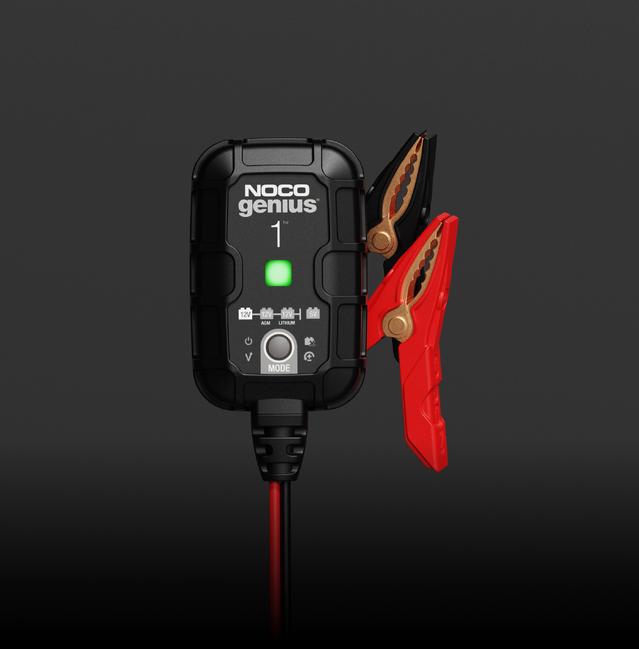
Compact Smart Battery Maintainer
A smart battery maintainer can help keep 12-volt batteries charged when vehicles are stored, awaiting parts, or used irregularly. Buyers should confirm compatibility with the vehicle battery type before use.
As an Amazon Associate I earn from qualifying purchases.
The U.S. debate over Chinese vehicles may appear distant from African showrooms and assembly plants, but the market effects could travel quickly. If global trade barriers redirect supply, African countries will need to decide whether they are mainly vehicle import markets, manufacturing bases, or a carefully managed mix of both.