

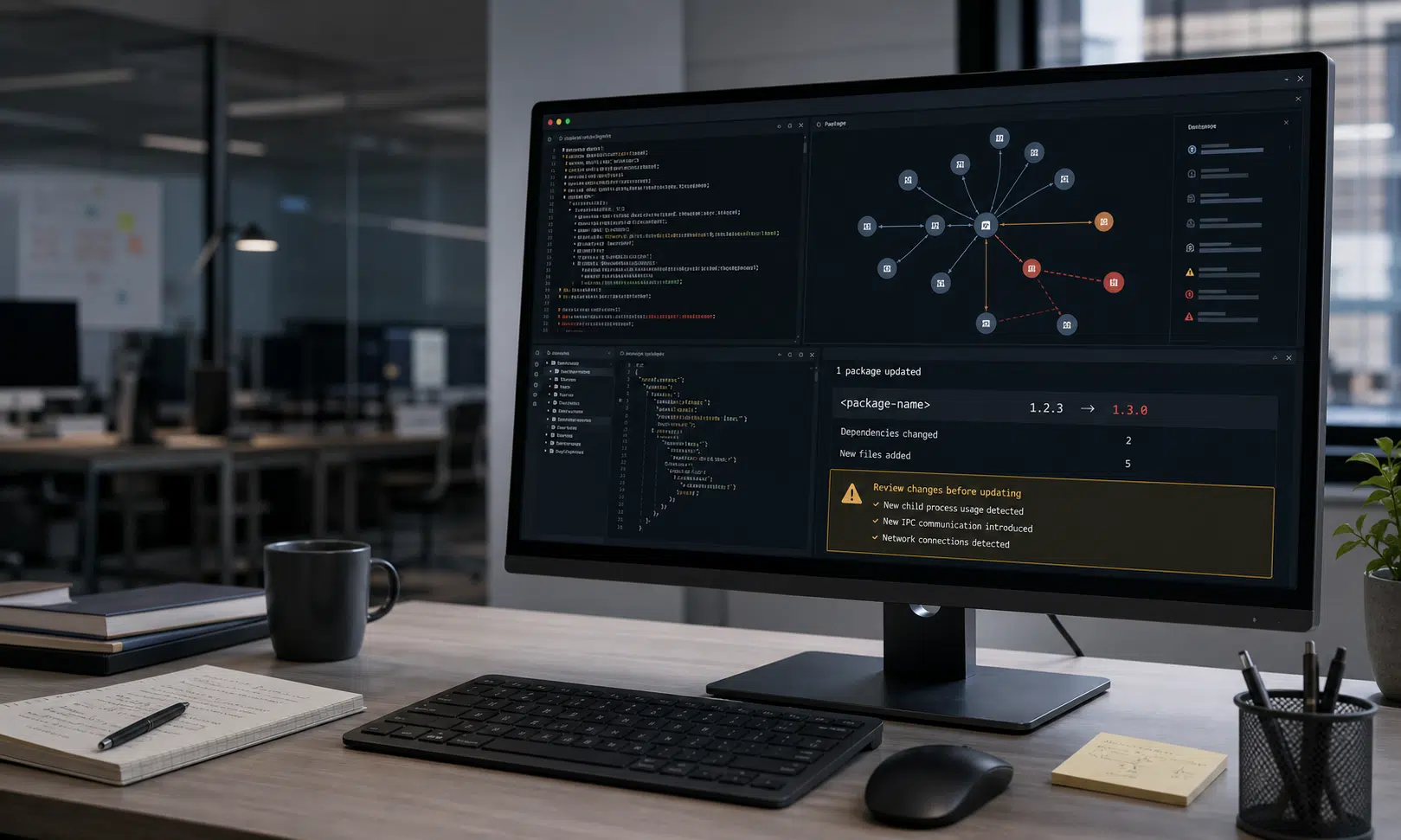

Security researchers have warned that three recently published versions of the npm package node-ipc may contain obfuscated stealer and backdoor behavior aimed at developer environments.
The versions named in the reports are node-ipc 9.1.6, 9.2.3, and 12.0.1. The concern is not a lookalike package or an obvious typosquat. It involves versions of a real, widely used package that many JavaScript projects already trust through direct or transitive dependencies.
That distinction matters for buyers and security leaders evaluating software supply chain tooling. A malicious package with a strange name is one problem. A suspicious update to a known package with a long history is harder to catch, especially when developers, CI systems, and automated dependency workflows are trained to treat package updates as routine maintenance.
The practical question is straightforward: can your organization tell where node-ipc is installed, whether any affected versions ran, which secrets were reachable from those systems, and whether npm publishing rights are protected well enough to prevent a similar issue in your own packages?
What Was Reported
According to reports from security researchers, node-ipc versions 9.1.6, 9.2.3, and 12.0.1 were flagged for suspicious code that appears designed to inspect the host environment, collect local files, compress gathered data, and attempt outbound transmission.
The reporting describes the payload as heavily obfuscated. Rather than relying on npm lifecycle hooks such as preinstall, install, or postinstall scripts, the suspicious code was reportedly appended to the package runtime file. If accurate, that design would make the behavior more likely to trigger when an application loads the package, not merely when the package is installed.
That is an important defensive detail. Many organizations focus package security controls on install-time scripts because those are a familiar abuse path in npm incidents. Runtime execution creates a different exposure model. A package may install quietly, pass basic install-time checks, and only become risky when a service, test suite, local tool, or CI job actually requires it.
Researchers also reported differences between the affected version lines. The 12.0.1 version was described as having a fingerprint-style condition that may limit execution to a specific target path or environment. The 9.x versions were described as broader in behavior, though organizations should treat that as a reported technical assessment unless they have confirmed it in their own environment.
For defenders, the takeaway is not to argue over whether every described behavior has been independently reproduced. The safer response is to assume that any system that installed and loaded one of the named versions may have exposed developer or cloud secrets, then investigate from that position.
Why This Incident Is Different From a Routine Malicious Package Alert
The hardest npm incidents are not always the loudest ones. A brand-new package with no history and a suspicious name can be filtered, blocked, or ignored by cautious teams. A known package with established usage can travel through dependency graphs with far less scrutiny.
node-ipc has also had prior controversy. In 2022, certain versions became associated with politically motivated behavior affecting systems tied to Russia or Belarus, and later releases included protest-related functionality. That history does not prove what happened in this latest case, but it does give security teams a reason to treat the package lineage with particular care rather than relying on reputation alone.
The newer reports say the suspicious versions were published by an npm account named atiertant, which was listed as a maintainer but was not the original package author. The available reporting suggests concern around how that account came to publish the versions, but organizations should be careful about treating the exact account-compromise story as settled without their own confirmation.
This is where dependency governance becomes a buying decision rather than a theoretical security concern. The question is not only whether a scanner can recognize a known bad version after an advisory appears. It is whether the organization can detect unusual maintainer changes, dormant package activity, suspicious publishing patterns, and runtime behaviors that do not look like normal package maintenance.
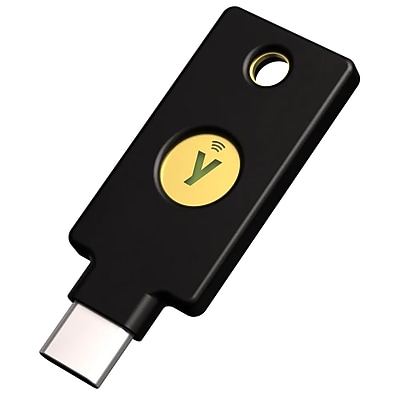
YubiKey 5C NFC Security Key
A hardware security key can reduce the risk that a stolen password or token leads to account takeover. Use it for npm, GitHub, cloud consoles, password managers, and other accounts that control code or deployment access.
As an Amazon Associate I earn from qualifying purchases.
Reported Technical Behavior
The reported behavior centers on developer-secret theft. Researchers described code that attempts to identify the environment, enumerate files, collect credentials or configuration files, package the results, and send them outside the system.
The claimed target set is broad. Reports mention cloud credentials, SSH keys, Kubernetes material, GitHub CLI configuration, infrastructure-as-code state, shell history, database credentials, and settings from developer tools. The exact list and count of targeted credential categories should be treated as researcher-reported rather than independently established here, but the general risk pattern is clear: developer machines and build systems often contain enough access to become a shortcut into production infrastructure.
| Reported Area | Why It Matters | What To Check |
|---|---|---|
| Cloud credentials | Keys or tokens may allow access to AWS, Azure, Google Cloud, or related services. | Review recent IAM activity, token use, unusual regions, new users, policy changes, and privilege escalation attempts. |
| Source control configuration | Developer tokens can expose private repositories, package publishing rights, or CI workflows. | Rotate tokens, review GitHub or GitLab audit logs, and check for new deploy keys or suspicious workflow changes. |
| SSH material | Private keys can provide access to servers, bastion hosts, or internal systems. | Rotate exposed keys, inspect authentication logs, and remove unused keys from authorized systems. |
| Kubernetes and infrastructure files | Cluster tokens and Terraform state can reveal sensitive topology and credentials. | Review cluster access logs, rotate service account tokens, and secure state backends. |
| Developer shell history | Command history can contain tokens, hostnames, internal URLs, and operational habits. | Assume secrets in history may be exposed and rotate anything that appeared in local command use. |
Reports also describe possible outbound communication through HTTPS and DNS-based techniques. One reported destination uses a domain styled to look like an Azure-related service. Because the exact exfiltration behavior should be validated by each affected organization, a practical response is to block known suspicious indicators from the reports, then review egress logs for unusual direct DNS activity, unexpected resolver changes, and outbound traffic from developer or CI hosts.
The DNS angle is worth taking seriously even if your team has not confirmed the entire payload chain. Many security programs rely heavily on corporate DNS logs. If malware can direct lookups away from monitored resolvers, teams may miss important evidence unless endpoint, network, and egress controls are correlated.
Who Should Be Most Concerned
This is not only a problem for projects that intentionally imported node-ipc last week. npm dependencies can arrive indirectly through other packages, older tools, build scripts, or archived projects that are still used in CI.
The highest-risk environments are those where developer tooling has broad access. That includes laptops with long-lived cloud keys, CI runners with production deploy permissions, internal build servers, and shared engineering workstations. A package loaded in one of those places can expose more than source code.
Teams should prioritize investigation if they meet any of the following conditions:
- They installed or loaded node-ipc 9.1.6, 9.2.3, or 12.0.1.
- They use automated dependency update tools without strict review of maintainer or package-history changes.
- Their CI jobs have access to cloud credentials, npm tokens, GitHub tokens, SSH keys, or production deploy rights.
- Developers store long-lived secrets locally instead of using short-lived credentials or brokered access.
- They cannot quickly produce an inventory of projects and lockfiles that include a specific npm package version.
For buyers evaluating security products, this incident is a useful test case. A tool that only says a version is vulnerable after the fact is helpful, but incomplete. The stronger buying criteria are package reachability, lockfile coverage, maintainer-change visibility, CI secret exposure mapping, and post-install behavior detection.
Immediate Response Checklist
Organizations that find one of the named versions should move quickly, but the response should be orderly. The goal is not only to remove the package version. The goal is to understand whether secrets were reachable and whether any of them were used.
- Search source repositories, lockfiles, package manifests, build images, and CI caches for node-ipc 9.1.6, 9.2.3, and 12.0.1.
- Replace affected versions with a known clean version appropriate for the project, such as a previously trusted release, after validating compatibility.
- Rebuild affected environments from clean dependency installs rather than trusting old caches.
- Identify every secret available to machines or jobs that installed and loaded the affected package.
- Rotate exposed credentials, including cloud keys, npm tokens, GitHub or GitLab tokens, SSH keys, database passwords, Kubernetes tokens, and CI secrets.
- Review npm publishing activity for any packages that could be affected by exposed npm credentials.
- Inspect source control audit logs for unusual token use, new keys, changed workflows, new collaborators, or unexpected package releases.
- Review cloud logs for suspicious IAM activity, new access keys, privilege changes, unusual API calls, and activity from unfamiliar locations.
- Block reported suspicious network indicators and inspect egress telemetry from developer and CI systems.
- Document the exposure window, affected systems, rotated secrets, and remaining uncertainty for later review.
Credential rotation should not be limited to the one secret you think was most likely exposed. Developer environments often contain secondary access paths: cached CLI sessions, old configuration files, local environment files, shell history, and forgotten tokens from prior projects.
This is where incident response frequently underestimates software supply chain attacks. Removing the bad dependency may stop future execution, but it does not invalidate a token that was already copied. Treat cleanup and credential rotation as separate workstreams.
How To Evaluate Your Controls After This
A good post-incident review should ask whether the organization was able to answer basic questions quickly. If the team needed hours or days to identify where a package version was installed, the dependency inventory needs work. If responders could not determine which secrets were available to a CI runner, secrets governance needs work. If egress review depended entirely on DNS logs from a corporate resolver, network detection may need broader coverage.
Security leaders comparing tools or services should look for evidence in five areas:
- Dependency visibility: Can the platform find package versions across repositories, lockfiles, containers, and build systems?
- Maintainer and publishing risk: Does it flag unusual maintainer changes, dormant package updates, suspicious publish timing, or new publisher behavior?
- Reachability and runtime context: Can it distinguish between a package that is merely present and one that is actually loaded in a sensitive environment?
- Secrets exposure mapping: Can the team see which credentials were available on affected developer machines or CI jobs?
- Response workflow: Does the system help rotate, revoke, audit, and verify rather than simply open another alert?
No single product category owns the whole answer. Software composition analysis, secrets management, endpoint telemetry, CI/CD security, cloud detection, and network monitoring all touch part of the problem. The buying decision should be based on the gaps your team actually experienced while answering this incident, not on a generic feature checklist.

Apricorn Aegis Secure Key 3NXC
For break-glass recovery codes or incident-response exports, a hardware-encrypted USB drive is safer than leaving sensitive files loose on a developer workstation. It should be used for controlled offline storage, not as a substitute for a proper secrets manager.
As an Amazon Associate I earn from qualifying purchases.
Verdict: Treat This As a Trust-Boundary Test
The node-ipc reports should be treated as more than a package-specific cleanup task. They are a test of whether your organization can manage trust in open source dependencies after that trust has already been granted.
For small teams, the practical path is to lock dependency versions, review automated updates more carefully, keep long-lived secrets out of developer environments, and rotate anything exposed by affected installs. For larger teams, the incident argues for stronger package provenance monitoring, CI runner isolation, short-lived credentials, egress controls, and faster dependency inventory.
The strongest response is also the least dramatic: know what you run, know where secrets live, minimize what build systems can access, and assume that trusted packages can become untrusted without changing their name.
That is the real buyer-aware lesson. The best tool or process is the one that shortens the time between a suspicious package report and a confident answer to three questions: where is it, did it run, and what could it reach?