

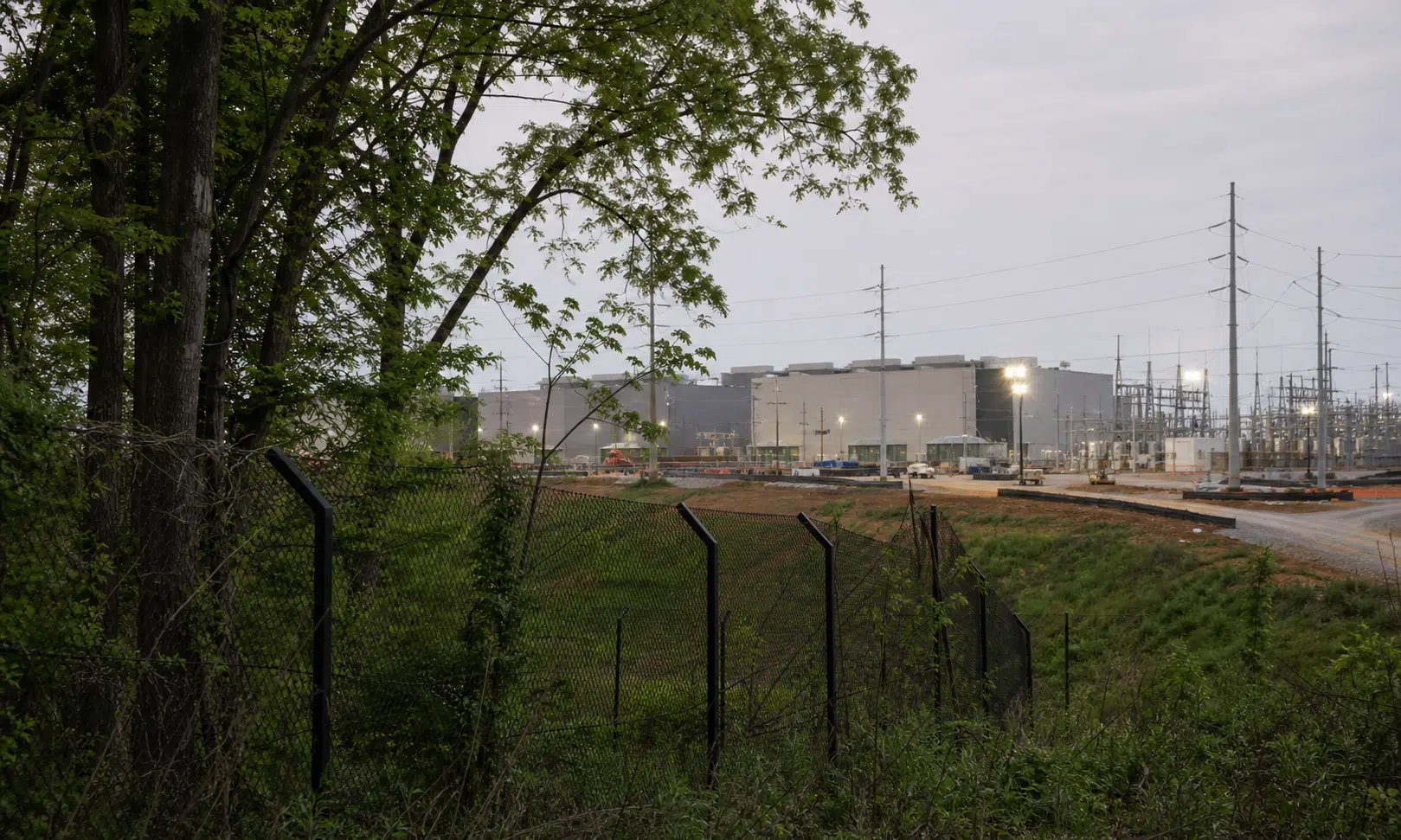

A proposed data center near Nashville Zoo has turned into a local fight over land use, animal welfare, power demand and how closely high-load digital infrastructure should sit beside sensitive public spaces.
The project, described in the source report as a DC Blox facility planned for a 1.6-acre first phase on a larger 23.5-acre property, has not moved beyond the permitting discussion described in that reporting. Several of the most important details remain unconfirmed outside the available source material, so the practical question is less whether the project is already settled and more what Nashville officials, nearby residents, the zoo and the developer would need to resolve before any buildout could be judged responsibly.
For the zoo, the concern is straightforward: a data center is not just an office building with servers inside. It can bring sustained mechanical noise, lighting, power infrastructure, backup systems, stormwater questions and construction disruption. Those issues matter more when the neighbor is not only a public attraction, but a place that houses animals and breeding programs.
For DC Blox and similar operators, the counterargument is also clear. A compact data center can be a normal piece of commercial infrastructure if it meets zoning, environmental, utility and noise requirements. The dispute is about whether this particular site is the right one, and whether the public has enough verified information to weigh the tradeoffs.
What the proposal appears to involve
The source report describes the plan as a proposed 1.6-acre data center buildout near Nashville Zoo. That acreage is said to be part of a larger 23.5-acre lot connected to MarketStreet Enterprises, with the zoo reportedly interested in using part of the property for an education and conservation center. Because those land and permit details were not independently verified in the provided material, they should be treated as reported claims rather than settled facts.
The facility is also described as having an estimated power draw of up to 50 MW and a dedicated substation. That figure is meaningful for any local review because 50 MW is a substantial utility load, even if it is smaller than the largest hyperscale or AI-oriented campus projects being discussed elsewhere. The practical issue is not just the headline megawatt number, but who pays for grid upgrades, how the load is phased, and whether backup power or substation work changes the impact on nearby properties.
DC Blox is reported to have said the project would use closed-loop or waterless cooling and comply with local ordinances. That matters because water use has become one of the central questions around data center siting. If the cooling system is truly closed-loop or waterless at operating scale, that would reduce one major source of concern. But for a buyer, tenant, public agency or nearby land user evaluating the plan, the important document is not a general claim. It is the permit record, engineering plan, water impact analysis and enforceable operating conditions.
Why the zoo is objecting
Nashville Zoo reportedly outlined concerns about noise, light pollution, water quality and pressure on local infrastructure. Those concerns are especially pointed because the project would sit near animal habitats, including species that the zoo says may be sensitive to mechanical noise.
The most concrete animal-welfare issue in the source material involves clouded leopards. The zoo is reported to have described them as highly sensitive to mechanical noise. That claim should be handled carefully: without independent documentation in the provided material, it is best read as the zoo’s stated concern, not as a verified measurement of expected harm from this specific data center.
Still, the concern is reasonable enough to require a serious answer. Data centers can run cooling systems, fans, transformers and backup systems on operating schedules that differ from ordinary offices. Even when sound levels comply with legal limits at a property line, a zoo may reasonably ask whether constant low-frequency sound, vibration or nighttime lighting could affect animals differently than it affects people in nearby buildings.
A careful review would need to separate construction impacts from long-term operating impacts. Construction may bring temporary noise, traffic and dust. Operations may bring continuous mechanical sound, exterior lighting, electrical equipment and service access. Those are different risks, and they should be evaluated separately rather than collapsed into a single yes-or-no debate.
The buyer-style comparison: what decision-makers should weigh
Although this is a local infrastructure dispute rather than a consumer product review, the decision still has a buyer-like structure. The parties are effectively comparing possible uses for a constrained parcel: data center development, zoo expansion, another commercial use, or no near-term redevelopment.
| Decision factor | Data center proposal | Zoo or conservation use | What needs verification |
|---|---|---|---|
| Power demand | Reported estimate of up to 50 MW, with possible substation work | Likely lower operating load, depending on final building plans | Utility studies, upgrade costs, grid capacity and phasing |
| Noise and vibration | Potential concern from cooling, electrical and backup systems | Likely tied mostly to visitors, events and building systems | Acoustic modeling, equipment specifications and operating limits |
| Water impact | Developer reportedly points to closed-loop or waterless cooling | Depends on education, animal care and landscaping plans | Cooling design, stormwater plan and water-quality review |
| Public benefit | Digital infrastructure, possible jobs and tax base | Education, conservation programming and zoo expansion | Economic impact, public access and long-term community value |
| Site fit | Compact industrial-style infrastructure near sensitive habitats | Use aligned with the existing zoo campus | Zoning, site buffers, traffic plan and environmental review |
That comparison does not automatically decide the case. It does show why the dispute has gained attention. A data center may be technically compliant and still be a poor fit for a particular edge-of-campus site. Conversely, a zoo’s preferred use may be publicly appealing and still depend on land ownership, financing and enforceable development rights.
The AI data center question
The source report makes a distinction between this proposed facility and the much larger AI data center campuses that have drawn scrutiny for heavy power and water needs. That distinction is useful, but it should not be overstated.
A 50 MW facility, if that estimate is accurate, is not in the same class as the largest multi-building campus projects that can require far larger utility commitments. It is still large enough to deserve close review. For local residents and public officials, the relevant question is not whether the site is smaller than a hyperscale AI campus. It is whether this facility’s power, cooling, sound and backup systems are appropriate for this location.
DC Blox is reported to have said the project would not be an AI factory placing a burden on local resources. The company’s broader marketing is also described as positioning some operations as AI-ready. Those two ideas are not necessarily contradictory, but they do raise a practical question: what exactly is being permitted now, and what future changes would require a new review?
That is where permit language matters. If the application allows one level of electrical capacity, cooling equipment and generator use, future increases should not be treated as a clerical update. They should be reviewed for their actual impact, especially next to a zoo, residential areas or other sensitive uses.
The permit and ownership questions
The source report says the project is in the permit stage and raises questions about whether DC Blox filed while not yet owning the land. It also says Nashville Mayor Freddie O’Connell described the application as unusual and asked Metro’s legal department to look into it. Those details were not independently verified in the provided material, so they should be read as reported developments rather than confirmed legal conclusions.
Even with that caution, the permit issue is important. Land-use disputes often turn less on broad public sentiment and more on who has standing to apply, what the zoning allows, whether the owner authorized the filing and which conditions a city can legally impose.
If the property owner has authorized the application, the dispute may move toward zoning, environmental and infrastructure review. If authorization is unclear, the city may need to resolve that threshold question before the project can be evaluated on its merits.
The source also reports that Nashville leadership has been considering broader data center restrictions covering water, power and noise, with possible limits on very large buildouts. Since those policy details are not fully verified here, they should be treated as part of a broader municipal debate rather than a final rule. Still, they show the Nashville Zoo dispute is not only about one parcel. It is part of a wider question facing many cities: how to welcome digital infrastructure without letting it outrun local planning.
What would make the proposal easier to judge
For residents, zoo supporters, city officials and potential commercial tenants, the next useful step is not another round of slogans. It is a clearer record.
- A site plan showing exact placement, buffers, fencing, lighting and equipment yards.
- An electrical plan explaining the estimated load, substation needs and who pays for upgrades.
- A cooling plan that confirms whether the system is closed-loop, waterless or dependent on local water resources.
- An acoustic study that models both normal operation and emergency backup scenarios.
- A stormwater and water-quality review tailored to the specific parcel.
- Clear permit documentation showing landowner authorization and the legal basis for the application.
- Operating conditions that explain what would trigger additional review if capacity or use changes later.
That is the practical standard for a project like this. A data center should not be rejected simply because data centers have become politically sensitive. It also should not be waved through on broad assurances when the neighbor is a zoo with animal habitats and public conservation programs.
Bottom line
The Nashville Zoo data center dispute is best understood as a site-fit problem. The proposed facility, as described in the source material, may be smaller than the largest AI infrastructure projects, and the developer reportedly says it can operate with reduced water impact and within local rules. But the location raises questions that ordinary commercial siting language does not fully answer.
For city officials, the decision should turn on verified permit authority, enforceable operating limits and credible studies of noise, light, water and grid effects. For the zoo and nearby residents, the strongest case is not a general objection to technology infrastructure. It is a focused argument that this parcel, next to sensitive animal habitats and possible conservation expansion plans, deserves a higher level of scrutiny before any approval moves forward.