

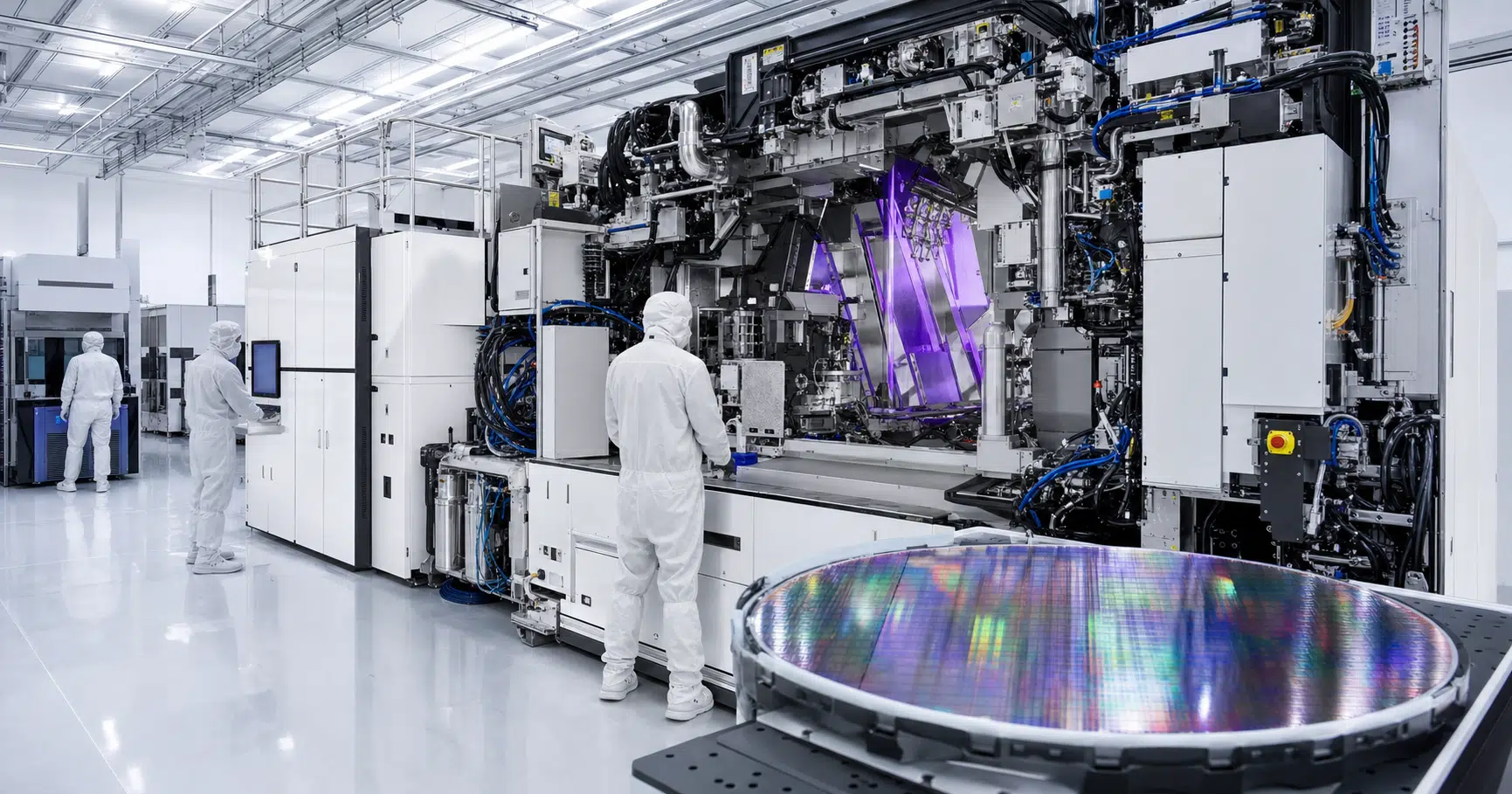

China may be moving closer to supplying its chipmakers with domestically produced deep ultraviolet lithography equipment. If the machines reach customers and perform as intended, they could reduce one of the semiconductor industry’s most consequential equipment dependencies.
That outcome is far from certain. The claimed production status, delivery schedule and customer commitments have not been independently verified. Questions also remain about performance, reliability and whether the equipment can support commercially useful production yields.
What may be coming to market
A state-backed Chinese manufacturer may be preparing to deliver domestically built DUV systems to local semiconductor companies. SMIC, Hua Hong Semiconductor and memory manufacturer CXMT have been discussed as possible early recipients, but neither that customer list nor the timing has been independently confirmed.
The proposed offering is important because lithography systems are among the most complex and difficult pieces of equipment in a semiconductor fabrication plant. The machines project intricate patterns onto silicon wafers during the many stages required to produce a chip.
The discussion centers on immersion DUV equipment rather than the newer EUV systems associated with the most advanced manufacturing processes. A domestic DUV option would not give Chinese fabs an instant replacement for every imported lithography tool, but it could address a meaningful part of their equipment requirements.
Why DUV still matters
DUV is an older lithography approach, but older does not mean obsolete. Chipmakers can extend its capabilities through techniques such as multi-patterning, although the precise process nodes and production economics achievable with an unproven machine should not be assumed.
That distinction matters. Producing a working scanner is only the first threshold. A commercially useful system must operate consistently, integrate with the rest of a fabrication line and help deliver enough functional chips per wafer to make production economical.
A domestic machine could therefore be strategically valuable even if it initially trails established alternatives. For a Chinese fab facing equipment-access constraints, availability, serviceability and a local supply chain may carry significant weight alongside raw technical performance.
The limitations could decide the outcome
No independently verified performance or reliability data is available for the proposed Chinese systems. Claims that the equipment is ready for mass production should consequently be treated as provisional until customers demonstrate sustained use in operating fabs.
Reliability is particularly important because downtime in a production facility can disrupt the entire manufacturing flow. Throughput matters as well: a machine that can technically complete a process may still be commercially unattractive if it handles too few wafers or requires excessive maintenance.
Yield is the larger test. A lithography system can function as designed without enabling efficient high-volume manufacturing. Process stability, defect rates and integration with deposition, etching and inspection equipment all influence the number of usable chips produced from each wafer.
The reported performance gap with established DUV equipment also remains unverified. Without comparable data on throughput, overlay accuracy, availability and yield, buyers cannot determine whether a domestic machine is a direct substitute, a limited production tool or primarily a platform for further development.
What buyers and industry watchers should monitor
For semiconductor manufacturers, the practical question is not whether a Chinese company can assemble a DUV machine. It is whether the equipment can meet production targets repeatedly and at a sustainable operating cost.
Evidence of customer installation would be an initial milestone, but acceptance testing and continued operation would be more informative. Confirmed specifications, service arrangements and production results would help establish which fabrication processes the machines can realistically support.
The implications for ASML are similarly uncertain. A credible domestic competitor could eventually reduce demand for imported DUV equipment in China, but an early-stage system with weaker reliability or economics would be unlikely to displace established tools quickly. Specific claims about ASML’s shipment plans, expansion targets or share-price movements are not reliable enough to connect directly to the proposed Chinese rollout.
Export controls make the potential appeal of domestic equipment easier to understand, but they do not guarantee technical success. Restrictions can accelerate investment in local alternatives; they cannot shorten every engineering, manufacturing and process-integration challenge.
China’s DUV effort is therefore best viewed as a potentially important industrial step rather than a completed breakthrough. Confirmed deliveries would show that a domestic supply path is emerging. Proof of competitive uptime, throughput and yields would determine whether that path can materially change the chipmaking market.