


For home theater buyers, the biggest argument for 4K Blu-ray has never been only the picture. It has also been the sound.
A good disc can deliver the kind of wide, clean, dynamic audio that makes a movie feel physically larger. Streaming services have improved a lot, especially on premium plans, but their Dolby Atmos tracks are still typically compressed harder than the soundtracks on 4K Blu-ray. On a modest TV speaker setup, that may not matter much. On a proper 5.1.2, 7.1.4, or soundbar-and-rears system, it can.
That is why Dolby AC-4 is worth paying attention to. It is a newer Dolby codec designed to carry high-quality immersive audio more efficiently than the Dolby Digital Plus-based Atmos streams most people hear today. In a recent double-blind listening event involving audio professionals, Dolby AC-4 reportedly performed extremely well against both the current streaming format and an uncompressed PCM reference.
The buyer question is not whether this makes your current streaming apps sound better overnight. It does not. The real question is whether AC-4 could make future Atmos streams sound close enough to disc quality that some viewers stop caring about the difference.
For some people, it might. For collectors and anyone who values ownership, reliability, and maximum bitrates, 4K Blu-ray still has advantages that a better codec cannot erase.
What Dolby AC-4 is trying to fix
Most Atmos streaming today uses Dolby Digital Plus with Joint Object Coding, often shortened to DD+JOC. It is a practical format because it lets services deliver object-based Atmos sound without requiring disc-level bandwidth. It also keeps broad compatibility with common streaming devices, TVs, AV receivers, and soundbars.
The tradeoff is compression. Streaming audio has to share bandwidth with video, app overhead, network variation, and the service provider’s own delivery limits. That means the Atmos mix you hear from a streaming app is usually not the same quality as the one you would get from a 4K Blu-ray disc.
Dolby AC-4 is built for a newer delivery model. It is designed to handle immersive audio more efficiently, including speaker-based Atmos, headphone listening, and object-audio features such as dialogue enhancement. In practical terms, it aims to give streaming services a way to send better Atmos audio without multiplying the amount of data they have to deliver.
That last part matters. If a codec needs huge bandwidth to sound better, streaming services may hesitate to adopt it widely. If it can sound better while using less data than current Atmos streams, the business case becomes easier.
Quick Comparison
| Image | Product | Best fit | Link |
|---|---|---|---|
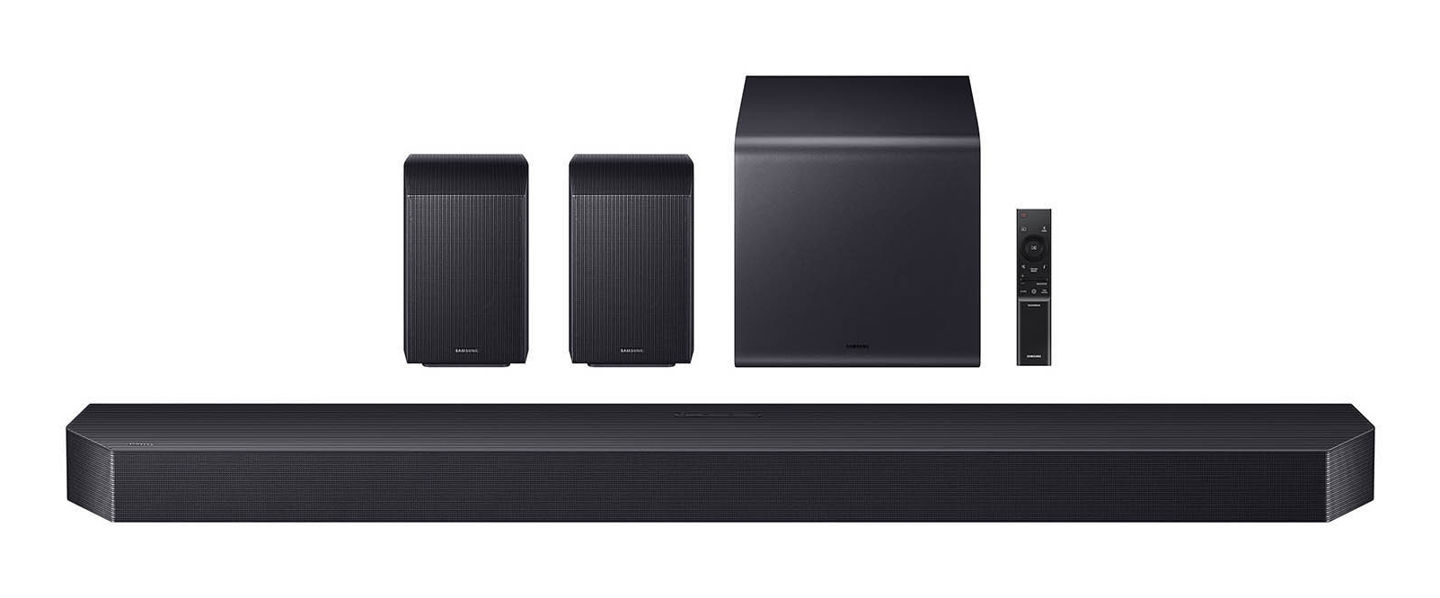 |
Samsung HW-Q990F 11.1.4 Dolby Atmos Soundbar System | A full Dolby Atmos soundbar package with rear speakers and a subwoofer is the kind of setup where cleaner streaming audio is more noticeable. It is a practical path for buyers who want immersive sound without installing a full receiver-based speaker system. | Check Price on Amazon |
 |
Denon AVR-S760H 7.2-Channel AV Receiver | For buyers planning separate speakers and height channels, an Atmos-capable receiver is the hub that makes the system work. It is better suited to a modular home theater than an all-in-one soundbar. | Check Price on Amazon |
 |
Sony UBP-X700 4K Ultra HD Blu-ray Player | A 4K Blu-ray player still makes sense for buyers who care about owned copies, stable playback, and disc-based audio quality. It is the hardware side of the physical-media argument the article describes. | Check Price on Amazon |
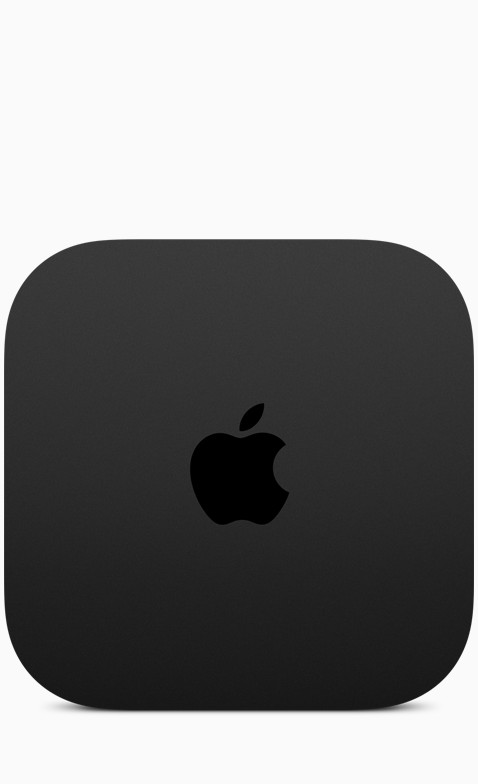 |
Apple TV 4K Wi-Fi + Ethernet | A capable streaming box can improve app consistency and Dolby format support across services, though AC-4 availability still depends on the service and device support. It is best viewed as a strong streaming platform, not a guarantee that future AC-4 movies will work everywhere. | Check Price on Amazon |
As an Amazon Associate I earn from qualifying purchases.
The listening test result that makes AC-4 interesting
The reported test compared three audio versions: the current-style DD+JOC Atmos stream, an uncompressed PCM reference, and Dolby AC-4 L4. The listening was done on a full 7.1.4-channel system, with additional checks using fewer active speakers and isolated speaker playback.
The headline result is simple: when all speakers were playing in a real home-theater-style setup, AC-4 was described as effectively tied with the uncompressed PCM reference. The same test also found that AC-4 was preferred over the existing compressed DD+JOC version by multiple audio professionals.
The bitrate comparison is where the result becomes especially striking.
| Format | Reported bitrate | Role in the test |
|---|---|---|
| DD+JOC | 768 kbps | Current-style streaming Atmos reference |
| Dolby AC-4 L4 | 448 kbps | Next-generation compressed Atmos option |
| Uncompressed PCM | 13,824 kbps | Lossless reference render |
On paper, AC-4 used only a small fraction of the data required by the PCM reference. That does not mean AC-4 is lossless. It means the listening panel reportedly had difficulty separating it from the uncompressed version in normal full-system playback.
There was a caveat. Compression became easier to notice when individual speakers were soloed. That is not how most people watch movies, but it is a useful stress test. It suggests AC-4 is not magically identical to PCM under every condition. It may simply be good enough that the difference becomes very hard to hear in normal use.
One low-confidence detail from the original report, the exact anonymized labeling method used during the test, should be treated as a process note rather than a verified independent fact. What matters for buyers is the broader design of the test: listeners were asked to compare codec performance while paying attention to artifacts such as reduced spatial precision, frequency loss, gating, and other signs of compression.
Why this matters more for serious home theater owners
If you listen through built-in TV speakers, AC-4 is probably not the upgrade that changes your life. TV speakers have physical limits. They cannot reproduce deep bass, wide dynamics, or convincing overhead effects the way a dedicated system can.
The potential impact is bigger if you already own, or plan to buy, one of these setups:
- A Dolby Atmos soundbar with wireless surrounds and a subwoofer
- A 5.1.2 or 5.1.4 speaker system with height channels
- A 7.1.4 AV receiver setup
- High-end headphones used for binaural Atmos music or movie playback
On systems like these, the quality of the incoming stream matters. A better codec can preserve more spatial detail, cleaner ambience, and more convincing movement around the room. It can also help loud effects and quiet dialogue coexist with less of the flattened feel that sometimes comes from heavy compression.
That does not automatically mean every AC-4 stream will sound excellent. The final result still depends on the original mix, the service’s encoding choices, the app, the playback device, and your sound system. A weak Atmos mix will not become reference-grade just because it is delivered in a newer codec.
Still, if AC-4 adoption spreads, it could raise the floor for streaming Atmos quality. That is the part buyers should care about.
Streaming still has to solve the adoption problem
The technology is only useful if services and devices support it.
Peacock has announced plans involving Dolby AC-4 as part of a broader push into upgraded Dolby video and audio features, especially around live sports. A firm timeline for broad movie and TV availability has not been publicly confirmed. Other major video streaming services may eventually move in the same direction, but buyers should not assume that Netflix, Disney Plus, Max, Prime Video, Apple TV, or Hulu will all switch their Atmos delivery quickly.
Dolby AC-4 is already relevant outside movie and TV streaming. Dolby describes AC-4 as being used by services including Tidal and Amazon Music for immersive audio delivery, especially where binaural headphone playback is part of the experience. That is related to the same codec family, but it is not the same buyer scenario as watching an Atmos movie through a living-room speaker system.
For now, the practical advice is conservative: do not buy a TV, receiver, streamer, or soundbar only because you expect AC-4 movie streaming to become universal soon. Treat AC-4 support as a useful future-facing feature, not as the deciding factor unless your preferred service has clearly announced support for the content you actually watch.
AC-4 versus 4K Blu-ray: what changes and what does not
The most tempting conclusion is that AC-4 could make streaming sound as good as 4K Blu-ray. The more useful conclusion is narrower: AC-4 could make future streaming Atmos sound much closer to a lossless reference in normal listening than today’s compressed Atmos streams often do.
That is still a big deal. For many viewers, the difference between “technically worse” and “not meaningfully worse from the couch” is where buying decisions change.
Here is the buyer-aware version of the comparison:
| Decision point | Streaming with AC-4 | 4K Blu-ray |
|---|---|---|
| Audio convenience | Very high, if supported by the app and device | Requires a disc player and physical media |
| Audio quality ceiling | Potentially much closer to lossless in real-world listening | Still the reference option for maximum disc-based quality |
| Bandwidth efficiency | Strong advantage, based on reported AC-4 bitrate results | Less constrained by streaming delivery limits |
| Ownership | Access depends on service rights and catalog availability | You own the disc copy you bought |
| Reliability | Depends on internet service, app performance, and platform support | Depends mainly on disc condition and player hardware |
That ownership row is not a minor footnote. Better streaming audio does not solve the problem of disappearing catalogs, changing rights, edited versions, app shutdowns, or titles moving between services. Many disc buyers care about quality, but many also care about having a permanent copy that does not depend on a subscription.
AC-4 can challenge one of Blu-ray’s advantages. It cannot challenge all of them.
Who should care now?
Dolby AC-4 is most relevant to three types of buyers.
First, it matters to people building or upgrading a home theater system. If you are investing in Atmos speakers, a capable soundbar, or an AV receiver, codec support and streaming-device compatibility are worth checking. You do not need to obsess over AC-4 today, but you should avoid buying into a setup that is already behind the direction premium streaming audio is moving.
Second, it matters to disc collectors who also stream heavily. AC-4 may not replace your favorite 4K Blu-rays, but it could make casual streaming nights sound less compromised. That is especially useful for movies and shows you like but do not plan to buy physically.
Third, it matters to sports viewers. Live sports are one of the areas where streaming services are pushing harder on premium Dolby features. If AC-4 becomes part of that pipeline, the biggest early benefits may show up in live events rather than older catalog movies.
For everyone else, the advice is to wait. You do not need to replace working gear just because a better codec is coming into view. The key milestone will be real service support on real devices with real content, not lab results alone.
Verdict: promising, but not a Blu-ray replacement yet
Dolby AC-4 looks like one of the more meaningful audio upgrades streaming could get. The reported blind-test performance is impressive because it points to better Atmos quality without asking services to stream massive lossless audio files.
For buyers, the most practical takeaway is this: AC-4 could make future streaming sound more satisfying on serious Atmos systems, especially when compared with today’s Dolby Digital Plus-based Atmos streams. It may reduce one of the clearest reasons to choose a 4K Blu-ray over streaming.
But it does not make physical media irrelevant. Discs still offer ownership, consistency, high bitrates, and independence from streaming catalogs. If those things matter to you, AC-4 will not change the decision. If convenience matters more, and your system is good enough to expose streaming audio limits, AC-4 could become a feature worth looking for when services finally roll it out more broadly.
The short version: Dolby AC-4 may make streaming Atmos much better. It does not make every current stream better today, and it does not remove the reasons collectors keep buying discs.