

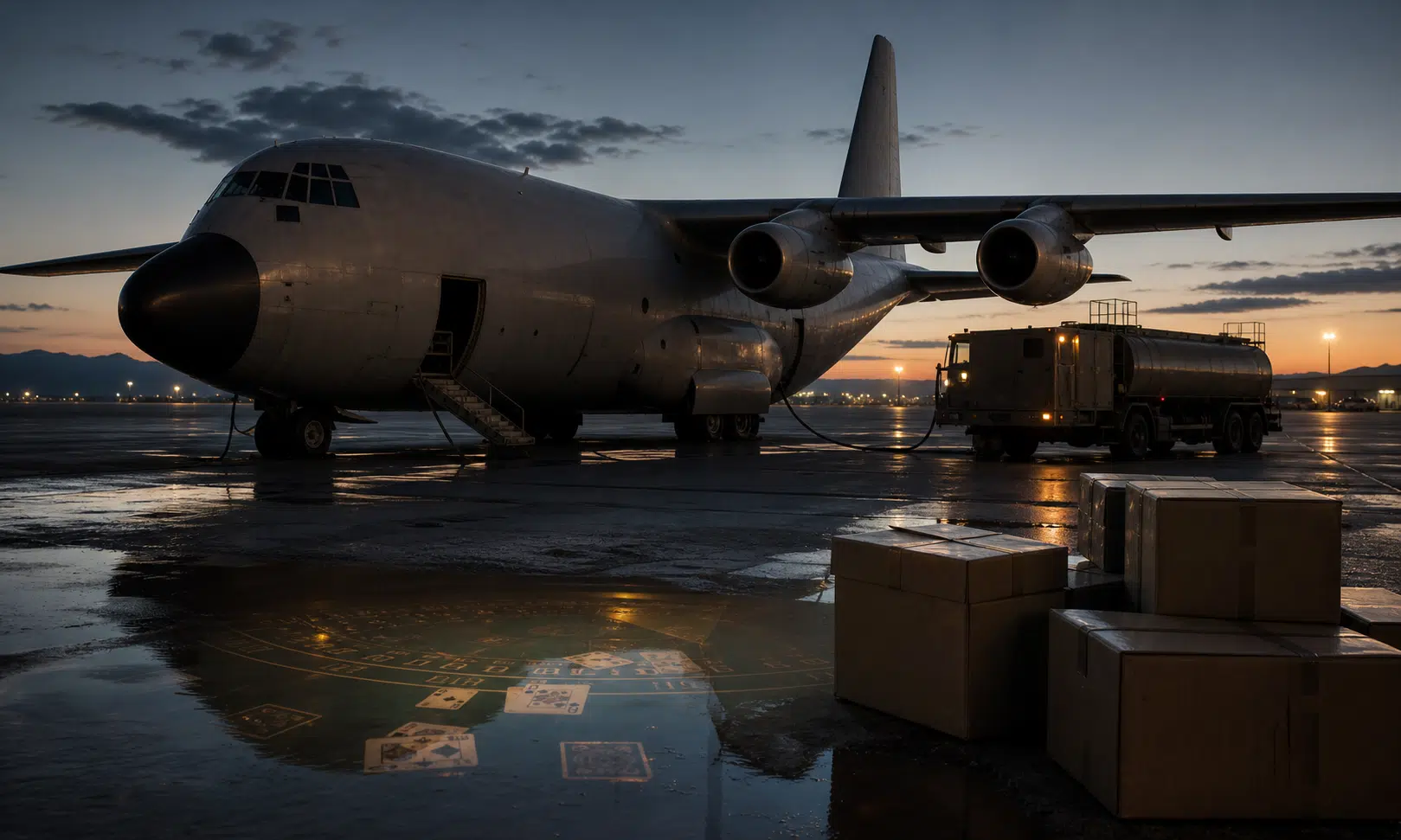

The Famous FedEx Blackjack Story
The best-known story about Fred Smith, the founder of Federal Express, sounds almost too neat to be true: a struggling company, its last few thousand dollars, a weekend in Las Vegas, and a blackjack table that somehow kept the planes flying.
The short version is this. In the early 1970s, Federal Express was bleeding cash. Fuel prices were rising, the company’s operating model was expensive, and lenders were losing patience. At one low point, the company reportedly had about $5,000 left, not enough to cover the fuel bill needed to keep its aircraft in the air.
Smith had gone looking for more financing and came up empty. Instead of flying back to Memphis, he went to Las Vegas. By Monday, the story goes, the company had about $32,000 in the bank. It was not enough to solve Federal Express’s problems, but it was enough to buy a little more time.
That detail matters. The blackjack winnings did not magically rescue FedEx. They kept the company alive long enough for Smith to raise a much larger round of financing. In business-history terms, the Las Vegas weekend is less a tidy miracle than a vivid example of how close some famous companies come to disappearing before the rest of the world ever knows their names.
Why Federal Express Was in So Much Trouble
Frederick W. Smith founded Federal Express after developing a conviction that the package-delivery business needed a different kind of network. Instead of moving parcels through the slower, more fragmented systems that already existed, Smith wanted a tightly coordinated air-and-ground operation built for overnight delivery.
He had been thinking about the idea since his time at Yale, where he later said he wrote a college paper outlining a version of an overnight delivery system suited to a more information-driven economy. The exact details of that paper, including the grade he received and some of the wording often attached to it, have become part of company lore and are not always easy to verify cleanly. What is clear is that Smith carried the idea forward and turned it into a real operating company.
The concept was ambitious. Federal Express would use a central hub, aircraft, and a carefully timed sorting network to move packages quickly across long distances. That kind of system required heavy upfront spending. Planes, fuel, facilities, staff, and technology had to be in place before the model could prove itself at scale.
Smith put in a large amount of his own money and raised far more from investors. Still, the company’s early years were brutal. By the mid-1970s, Federal Express was reportedly losing more than $1 million a month. Rising fuel costs made the situation worse. A company built around aircraft could not simply ignore the price of fuel, and it could not pause operations without risking the customer trust it was trying to build.
That is the context that makes the blackjack story stick. Smith was not gambling because the company was healthy and he wanted a colorful anecdote. He was gambling because, by his own later telling, the practical alternatives had nearly run out.
The Las Vegas Weekend
The story usually centers on a failed funding pitch to General Dynamics. Smith needed more money to keep Federal Express operating. When that pitch did not produce the financing he needed, the company was left with only a few thousand dollars.
Instead of returning directly to Memphis, Smith went to Las Vegas and played blackjack with the remaining funds. By the end of the weekend, he had turned roughly $5,000 into roughly $32,000.
That amount was still tiny compared with Federal Express’s real needs. It would not cover payroll for long. It would not stabilize the business. It would not persuade skeptical lenders by itself. But it could cover fuel for a short period, and in a company built around keeping planes moving, a short period mattered.
Smith later gave a characteristically blunt explanation for the decision. The company could not fly without fuel, so losing the remaining $5,000 would not have changed much if operations were already about to stop. Winning, on the other hand, might keep the system running for a few more days.
That logic is not a general business lesson in favor of gambling with company money. For almost any operating business, it would be a reckless and unacceptable way to manage cash. But as a historical episode, it captures the narrowness of the moment. Smith was making a desperate move in a situation where ordinary options had failed.

Changing How the World Does Business
For more background on how Federal Express grew from a risky overnight-delivery idea into a global logistics company, this company-history title gives readers a broader look at the people, operations, and decisions behind FedEx’s rise.
As an Amazon Associate I earn from qualifying purchases.
What Actually Saved FedEx
The blackjack money bought time. The financing that followed did the real work.
Shortly after the Las Vegas weekend, Smith raised about $11 million, enough to keep Federal Express alive and give the company room to prove its model. From there, the business began moving toward stability. By 1976, Federal Express reported its first profit, about $3.6 million.
Later accounts have described the company’s revenue and profit climbing sharply in the years that followed, though some of the exact figures repeated in older retellings vary and should be treated carefully. The broad direction is not in doubt: Federal Express survived its early cash crisis, became profitable, and grew into one of the most important logistics companies in the world.
The company later shortened its public identity from Federal Express to FedEx, a name that had already become common shorthand. Over time, FedEx expanded beyond its original express-air model into a much broader transportation and logistics network.
That is why the Las Vegas story remains useful when it is told with the right emphasis. It was not the whole rescue. It was a bridge. Smith still had to raise money, keep employees committed, serve customers, and prove that the hub-based overnight delivery system could work at a national scale.
Fred Smith Beyond the Blackjack Story
The blackjack episode can make Smith sound like a pure risk-taker, but that is only part of the picture. He was also a Marine Corps veteran who served in Vietnam and received several military decorations. His experience in aviation and logistics shaped the way he thought about time, movement, coordination, and command.
Smith’s background also included a family connection to transportation and hospitality. His father, who died when Smith was young, had been involved in the motor-coach business and later in the Toddle House restaurant chain. Toddle House was a diner-style business built around quick service, counter seating, and a simple operating format. It was a very different company from FedEx, but it belonged to the same broad world of repeatable systems, customer flow, and operational discipline.
Smith also moved in prominent political and social circles. He attended Yale, where he was associated with well-known classmates and organizations, and he later became friendly with figures in both major political parties. George W. Bush reportedly considered him for defense secretary, a role Smith did not take. He was also known to be friendly with John Kerry, even though Smith supported Bush in the 2004 presidential election.
In 2022, Smith stepped down as FedEx CEO and Raj Subramaniam became the company’s chief executive. Smith remained closely associated with the company he founded until his death in June 2025.
Other Dramatic Moments in FedEx History
FedEx’s history includes other episodes that sound like they belong in a thriller. One of the most serious came on April 7, 1994, when Auburn Calloway, a former FedEx employee, attacked the crew of a FedEx aircraft. Reports from the incident describe a violent struggle onboard before the crew was able to prevent the attack from succeeding. The crew members survived, though accounts of the event describe serious injuries.
The company has also experienced fatal aviation accidents. One widely reported crash occurred on March 23, 2009, when a FedEx Express aircraft crashed while landing at Narita International Airport in Japan. Reports described difficult wind conditions and a hard, bouncing landing sequence before the aircraft overturned and caught fire, killing both pilots.
Those events are separate from the founding story, but they underline a basic truth about FedEx’s business: the company operates in a world where logistics depends on aircraft, timing, weather, crews, and constant risk management. The public usually sees a package arrive at a door. Behind that simple result is a system that has always carried real operational pressure.
Why the Story Still Gets Repeated
The FedEx blackjack story survives because it is compact, dramatic, and easy to remember. It has a founder, a crisis, a last stake, a risky decision, and a Monday morning reprieve. That makes it irresistible as business folklore.
But the better version of the story is not “gambling saved FedEx.” That is too simple. A more accurate reading is that Smith had built a company with a bold but expensive model, ran into a cash crisis, took an extraordinary risk at the edge of failure, and then used the time he gained to secure real financing.
The difference matters. The lesson is not that desperate bets are good strategy. The lesson is that early companies often live or die in narrow windows, and survival sometimes comes down to whether a founder can keep the operation moving long enough for the next serious solution to arrive.
In FedEx’s case, that window was measured in days. The planes needed fuel. The company needed money. Smith found just enough of the first to give himself a chance at the second.
That is why the story remains powerful decades later. It is not a clean parable about luck. It is a messy story about timing, pressure, conviction, and a company that nearly ran out of runway before it became FedEx.