

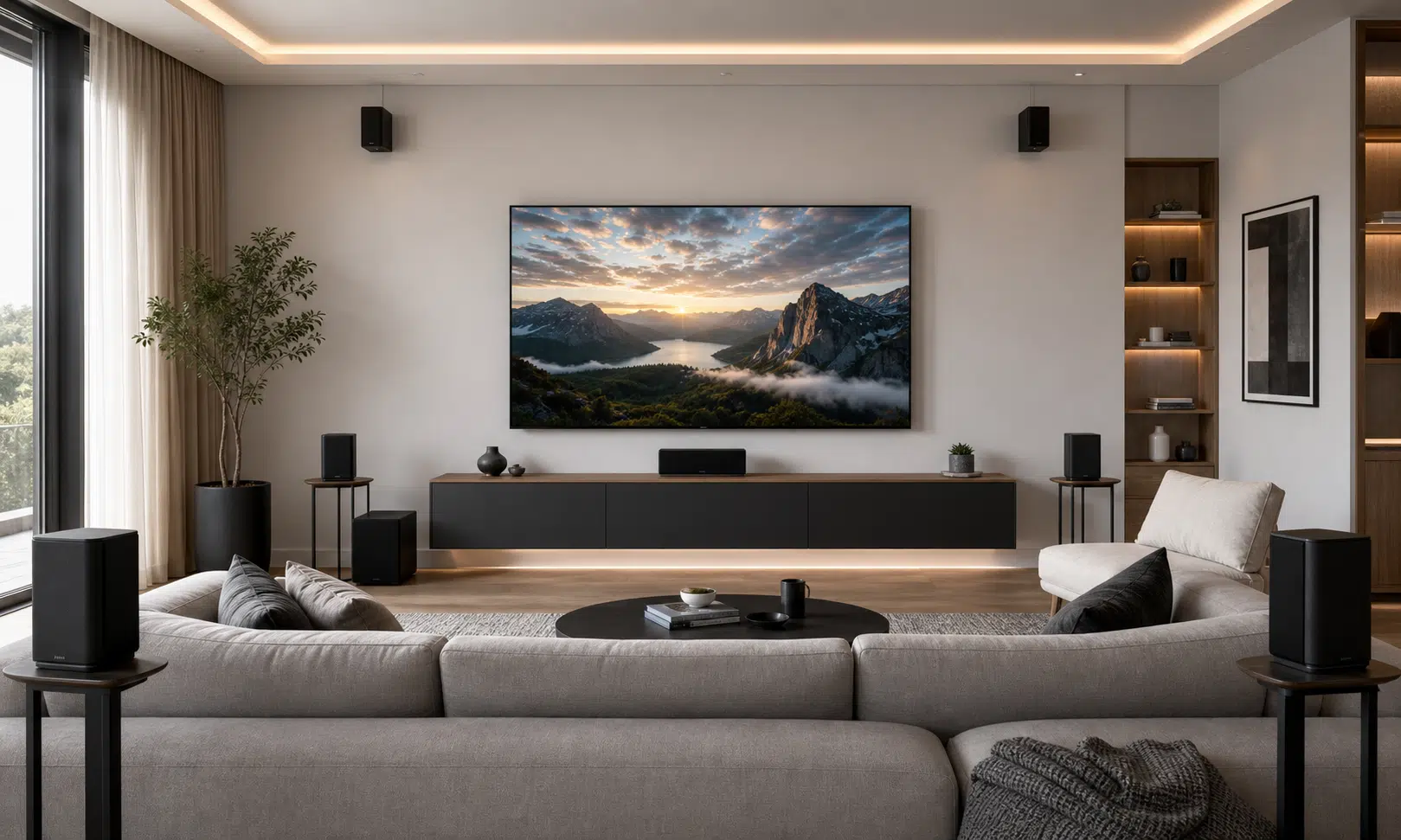

For years, the easiest upgrade from thin TV speakers has been a soundbar. The more ambitious route has been an AV receiver with separate speakers, more cables, and more setup time. Wireless Dolby Atmos speakers sit somewhere between those two approaches: less wiring than a traditional receiver system, but potentially more flexible than a single bar under the TV.
That does not mean every soundbar owner should immediately change course. Many of the most interesting systems depend on specific TVs, proprietary features, or brand ecosystems, and several claims around these products should be treated as product-positioning rather than universal fact. Still, for buyers planning a new home theater setup, this category is worth a closer look.
What wireless Dolby Atmos speakers are trying to solve
The basic promise is simple: create a more spacious TV audio system without running speaker cable around the room or installing a full AV receiver. In this kind of setup, the speakers generally include their own amplification and connect wirelessly within a compatible TV audio system.
The appeal is obvious if your room is awkward. A sofa may be pushed against a wall, a side table may block the ideal surround position, or the TV may sit in a room where a receiver and speaker wire would be a hard sell. Wireless speaker systems are designed to reduce some of that friction.
The careful buyer should focus on the phrase “compatible system.” These speakers are not generic Bluetooth boxes that automatically become a full Dolby Atmos theater with any TV. In many cases, the best features depend on a specific TV brand, a specific model range, or a defined audio platform such as Samsung Q-Symphony, Dolby Atmos FlexConnect, or Sony’s Bravia Theater systems.
That makes this less of a simple soundbar replacement and more of an ecosystem decision. If you already own the right TV, wireless Dolby Atmos speakers may be a cleaner upgrade path. If you do not, the total cost can rise quickly.
Wireless Dolby Atmos Speakers vs Soundbar Systems
| Image | Product | Best fit | Link |
|---|---|---|---|
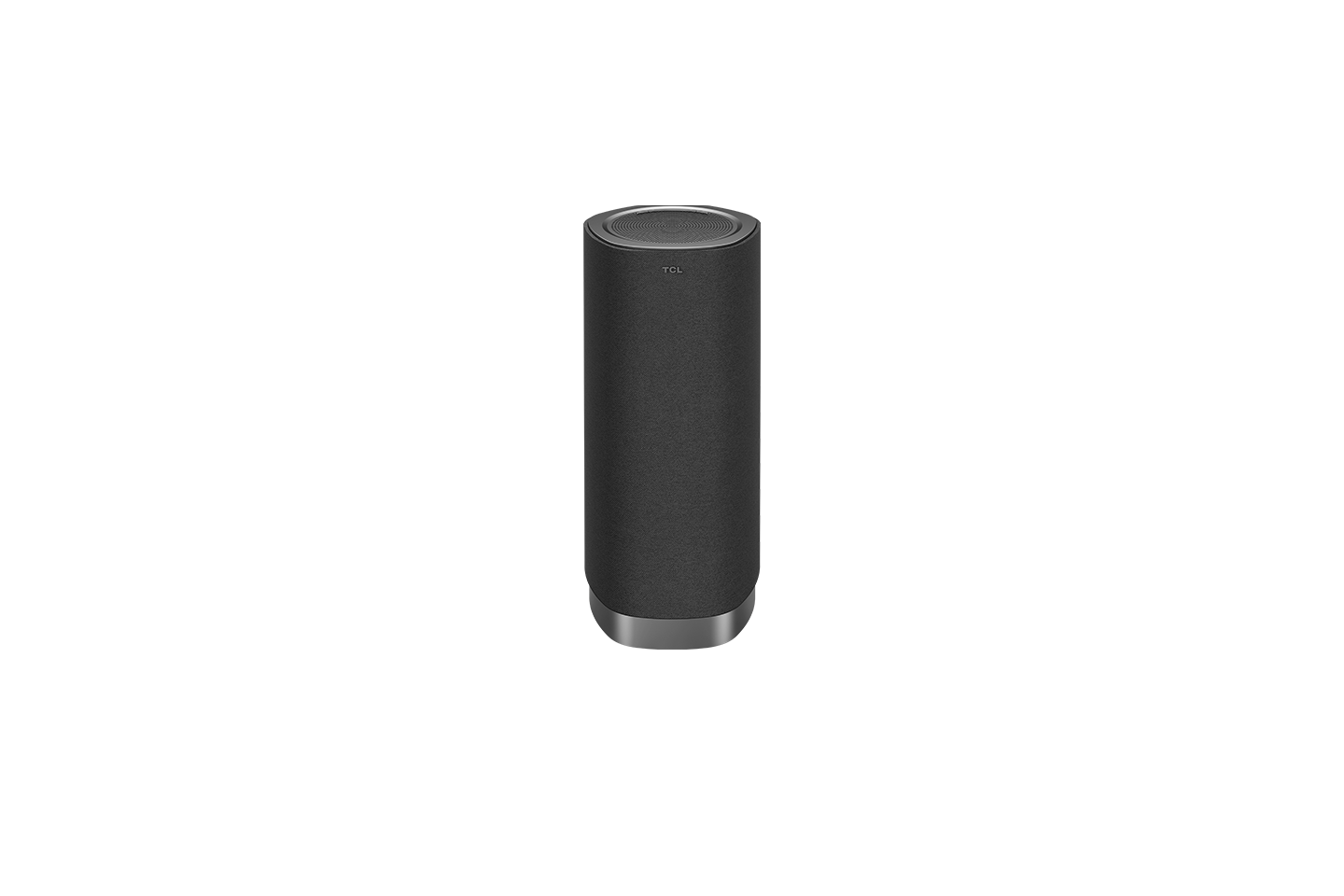 |
TCL Z100 Dolby Atmos FlexConnect Speaker | The TCL Z100 is a compact wireless speaker built around Dolby Atmos FlexConnect. It is most relevant for readers who already own, or plan to buy, a compatible TCL TV. | Check Price on Amazon |
 |
Sony BRAVIA Theater Quad | Sony BRAVIA Theater Quad uses four wireless speakers and Sony spatial processing instead of a single front soundbar cabinet. It makes the most sense when paired with compatible BRAVIA TV features. | Check Price on Amazon |
 |
Hisense HT Saturn Wireless Home Theater System | Hisense HT Saturn is a wireless speaker-and-subwoofer home theater system for buyers considering a TV-linked setup instead of a conventional soundbar. Confirm TV integration and supported audio features before making it the core of the room. | Check Price on Amazon |
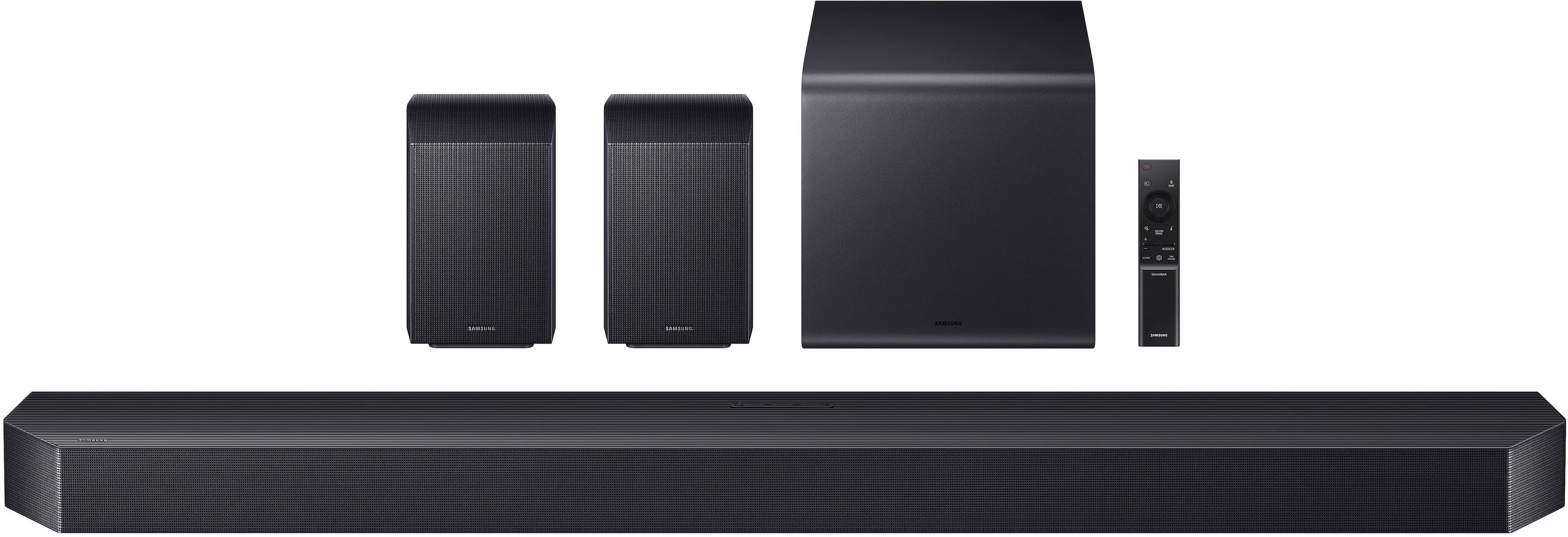 |
Samsung HW-Q990F Q-Series Soundbar System | The Samsung HW-Q990F keeps the simpler soundbar format while adding rear speakers and a wireless subwoofer. It is a useful comparison point for readers who want Atmos effects without committing to a modular speaker ecosystem. | Check Price on Amazon |
As an Amazon Associate I earn from qualifying purchases.
The main alternatives: soundbar, AV receiver, or wireless speakers
A soundbar remains the lowest-friction choice for most people. It is compact, usually easy to connect over HDMI eARC, and many models include a wireless subwoofer or optional rear speakers. The tradeoff is that the front soundstage still comes from one long cabinet, and the surround effect often depends heavily on reflections, processing, and room shape.
An AV receiver system is still the more traditional enthusiast option. It gives buyers the most control over speaker choice, channel layout, upgrades, and placement. It also asks more from the room and the owner: more hardware, more cables, and more setup decisions.
Wireless Dolby Atmos speaker systems are trying to claim the middle ground. They can offer more physical separation than a soundbar while avoiding some of the wiring and complexity of a receiver-based system. The question is not whether they are automatically better. The question is whether their convenience, calibration features, and ecosystem limits make sense for your room.
| Setup type | Best fit | Main tradeoff |
|---|---|---|
| Soundbar | Simple TV audio upgrades with minimal setup | Surround and height effects depend heavily on the bar design and room |
| AV receiver and speakers | Buyers who want the most control and upgrade flexibility | Requires more space, wiring, and setup work |
| Wireless Dolby Atmos speakers | Rooms where separate speakers are useful but cables are a problem | Compatibility and feature support can be tied to specific TV ecosystems |
Why room calibration matters
One reason these systems are getting attention is room optimization. The source material describes setups where a compatible TV and speaker system can use test tones and built-in microphones to identify speaker placement and adjust playback for the room. Because the specific behavior varies by platform, buyers should treat those details as feature claims to verify against the exact TV and speaker models they plan to buy.
The idea itself is useful. Home theater rarely happens in perfect rooms. Furniture, wall distance, ceiling height, and open-plan layouts all affect sound. A system that can account for real placement is more forgiving than one that assumes every speaker sits in an ideal position.
That is why Dolby Atmos FlexConnect and similar approaches are interesting. The source article describes FlexConnect as a way for compatible TVs and speakers to work together without requiring a soundbar or AV receiver, with calibration based on speaker position and room acoustics. It also describes Samsung Q-Symphony as a related ecosystem approach, although buyers should confirm exactly which TVs and speakers support which features.
The benefit is not only convenience. If a system can use speakers where they actually fit, rather than where a diagram says they should go, it may work better in living rooms that were not designed around home theater.
Products and ecosystems mentioned by the source
Several brands are involved in this shift, but the details matter. The source names Samsung Music Studio 7, LG SoundSuite FlexConnect, TCL Z100 speakers, Sony Bravia Theater Trio and Bravia Theater Quad, and Hisense HT Saturn. Because many of the associated claims were not independently verified in the provided fact-check notes, the safest way to use them is as examples of the category rather than as confirmed recommendations.
Samsung’s Music Studio 7 is presented in the source as a compact wireless speaker intended to work within Samsung’s Q-Symphony ecosystem. The article describes it as a multi-directional speaker with Wi-Fi and Bluetooth, a 3.1.1-channel design, and 150W output, but those specifications should be checked against Samsung’s own model page before purchase.
LG’s SoundSuite FlexConnect is described as using Dolby Atmos FlexConnect, with an additional Sound Follow feature that can adjust the listening focus based on the viewer’s position. The source connects that positioning feature to ultrawideband support in a smartphone, but buyers should verify device compatibility before treating it as a deciding feature.
TCL’s Z100 speakers are discussed in connection with Dolby Atmos FlexConnect. The source characterizes TCL as an early major TV brand to support the technology, but it is better to avoid treating any “first” claim as settled without checking a firm launch timeline.
Sony’s Bravia Theater Trio and Bravia Theater Quad take a different route. The source describes the Trio as a left-center-right style system using spatial sound mapping and virtualization to create the impression of additional speakers. It describes the Quad as a four-speaker wireless surround system that can work with a Bravia TV’s speakers for center-channel duties or create a virtual center. Those are useful buying considerations, but they also reinforce the same point: TV compatibility is central.
Hisense’s HT Saturn is described as a four-speaker system with a wireless subwoofer, 4.1.2-channel playback, two upfiring drivers, 720W total power, and tuning associated with Devialet. Those are meaningful specs if accurate, but they should be verified at the product level before purchase.
Where wireless speakers may beat a soundbar
The best argument for wireless Dolby Atmos speakers is physical separation. A soundbar can do impressive processing, but it still starts from one cabinet near the TV. Separate speakers can place sound in more parts of the room, which may help movies, games, and sports feel less tied to the screen.
Wireless systems may also be easier to live with than traditional separates. There is no need to route speaker cable across the room, and some systems are designed to handle placement more flexibly through calibration. For renters, shared living spaces, and rooms where furniture comes before speaker geometry, that matters.
The source also notes the possibility of mixing different speaker types over time, especially if standards such as Dolby Atmos FlexConnect become more widely supported. That is a promising idea, but it should be framed as a potential direction rather than a guaranteed near-term buying benefit. Early systems often work best inside one manufacturer’s ecosystem.
Where soundbars still make more sense
Soundbars are not suddenly obsolete. In many homes, they remain the better buy. They are easier to compare, easier to install, and often cheaper than buying multiple wireless speakers and a compatible TV.
A soundbar also avoids some ecosystem uncertainty. If it supports HDMI eARC and the audio formats you need, it will usually work across TV brands. Wireless Atmos speaker systems may offer more flexibility in placement, but they can be less flexible in product matching.
Buyers should also think about power outlets. “Wireless” usually means no speaker cable running back to a receiver, not no wires at all. Most powered speakers still need electricity. In some rooms, finding clean outlet access for multiple speakers can be almost as annoying as hiding speaker cable.
Verdict: a serious option, not an automatic replacement
Wireless Dolby Atmos speakers are one of the more practical new directions in TV audio, especially for buyers who want a fuller surround field without building a receiver-based system. They make the most sense when you already own, or plan to buy, a compatible TV and you have a room where separate speaker placement would clearly help.
They are less compelling if you want the simplest possible upgrade, if your budget is tight, or if you are not ready to commit to a specific TV and speaker ecosystem. In those cases, a good soundbar still has a strong case.
The buyer-aware takeaway is straightforward: do not compare wireless Dolby Atmos speakers to soundbars on convenience alone. Compare the whole system. Check TV compatibility, calibration support, speaker count, subwoofer options, outlet placement, and upgrade paths. If those pieces line up, wireless speakers can be a cleaner and more immersive route than a soundbar. If they do not, the soundbar remains the safer purchase.