

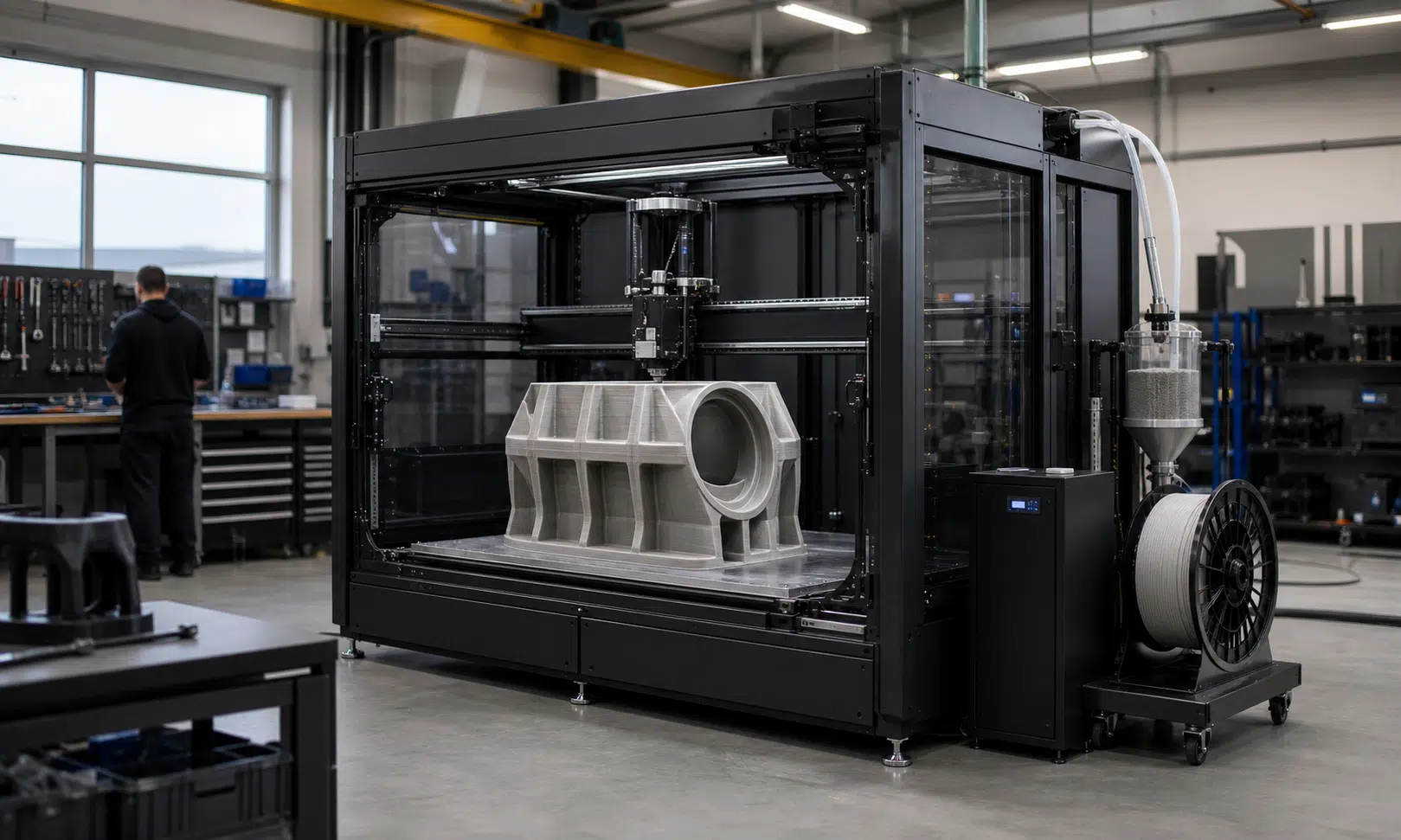

The Modix MAMA-1000 is not aimed at hobbyists looking for a bigger desktop printer. It is a large-format pellet 3D printer built around a 1,000 x 1,000 x 1,000 mm build volume, with a reported starting price of $35,000 and a workflow that makes more sense for shops, labs, and manufacturers than casual makers.
Its main appeal is scale. A cubic meter of build space opens the door to furniture prototypes, display pieces, molds, props, signage, and other parts that would otherwise need to be split across multiple smaller prints. That does not automatically make it the right buy, though. A machine this size brings material handling, drying, ventilation, installation, and operator training into the decision.
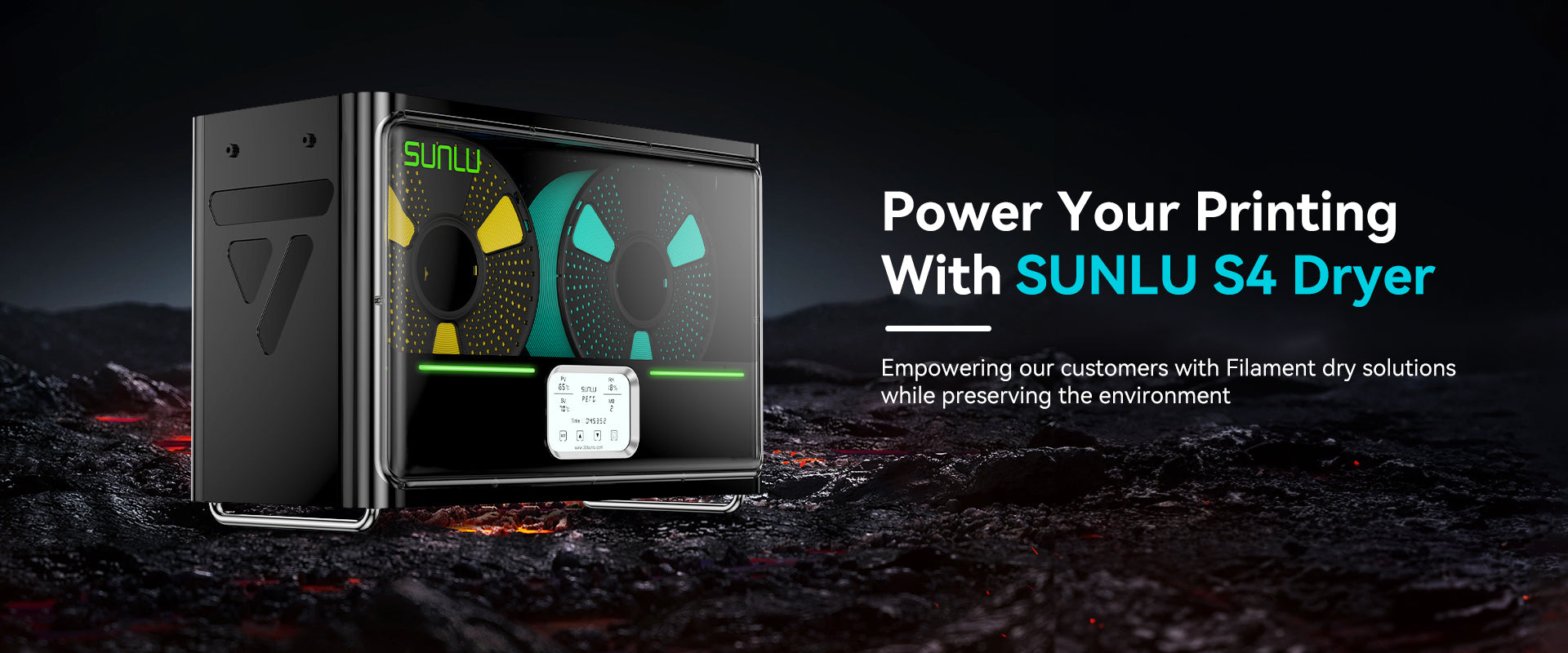
SUNLU FilaDryer S4 Filament Dryer
For shops using the filament head alongside pellet extrusion, a dedicated filament dryer can help keep hygroscopic materials such as nylon, PETG, TPU, and composites in better printing condition. A multi-spool unit is most useful when several materials are staged for testing or support workflows.
As an Amazon Associate I earn from qualifying purchases.
What the MAMA-1000 Offers
The MAMA-1000 combines pellet extrusion with a filament extrusion option. Modix lists the pellet system as using a DYZE Design Pulsar print head with up to 3 kg per hour throughput, 500 mm3/s flow, and 3 mm and 5 mm nozzle options. That setup is meant for moving a lot of material quickly, not for tiny surface details.
For finer work, Modix also lists a Griffin Ultra filament print head using 1.75 mm filament and a 1.6 mm nozzle, with lower maximum output. In practice, that gives buyers a way to use pellet printing for the bulk of a large part while reserving filament printing for areas where finish or feature definition matters more.
| Feature | Buyer relevance |
|---|---|
| 1,000 x 1,000 x 1,000 mm build volume | Useful for large single-piece prints and fewer joined assemblies |
| Pellet extrusion | Best suited to high-material-use jobs where feedstock cost matters |
| Filament head option | Adds flexibility for finer features and support workflows |
| Fully enclosed frame | Important for managing large prints and broader material use |
| Fully assembled delivery | Reduces setup burden compared with large self-assembly kits |
The Pellet Printing Tradeoff
Pellet printing can lower material costs because it uses plastic granules rather than filament spools. Modix says compatible materials include PLA, ABS, ASA, TPU, PETG, nylon, composites, recycled polymers, and other pellet materials. It also lists pellet costs in a broad $2 to $8 per kg range, compared with much higher filament costs.
That cost advantage matters most when the printer is kept busy. If your use case involves occasional oversized prints, the machine price and support equipment may be hard to justify. If your team regularly burns through large volumes of plastic for tooling, furniture, display work, or production fixtures, the economics become more interesting.
Pellet workflows also add steps. Modix lists drying and compressed-air feeding as part of the system, and buyers can add a 25 kg pellet dryer, a pigment mixer, an air filter unit, and an IDEX-style dual-head setup. Those add-ons may be optional on paper, but some shops will treat them as part of the real operating package.
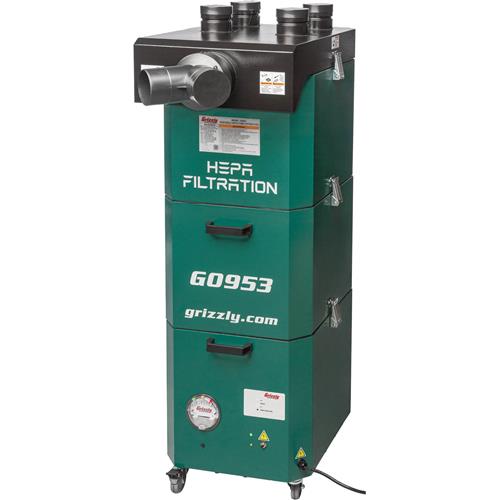
HEPA/Carbon Fume Extractor for 3D Printing Workspaces
Large-format plastic printing can make air handling part of the real installation cost. Look for a fume extractor or filtration system sized for the room, material set, enclosure design, and local safety requirements rather than treating a small desktop purifier as enough for industrial use.
As an Amazon Associate I earn from qualifying purchases.
Who Should Shortlist It?
The MAMA-1000 is easiest to justify for teams that already know why they need a one-meter build volume. That includes industrial design groups, fabrication shops, universities, mold and tooling users, and companies producing large visual or functional parts.
It is less compelling for buyers who mostly want a very large version of a desktop FDM printer. Large-format printing is slower to validate, harder to tune, and less forgiving when a job fails after many hours and kilograms of material. The MAMA-1000’s pellet system is built for output, but buyers should still evaluate floor space, ventilation, drying, operator time, and support response before treating the headline throughput as the whole story.
Buying Verdict
The Modix MAMA-1000 looks like a practical middle point in Modix’s MAMA line: smaller than the MAMA-1700, but still large enough for serious industrial-scale parts. Its value depends less on the headline 1 cubic meter build area and more on whether your work can benefit from pellet feedstock, large nozzles, and a combined pellet-plus-filament workflow.
For a print farm, design studio, or research lab with recurring large-part needs, it belongs on the comparison list. For a buyer chasing one or two oversized projects, outsourcing or printing in sections on smaller machines may still be the better financial decision.