


California’s Assembly has passed AB 2047, a 3D printer bill aimed at blocking the production of firearms and illegal firearm parts before a print job starts. The measure, titled the California Firearm Printing Prevention Act, moved to the state Senate after a 58-19 Assembly vote on May 26, 2026.
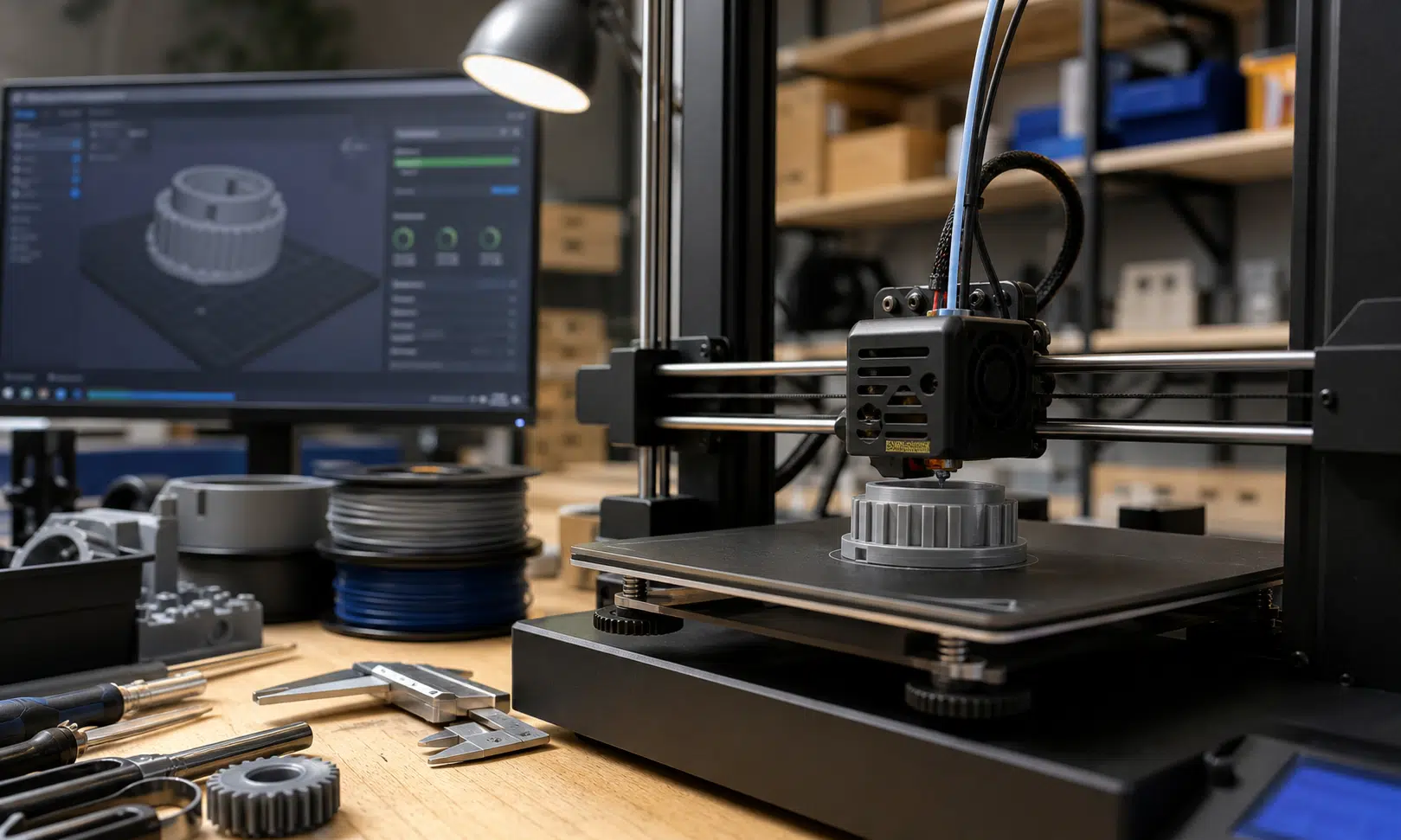
The bill would require 3D printers sold or transferred for consideration in California to include firearm-blocking technology. In practical terms, that means a printer would need a way to evaluate the underlying design file before printing and reject files identified as producing a firearm or illegal firearm part.
The provision drawing the sharpest reaction is the anti-circumvention language. As written, the bill would make it a misdemeanor to knowingly disable or bypass firearm-blocking technology with the intent to manufacture firearms, or to sell or transfer modified listed printers in California with the intent to facilitate unlawful firearm manufacturing.
What AB 2047 would require
AB 2047 would add a new title to California’s Civil Code and give the Department of Justice, or another relevant state agency, a central role in setting performance guidance. The agency would be directed to study known firearm blueprint files and existing detection algorithms, then publish standards for detection systems and software control processes by January 1, 2028.
The bill does not demand a perfect detection rate. Instead, it calls for standards that account for false positives and false negatives, while still requiring a high degree of accuracy and reliability. The proposal also contemplates regular updates as new firearm design files appear.
The compliance timeline is staged:
| Date | Requirement |
|---|---|
| January 1, 2028 | State guidance due for detection algorithms and software control processes. |
| March 1, 2028 | Manufacturer guidance due for equipping printers with firearm-blocking technology. |
| July 1, 2028 | Printer manufacturers must submit self-attestations for models intended for California sale or transfer. |
| September 1, 2028 | The state must publish a list of printer models with complete or incomplete attestations. |
| March 1, 2029 | The sales and transfer restrictions become operative. |
A false attestation could also expose a filer to potential perjury prosecution, separate from the bill’s civil enforcement tools.
Why makers and printer vendors are worried
For printer owners, schools, libraries, and makerspaces, the concern is not only about firearm files. Critics argue that a mandatory pre-print screening layer could affect ordinary workflows, especially where users rely on open firmware, third-party slicers, custom printer builds, or offline machines.
Digital rights advocates and parts of the maker community have warned that the bill could push consumer 3D printers toward closed software ecosystems. Their concern is that a printer designed to accept jobs only through an approved slicer or firmware path could make legitimate repair, modification, and open-source development harder.
There are also technical questions. Firearm components can share shapes and dimensions with lawful mechanical parts, and small edits to a file can complicate signature-style detection. More advanced analysis may require more processing power than many consumer printers have available, which raises further questions about cloud checks, privacy, and internet-dependent printing.
Who would be exempt
AB 2047 includes exemptions for certain printers manufactured and sold exclusively to specific users, including state-licensed firearms manufacturers, law enforcement or government users for firearm manufacturing purposes, some industrial and government-contractor buyers, and entertainment industry stagecraft or propmaking studios.
Those carveouts do not appear to cover ordinary consumer printers used in classrooms, public libraries, hobby workshops, or local makerspaces. That is one reason the bill has become a broader hardware-control debate rather than only a gun-policy debate.
Supporters frame the measure as a response to the rise of 3D-printed ghost guns and argue that file-screening requirements would close an enforcement gap. Opponents see it as a hard-to-implement mandate that could reshape the consumer 3D printer market in California even for users who never print firearm parts.
For now, AB 2047 is not law. As of June 1, 2026, it is an active bill in the California Senate, pending the next stage of consideration.