

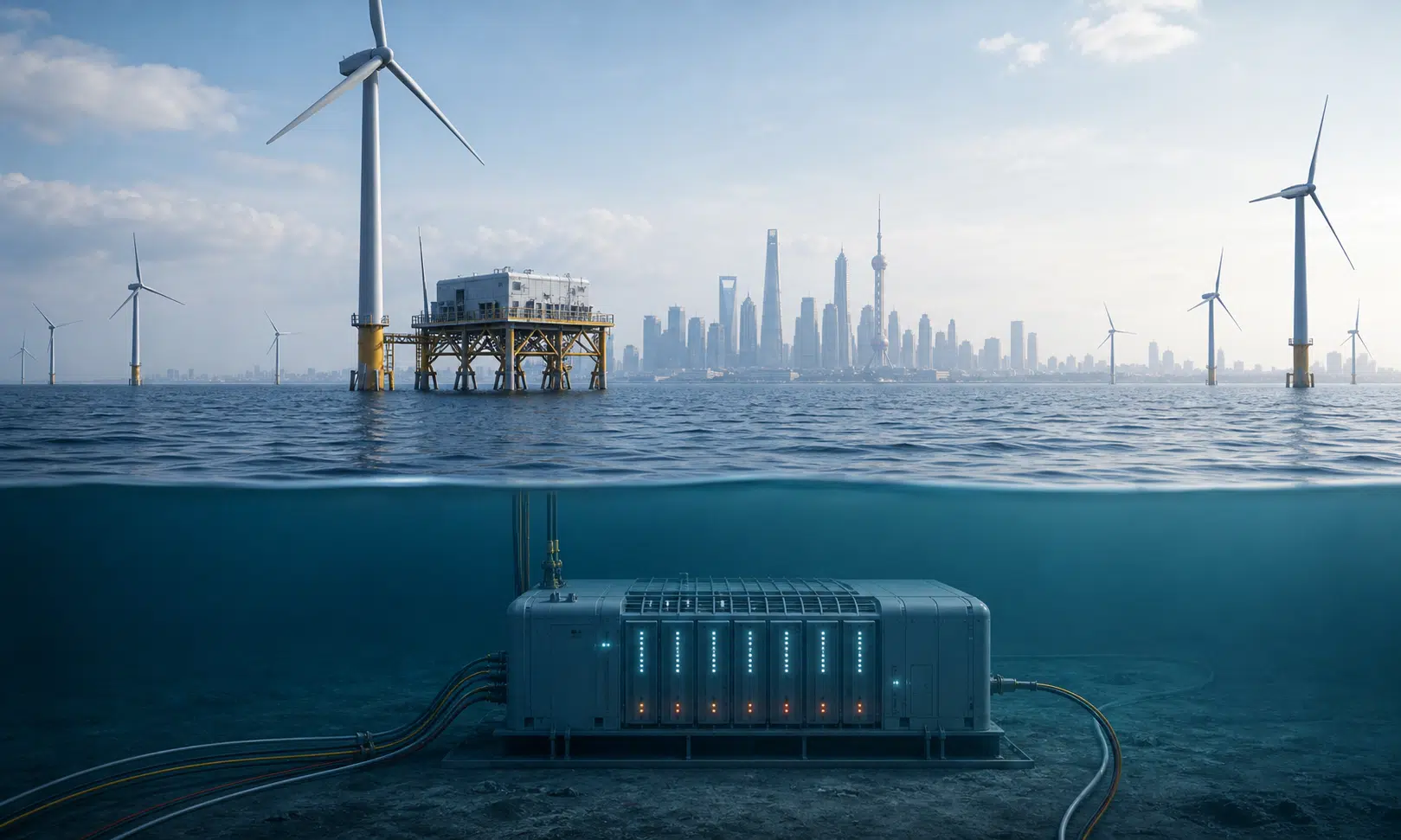

China is pushing ahead with an underwater datacentre project off Shanghai as part of a wider search for ways to cut the energy and water burden of AI infrastructure. The project has been described as a wind-powered underwater datacentre, but several key details have not been independently verified.
The Shanghai Lingang undersea datacentre demonstration project reportedly launched in May and has been described as having a capacity of 24 megawatts. That capacity figure has not been independently verified. The project has also been described as a joint effort involving HiCloud Technology and China Communications Construction, a state-owned company, but that partnership detail should be treated as reported rather than independently confirmed.
According to the project description, the facility sits more than 6 miles, or about 10km, off the Shanghai coast, is submerged about 10 metres below the surface, and draws power from a nearby offshore windfarm. Those location, depth and power-source details have not been independently verified.
Why put a datacentre underwater?
The basic argument for underwater datacentres is straightforward: servers produce heat, and cooling them consumes a large share of datacentre energy. Supporters of underwater designs say seawater can help reduce the need for conventional cooling systems, while offshore renewable power could cut reliance on fossil-fuelled electricity.
The Chinese government has claimed the Shanghai project reduces power consumption by more than one-fifth compared with land-based datacentres. That figure has not been independently verified. The broader cooling claim should also be read with care: seawater may reduce some cooling demand, but the exact savings depend on the design, workload, local conditions and how performance is measured.
Land-based datacentres have drawn more scrutiny as AI use expands, particularly because they require large amounts of electricity and, in many cooling setups, water. Some reports have estimated that cooling can account for a substantial portion of a traditional datacentre’s electricity use, but the specific range cited for chilled-water systems has not been independently verified here.
How the underwater model compares
| Factor | Land-based datacentres | Underwater datacentres |
|---|---|---|
| Cooling | Often rely on mechanical cooling and chilled-water systems. | May use surrounding seawater to reduce cooling demand, depending on design. |
| Water pressure | Can add pressure on freshwater supplies. | Could reduce freshwater demand, but full lifecycle impact is still uncertain. |
| Power source | Depends on grid mix and site contracts. | The Shanghai project is described as linked to offshore wind, though the details are not independently verified. |
| Environmental risk | Land, power and water impacts vary by location. | Marine impacts may include sediment disturbance and localized warming, requiring monitoring. |
This comparison does not make underwater datacentres an automatic replacement for conventional facilities. It shows the tradeoff: potential cooling and water advantages on one side, marine engineering complexity and environmental monitoring on the other.
What is still unclear
HiCloud has been described as having launched a commercial underwater datacentre in Hainan in 2023, while the Shanghai project has been presented as the first offshore-wind-powered version. Those claims have not been independently verified. Microsoft also previously tested underwater datacentre technology near Orkney in Scotland, though the claim that China has moved further because of faster coordination between industry, engineering and policy should be treated as expert interpretation rather than settled fact.
China’s AI strategy is another important backdrop. The country has signalled support for datacentre construction and cleaner energy supplies for digital infrastructure, but specific policy timelines and investment figures attached to the Shanghai project should not be treated as confirmed unless independently checked. A reported 1.6bn yuan investment figure for the Lingang datacentre has not been independently verified.
The environmental question remains open. Underwater datacentres could reduce some freshwater demand, but they may also disturb seabed sediments or warm nearby seawater. Experts have suggested those risks may be manageable with monitoring, but the project will need evidence from real operation, not only design claims, before its benefits can be judged with confidence.