

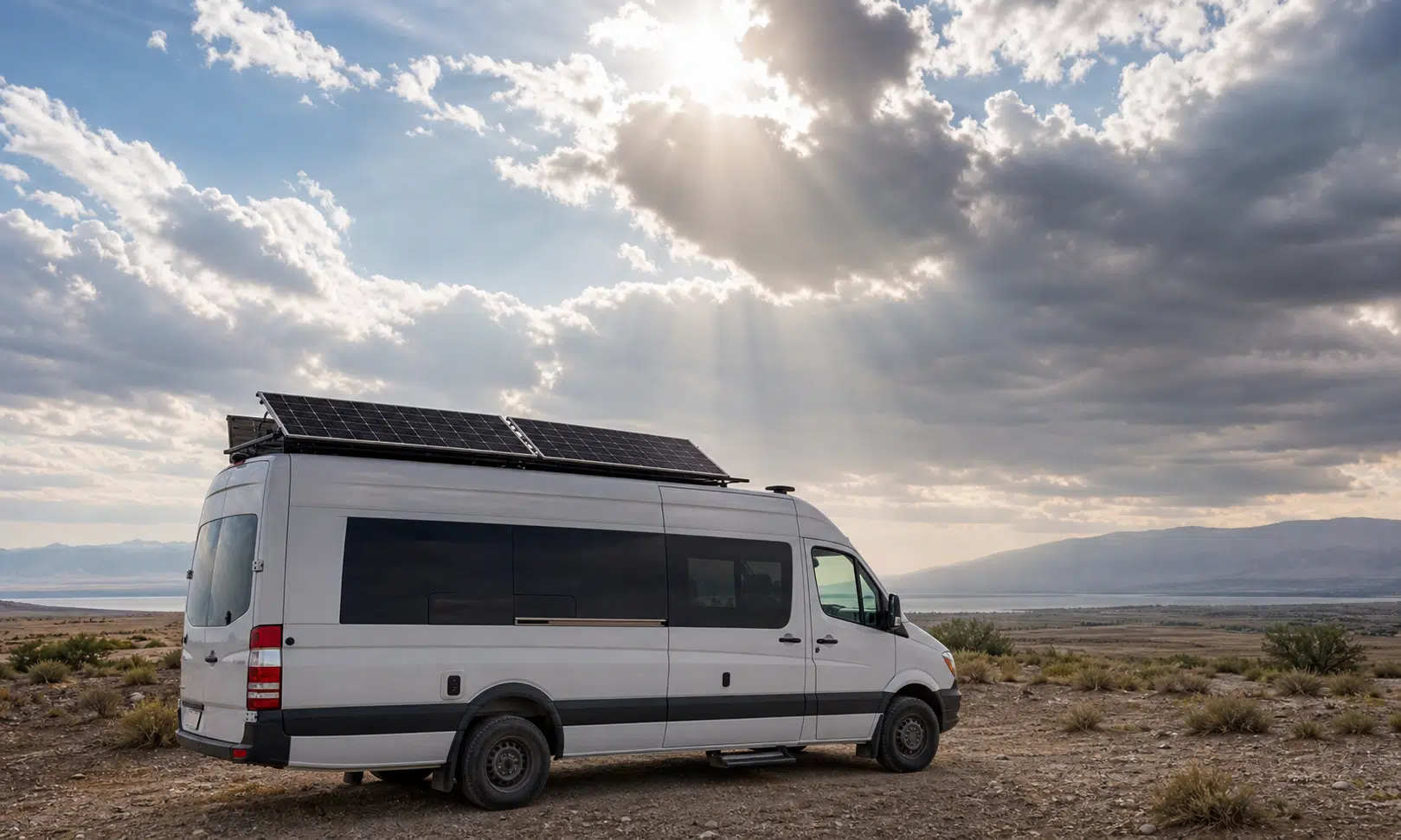

An 880-watt solar setup reportedly produced 1,050 watts during a recent outing, a number that looks impossible at first glance. The system was made up of two 440-watt panels mounted on a long-wheelbase Sprinter van, according to the original account shared online.
That kind of reading naturally raises questions. Solar panels are sold with a rated output, and buyers usually expect real-world performance to come in below that number, not above it. Heat, angle, dust, wiring losses, and inverter behavior all tend to pull output down. Seeing a system jump to about 120 percent of its stated panel rating can make the monitoring app look suspicious.
But brief overperformance does not automatically mean the meter is wrong or that the panels are breaking physics. Under the right sky conditions, sunlight reaching a panel can temporarily exceed what people expect from a clear day. One likely explanation is a known weather-related effect often called cloud edge enhancement.
The reported setup was small, mobile, and exposed
The system in question was not a large rooftop array or utility-scale installation. It was a compact van setup: two 440-watt dual-glass, all-black N-type bifacial solar panels mounted on the roof of an XLWB Sprinter. The owner noticed output above 1,000 watts and asked other users whether they had seen anything similar.
That detail matters because mobile solar behaves differently from a fixed residential array. A van roof may have a clearer view of the sky than a house roof surrounded by chimneys, trees, rooflines, or nearby buildings. It can also be parked in a place with unusually open exposure.
The bifacial panel design may also matter in some installations. Bifacial panels can collect light from both the front and rear sides, although the real gain depends heavily on mounting, spacing, surface reflectivity, and local conditions. On a van roof, rear-side contribution is not guaranteed to be large, but reflected light can still be part of the broader picture.
In other words, the reported number should not be read as proof that an 880-watt system will normally behave like a 1,050-watt system. It is better understood as a short-lived output spike under favorable conditions, assuming the measurement was accurate.
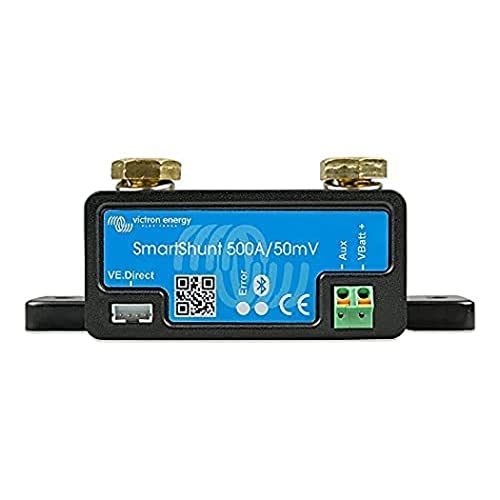
Victron Energy SmartShunt 500A Battery Monitor
A shunt-based battery monitor can help show how much current is moving into and out of a van or RV battery bank. It is useful when comparing brief wattage spikes with longer-term energy production over the day.
As an Amazon Associate I earn from qualifying purchases.
Why clouds can increase solar output for short periods
The counterintuitive part is that clouds are usually associated with lower solar production. Thick cloud cover blocks direct sunlight, and a fully overcast day can cut panel output sharply. But broken or fast-moving clouds can create a more complicated scene.
Cloud edge enhancement can occur when sunlight is reflected or scattered by the edges of nearby clouds while direct sunlight still reaches the panel. For a short time, the panel can receive direct sun plus extra diffuse or reflected light from the surrounding sky. That can push irradiance above what a simple clear-sky expectation would suggest.
This is not the same as saying that more clouds always mean more power. Most clouds reduce production. The effect is highly dependent on cloud type, sun angle, cloud position, panel orientation, and timing. It is usually brief, and it can come and go quickly as clouds move.
A useful way to think about it is that the panel is not only responding to whether the sky is sunny or cloudy. It is responding to the amount of solar energy arriving at its surface at that moment. In broken-cloud conditions, that momentary energy can spike.
| Condition | Typical effect on panels | Why it matters here |
|---|---|---|
| Clear, hot sun | Strong light but warmer panels | Heat can reduce electrical output compared with ideal test conditions |
| Thick cloud cover | Lower output | Direct sunlight is reduced or blocked |
| Broken clouds near the sun | Possible short output spikes | Cloud edges can scatter or reflect extra light toward the panel |
| Cool air after rain | Potentially better efficiency | Cooler panels generally convert sunlight more efficiently than hot panels |
Cooler panels can also help
Another factor is temperature. Solar panels are tested and rated under standard conditions, but outdoor conditions rarely match the lab. In real use, panels sitting in direct sun can get much hotter than the surrounding air, and higher cell temperature usually reduces output.
That means a bright, cool day can sometimes be better than a brutally hot sunny day. If rain has recently cooled the panels or the air temperature is lower, the same amount of sunlight can produce more electrical power than it would on a hotter surface.
When cooler panels coincide with cloud edge enhancement, the result can look dramatic on a monitoring screen. The panel may be receiving unusually strong irradiance for a few moments while also operating at a more favorable temperature. That combination is a plausible reason for an output spike above the nameplate rating.
Still, the timing matters. A brief peak is not the same as sustained energy production. Solar owners should distinguish between instantaneous watts and total watt-hours over the day. A system can hit an impressive peak and still produce an ordinary daily total if the conditions do not last.
Why the rating is not a hard ceiling
A panel rating is not a physical limiter built into the panel. It is a measured output under defined test conditions. Real-world output can land below, near, or occasionally above that rating depending on irradiance, temperature, wiring, controller behavior, and measurement accuracy.
That does not mean every part of the system can safely handle any spike. Charge controllers, wiring, fuses, connectors, and batteries all have operating limits. A short-lived panel-side overproduction event may be harmless in one setup and stressful in another if the system was designed with very little margin.
For small van and RV systems, the practical lesson is simple: size the balance of the system with real operating behavior in mind, not only the label on the panels. The solar charge controller should be appropriate for the panel voltage and current, and the wiring and protection should match the expected load with suitable overhead.

BougeRV 15A Inline Solar Fuse Holders
Inline solar fuse holders are used to protect PV wiring and connected equipment when the system design calls for fused solar leads. Match fuse size to the panel, wire, and controller specifications rather than choosing by wattage alone.
As an Amazon Associate I earn from qualifying purchases.
The original report does not independently prove that every component in the van system handled the event without stress. It only shows that the owner observed unusually high output. Without direct access to the equipment, logs, calibration, and installation details, the safest conclusion is that the system appeared to produce extra power under favorable conditions.
Cloud enhancement can be useful, but it can also create risk
For an individual user, a short spike above rated output can feel like a bonus. For solar plant operators, rapid irradiance changes can be more complicated. Sudden jumps and drops can affect inverters, grid management, forecasting, and equipment protection.
Researchers have studied cloud enhancement events because they can create brief periods of unexpectedly high irradiance. Some reports have linked these events to operational concerns at solar facilities, including incidents in Brazil in 2019, though the exact financial impact should not be treated as confirmed without more detail.
The broader point is sound: solar production is not controlled only by whether the day is sunny. Cloud shape, movement, and position can create fast-changing conditions that matter for both small systems and large plants.
For everyday solar owners, this does not mean cloud edge enhancement is something to chase. It is too weather-dependent and short-lived to plan around as a normal source of extra energy. It is better treated as an occasional event that explains why a monitoring app may show a surprising peak.
The takeaway for solar owners
The reported 1,050-watt output from an 880-watt panel setup is unusual, but it is not automatically impossible. Broken clouds can briefly increase irradiance, cooler panels can perform more efficiently, and a well-exposed mobile setup may see conditions that are different from a shaded residential roof.
The important distinction is between a momentary watt reading and dependable energy production. A spike above rated output is interesting, but it does not change the long-term economics or expected performance of a solar system. Buyers should still size their systems around realistic daily energy needs, seasonal sunlight, and proper electrical design.
If anything, the episode is a useful reminder that solar panels operate in a real atmosphere, not a spreadsheet. Clouds usually reduce output, but under the right conditions, their edges can briefly do the opposite.