

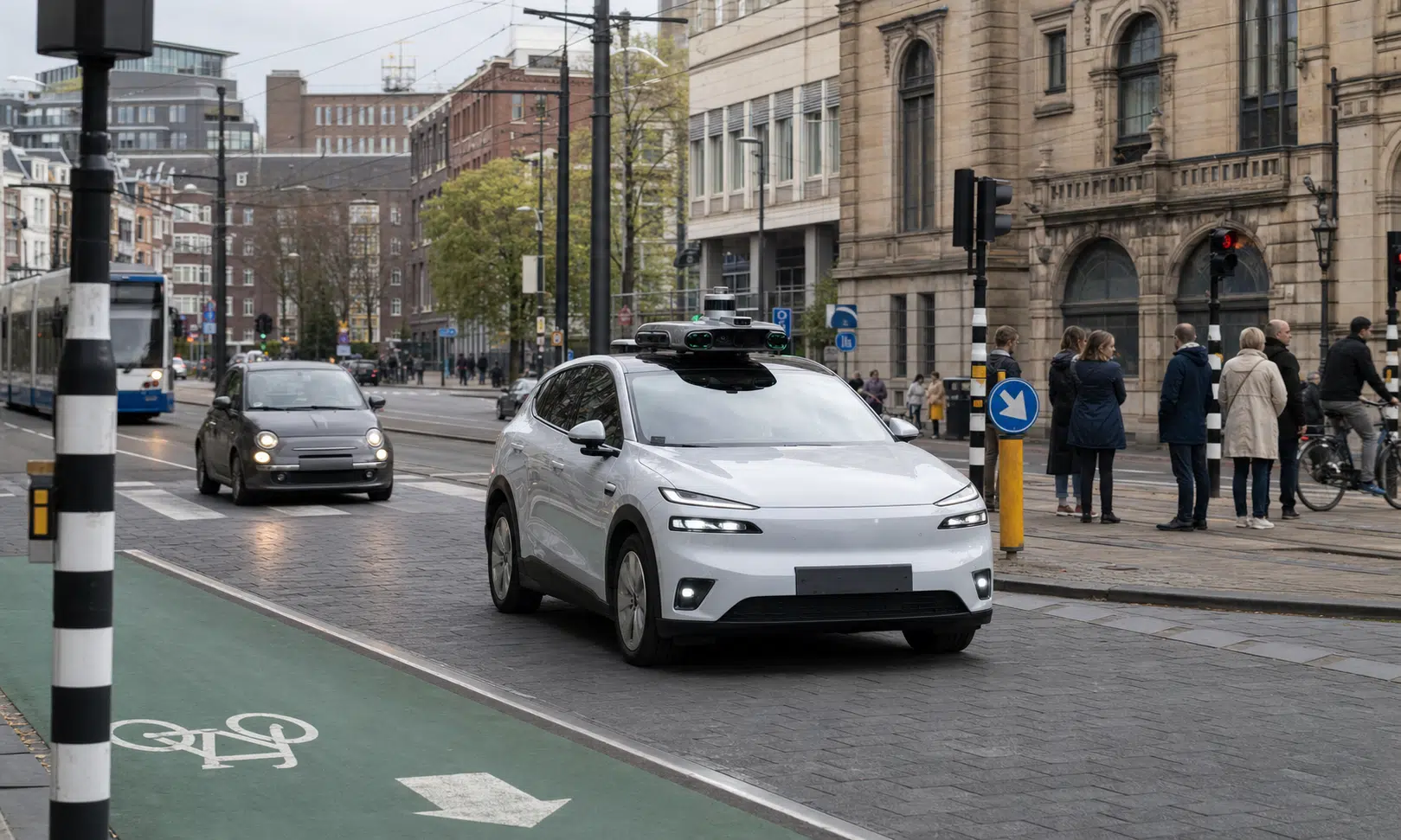

Europe’s self-driving taxi market is moving from long-running discussion toward practical trials, but it is not yet a simple consumer product story. The source article describes a wave of planned or reported robotaxi pilots across Europe, involving ride-hailing platforms, automakers and autonomous-driving companies. Many of those claims should still be treated as reported plans rather than settled facts, especially where exact launch dates, fleet sizes or regulatory timelines have not been independently confirmed.
That distinction matters for anyone evaluating autonomous taxi services as a rider, city buyer, fleet partner or mobility investor. A robotaxi announcement can sound like a full commercial launch when it is really a controlled pilot, often with a safety operator on board, a limited service area and a regulatory approval path that still has several steps left.
Verdict: Europe Looks Interested, Not Yet Open at Scale
The most useful way to read the European robotaxi push is as an early market test, not as a finished transportation shift. The source describes trials or planned trials in cities including Zagreb, London, Madrid, Munich and parts of Switzerland and Luxembourg. It also points to a wider policy debate inside Europe: whether autonomous taxis should serve dense, profitable city centers first, or whether public authorities should steer them toward suburbs and rural areas where public transport coverage is weaker.
For buyers and decision-makers, the practical verdict is cautious. Europe may become a meaningful robotaxi market, but the first deployments are likely to be narrow, closely watched and dependent on local regulation. A service that works in one city will not automatically be available, affordable or legally cleared in another.
What Is Actually Being Tested
The source frames robotaxis as driverless vehicles loaded with sensors and software, usually connected to a ride-hailing or fleet-management platform. In Europe, however, the article says safety-driver requirements remain an important constraint. That means some early vehicles may look like autonomous taxis to passengers while still carrying a person responsible for monitoring the trip.
The article reports that Europe is considering a more unified testing approach, described as a testbed, that could reduce the need for companies to seek approval country by country. Because the timing has not been independently confirmed, this should be read as a regulatory direction to watch rather than a guarantee that every operator will soon be able to run cross-border tests.
For a buyer, the key question is not whether a company uses the word “robotaxi.” It is whether the service is:
- Operating with or without a safety driver
- Available to the public or limited to closed pilots
- Restricted to a mapped service zone
- Booked through a consumer ride-hailing app or a private pilot program
- Approved for commercial fares or only for testing
Those details decide whether a robotaxi is a real transport option or a technology demonstration.
The Reported European Trial Map
The source names several companies and cities, but the reported status varies. Some items are described as active pilots, others as planned tests, and others as partnerships that may lead to service later. A cautious buyer should separate confirmed daily availability from announced intent.
| Market | Companies named in the source | Buyer-relevant takeaway |
|---|---|---|
| Zagreb | Pony.ai, Uber, Verne and Rimac-linked backing | Presented as one of Europe’s first visible pilot cases, but still best treated as a controlled trial. |
| London | Waymo, Wayve with Uber, and Apollo Go | Several major operators are reported to be targeting the city, making London a key market to watch. |
| Madrid | WeRide and Uber | The source describes a test announcement, but public availability and timing should be verified before treating it as a service option. |
| Munich | Uber and Momenta | The report points to a planned robotaxi deployment using Momenta technology, with timeline details still needing confirmation. |
| Switzerland | Apollo and Swiss Post | Positioned as a pilot outside the biggest capital-city pattern, which could matter for regional mobility planning. |
| Luxembourg | Stellantis and Pony.ai | Described as a planned test, useful mainly as a signal of automaker interest. |
Why Europe Is Moving More Slowly
The source presents Europe as behind the United States and China in robotaxi deployment. It attributes that slower pace partly to stricter safety rules and partly to Europe’s stronger public-transport culture. That framing is plausible, but exact comparisons in fleet size and timing should be handled carefully because the underlying figures were not independently verified in the supplied material.
For riders, slower rollout is not automatically bad. It may mean fewer early options, but it can also mean more conservative approval processes and more public scrutiny before driverless services operate at scale. For city agencies, the slower pace creates time to decide whether robotaxis should compete with public transport, fill gaps in it, or be restricted to specific use cases.
The commercial tension is clear. Operators tend to prefer dense districts where short, frequent trips can produce revenue. Politicians and transport authorities may prefer suburbs, late-night routes or rural connectors where conventional transit is thin. Those goals do not naturally line up.
How To Evaluate A Robotaxi Service
A buyer-aware review of robotaxis should focus less on the brand announcement and more on the service conditions. If a European robotaxi option appears in a city, the following criteria will matter more than headline fleet size.
1. Safety Model
The first question is whether the vehicle is fully driverless, supervised remotely, or carrying a safety operator. A service with a safety driver can still be valuable as a pilot, but it is not the same operating model as a driverless commercial fleet. It may also have different cost assumptions.
2. Service Area
Robotaxis usually begin in limited, well-mapped zones. That means a service can be available in a city without being useful for a specific commute, airport run or suburban trip. Riders should check whether the pickup and drop-off area matches their real routes.
3. Booking Channel
The source names ride-hailing platforms such as Uber, Lyft and Bolt as common partners in robotaxi projects. That matters because the user experience may be shaped by the app, not just the autonomous-driving company. Pricing, refunds, ride matching and support may come through the platform that sells the trip.
4. Reliability In Mixed Traffic
European streets can be difficult for autonomous systems because of dense pedestrian movement, cyclists, older street layouts, trams, delivery vehicles and heavy curbside activity. A polished demo route is not the same as reliable daily operation across a varied city.
5. Public Transport Fit
Robotaxis can either complement transit or pull riders away from it. For public agencies, this is one of the most important buying questions. A fleet that serves first-mile and last-mile trips to train stations has a different public value than one that mostly replaces metro and bus trips in a city center.
Company Positioning: What The Source Suggests
The source article names Waymo, Apollo Go, Pony.ai, WeRide, Momenta, Uber, Stellantis, Swiss Post and others. It also describes larger fleet numbers and future market forecasts from organizations including the IEA, BCG and Goldman Sachs. Because those numerical claims were not independently verified here, they should be treated as directional context rather than confirmed market sizing.
Still, the reported company mix tells a useful story. European deployment is not being led only by European firms. Chinese autonomous-driving companies, US ride-hailing platforms, US technology groups and European automakers all appear in the reported trial landscape. That creates a fragmented market where local regulators may be dealing with cross-border software providers, vehicle manufacturers and platform operators at the same time.
For buyers, that means the brand on the app may not tell the whole story. The vehicle, self-driving stack, fleet operator and booking platform may be separate companies. When something goes wrong, service accountability could depend on how that partnership is structured.
Best Fit: Who Should Pay Attention First
Robotaxis in Europe are not yet a mainstream buying decision for ordinary riders in most places. The more immediate audience is made up of city transport teams, airport and campus operators, fleet partners, insurers, regulators and mobility investors.
For those groups, the opportunity is worth watching if the goal is to understand where autonomous mobility could reduce driver dependency, expand off-peak service or test new shared-transport models. It is less compelling for anyone looking for broad, near-term consumer availability across Europe.
The best-fit use cases are likely to be controlled environments and clearly bounded routes before open-ended citywide service. Examples include airport districts, business parks, campuses, suburban feeder routes and city zones where the road environment can be mapped and monitored closely.
What Could Slow Adoption
The biggest risk is not one technical problem. It is the combination of regulation, public trust, economics and local politics. A company may be technically ready to test a fleet, but still need approval, insurance, roadside support, public communication and a convincing answer to where the service should operate.
The source also highlights a policy crossroads: leave deployment mainly to the market, or use public investment and planning to push robotaxis toward general-interest routes. That decision will shape whether robotaxis become a premium urban convenience or a tool for filling transport gaps.
There is also a timing risk. Several reported projects use future-facing language. Until the vehicles are carrying riders under clear rules, buyers should avoid treating announced trials as available services.
Bottom Line
Europe’s robotaxi market appears to be entering a more active testing phase, but the practical reality is still early and uneven. The most important buyer question is not which company announces the most cities. It is which operator can run a legally approved, safe, useful and economically sustainable service in the places people actually need to travel.
For now, the smart position is to watch the pilots closely, compare the operating models and treat specific dates or fleet numbers as provisional unless confirmed by the operator or regulator. Europe may be opening the door to self-driving taxis, but the door is not yet wide open.