



Verdict: A Smarter Walk, Not a Complicated Workout
Interval Walking Training, often shortened to IWT, is one of the rare fitness habits that feels both specific and easy to start. You do not need a gym, a class, or a complicated training plan. You need about 30 minutes, a place to walk, and enough attention to alternate between brisk and gentle effort.
The basic idea comes from Japanese walking research associated with Shinshu University: instead of walking at one steady pace, you move between short blocks of higher-effort walking and easier recovery walking. For people who already walk but want more structure, it is a useful upgrade.
This is not a magic productivity trick or a replacement for every other form of exercise. It is better understood as a practical system: simple enough to repeat, structured enough to feel purposeful, and flexible enough to fit into a normal workweek.
How the Method Works
A standard IWT session is built around alternating three-minute blocks. The brisk sections should feel challenging but controlled. You should be able to speak in short phrases, but singing would be difficult. The recovery sections are deliberately easy.
- Warm up with 2 to 3 minutes of easy walking.
- Walk briskly for 3 minutes at roughly 70% effort.
- Recover with 3 minutes of gentle walking.
- Repeat the brisk-and-easy pattern for 5 total cycles.
- Cool down with 2 to 3 minutes of easy walking.
That puts the core session at about 30 minutes, with a short warmup and cooldown around it. The appeal is the rhythm: you always know what comes next, and each hard section is short enough to feel manageable.
What Makes It Useful
Walking has long been tied to thinking work. Steve Jobs was known for walking meetings, and many writers, philosophers, and builders have used movement as part of their creative process. Aristotle’s school is often associated with walking and discussion, though the tidy modern phrase “walking philosophers” should be treated more as shorthand than as a precise historical claim.
The modern case for walking is more practical: it changes the state of the body, breaks desk inertia, and gives the mind a different setting. Stanford research found that walking can increase creative output during idea-generation tasks, which fits what many people notice in daily life. Some problems loosen up when you stop staring at the screen.
IWT adds a fitness frame to that habit. Instead of wandering until you get tired or bored, you have a repeatable session with clear effort changes.
Who It Is For
IWT is a good fit if you want a low-barrier routine that still feels like training. It is especially useful for people who already take walks, dislike running, or want a workday-friendly way to add movement.
- Best for: walkers who want more structure, remote workers, beginners, and people who prefer low-impact exercise.
- Less ideal for: anyone who needs a fully seated routine or dislikes timing intervals.
- Main tradeoff: it is easy to start, but it still requires consistency.

Supportive Walking Shoes
If your current shoes are worn down, a cushioned neutral walking or running shoe can make repeated brisk intervals more comfortable. Look for a secure fit, enough forefoot room, and cushioning that still feels stable at a faster walking pace.
As an Amazon Associate I earn from qualifying purchases.
A pair of supportive walking shoes is the first sensible purchase if your current shoes are worn out. If weather or winter darkness regularly stops you, an under-desk walking pad can also make the habit easier to maintain during calls or light work blocks.
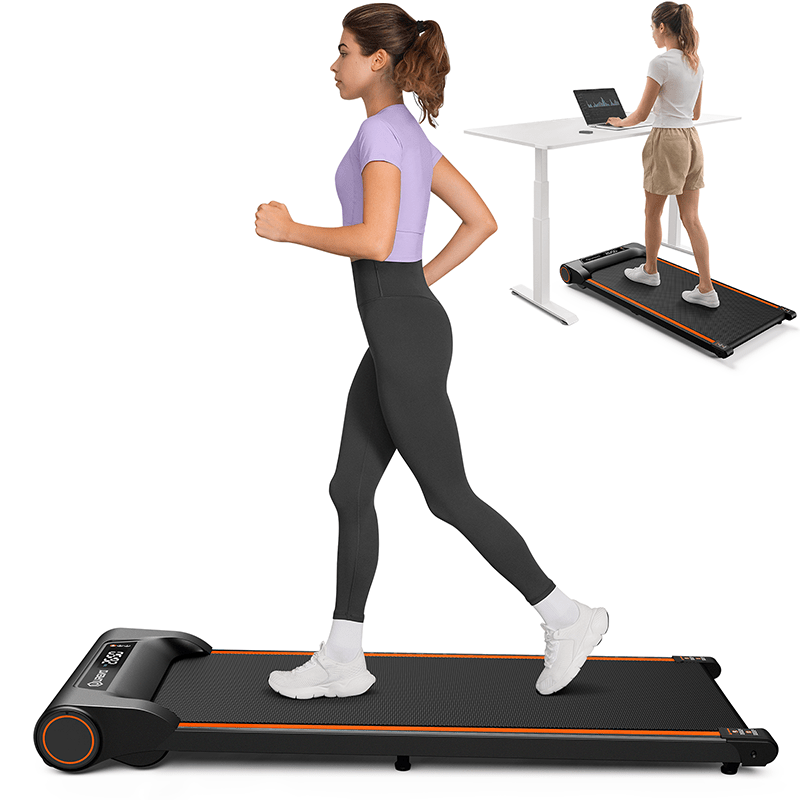
Under-Desk Walking Pad
A compact walking pad can help keep the habit available when outdoor walks are inconvenient. It works best for easy walking and controlled brisk blocks, not for replacing a full treadmill workout.
As an Amazon Associate I earn from qualifying purchases.
The Maintenance Question
The source routine suggests doing IWT at least four times per week. That is where the method becomes less about fitness theory and more about scheduling. A 30-minute walk is simple, but it still has to live somewhere in the calendar.
The cleanest approach is to attach it to something you already do: a solo planning session, a recurring phone call, a lunch break, or the first half hour after work. Many adults spend long stretches seated and then add more screen time afterward, so even a few structured walking sessions can make the week feel less static.
The bottom line: Interval Walking Training is worth trying if you want a walking habit with more intent. It asks for very little setup, gives you a clear format, and turns an ordinary walk into a repeatable system.